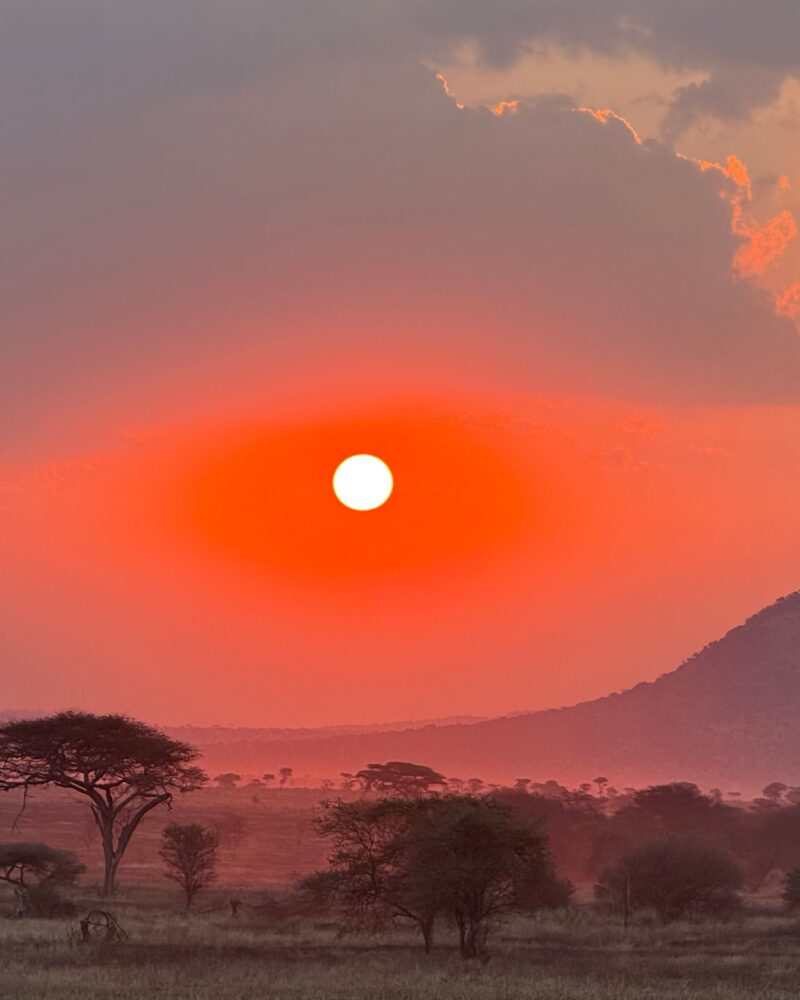
Before going on a safari, I assumed it would cost a fortune. I pictured luxury lodges, private guides, and thousands of dollars just to spend a few days looking for wildlife. But after doing some research, I realized you can actually do a Tanzania safari on a budget.
I spent $950 on four days covering the Serengeti, Ngorongoro Crater, and Tarangire. In this guide, I’ll break down how to find a safari package that works for you and what to expect while you’re on the ground.
Planning your own Tanzania safari? Get these before you go.
📱 Tanzania eSIM: I used Airalo’s Africa Safari package since I was going to Tanzania, Uganda, and Kenya during my East Africa trip. If you’re just visiting Tanzania, Airalo also offers a Tanzania-only eSIM.
🏨 Arusha hotel: Depending on your safari package, accommodation before and after the safari may or may not be included. If it isn’t, you can browse hotels in Arusha and find an option that fits your budget.
🚕 Airport pickup: Book a transfer beforehand so you don’t have to negotiate with taxi drivers or figure out transportation after a long flight. Your driver will be waiting for you when you arrive, making it one less thing to worry about.
🛡️ Travel insurance: I recommend getting travel insurance for a Tanzania safari, especially if you’re combining it with a Kilimanjaro trek, which requires mandatory travel insurance. Use VisitorsCoverage to compare plans and find one that fits your trip.
🎟️ Other activities: If you have extra time before or after your safari, check out other activities in Arusha or Moshi to round out your trip.
Table of Contents
How to Do a Tanzania Safari on a Budget
To do a budget safari, you need to make some sacrifices. This includes joining a group safari, choosing camping as your accommodation, and limiting the number of days you’re in the park.
Join a group safari
The easiest way to bring down the cost of a safari is to do it with other people. A private safari means you’re paying for the vehicle, driver, and guide yourself. With a group safari, those costs are split among everyone in the vehicle. I’d especially recommend considering a group safari if you’re traveling solo like I did.
Most group safaris have around 4–7 people, although the exact number depends on the tour company and vehicle. You’ll usually be picked up in Arusha or Moshi, meet the rest of your group, and spend the next few days traveling together.
I ended up enjoying the group aspect more than I expected. You’re spending several days together, so it can be a fun way to meet other travelers.
Choose camping over lodges
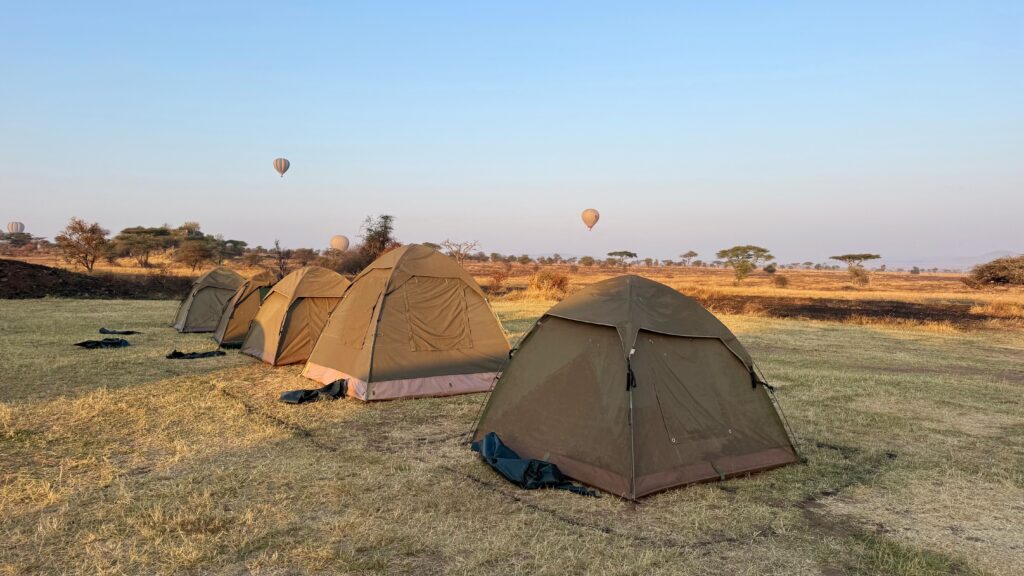
Another way to keep costs down is to choose camping as your accommodation. This means sleeping in a tent and using shared bathroom facilities. The safari company handled everything; I didn’t have to pitch my own tent or carry camping gear around.
Obviously, you’re giving up some comfort by choosing the cheapest option. You won’t have a private bathroom, a proper bed, or the same level of amenities you’d get at a luxury lodge. You may also have to deal with cold nights, dust, and the occasional less-than-glamorous bathroom.
Limit the number of park days
The more time you spend in the park, the more you have to pay. To reduce costs, I recommend keeping your safari to around 3–5 days. This gives you enough time to visit multiple parks and see plenty of wildlife.
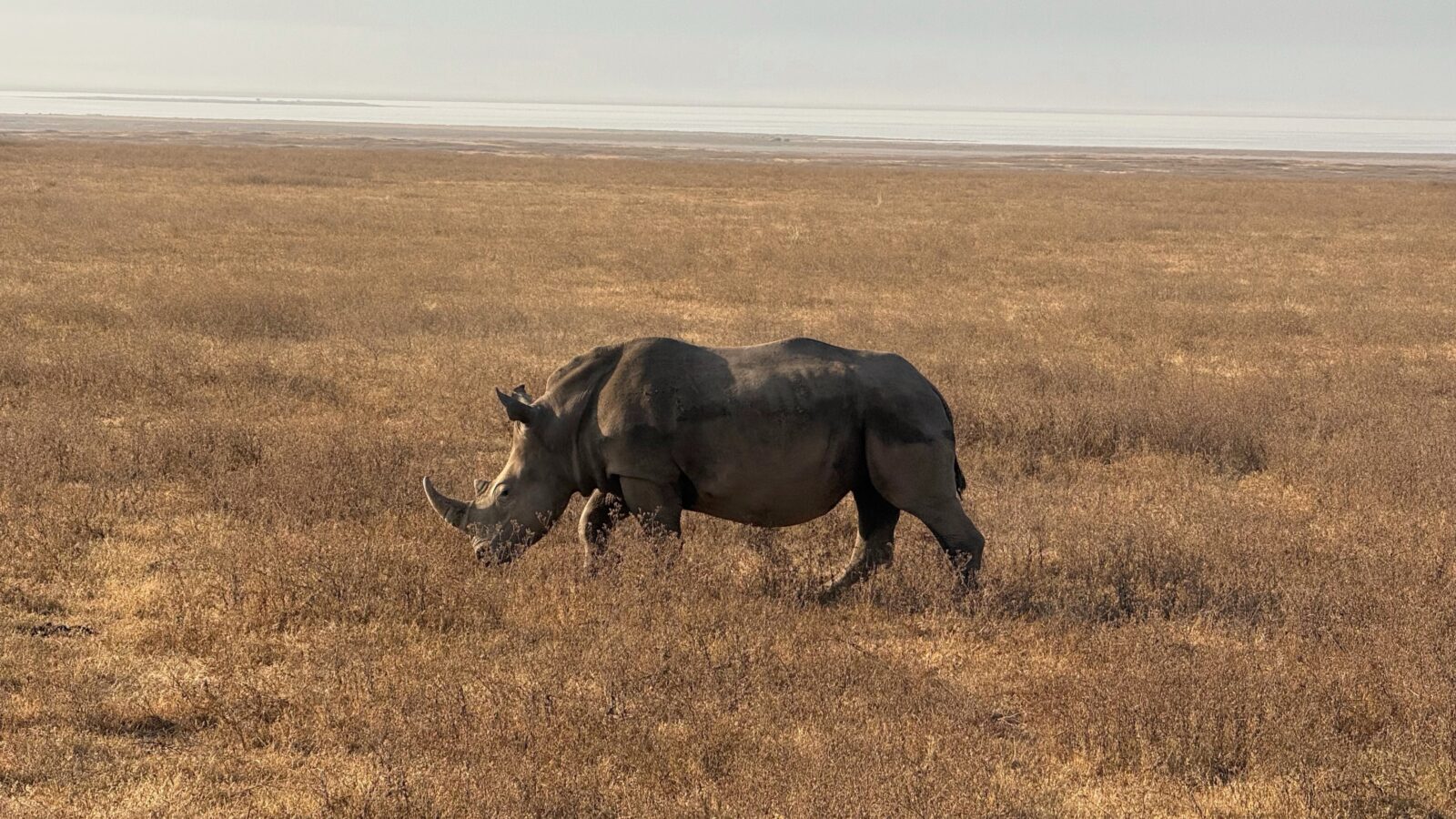
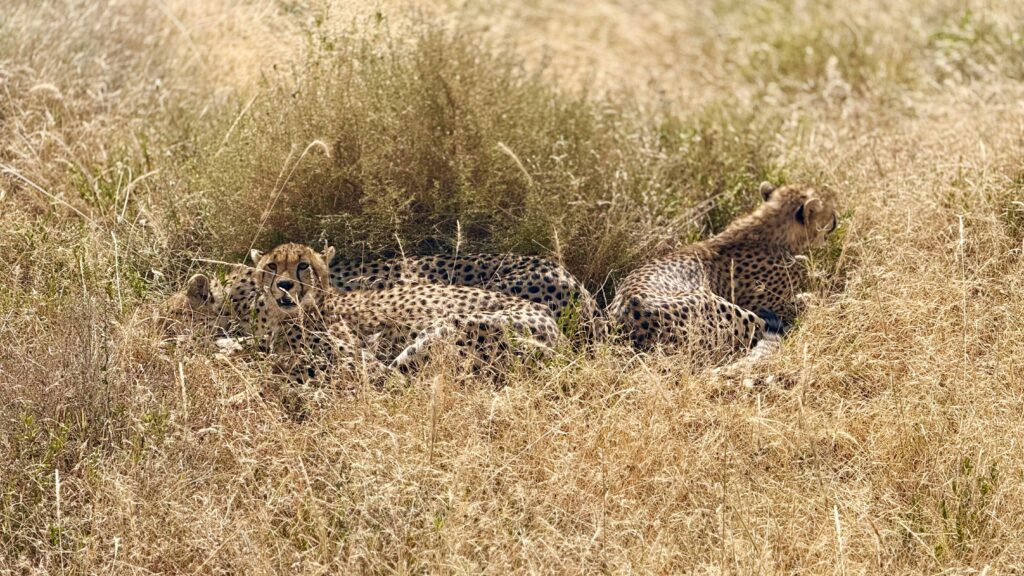
For my trip, I did a 4-day safari covering the Serengeti, Ngorongoro Crater, and Tarangire. I got to see lions, rhinos, cheetahs, elephants, giraffes, and plenty of other animals, so I never felt like I was missing out by keeping the trip relatively short.
What are the drawbacks of a budget safari?
The biggest drawback for me was the lack of flexibility. With a private safari, you have much more control over when you start your day, how long you spend on game drives, and which parks you visit and in what order. With a group safari, you’re working around the schedule of the entire group.
You also can’t necessarily stay out in the parks as long as you want. Budget group safaris have to stick to park and campsite schedules, and the guide needs to get everyone to the next camp in a timely manner.
At one point, we were tracking a leopard, but we had to leave and drive to the next camp so our chef could get started on dinner. I can’t know for sure that we would have seen it if we’d stayed, but it was a little disappointing walking away from a potentially great sighting because of the schedule.
You may also have to make detours for other people in your group. For example, some group members booked a hot air balloon ride, so our vehicle had to make a stop to pick them up afterward.
If you’re someone who wants complete control over your safari, a private tour will give you much more freedom. But if you’re mainly looking to see wildlife while keeping costs down, these tradeoffs may be worth it. For me, they definitely were.
What Does a Budget Tanzania Safari Itinerary Look Like?
Your itinerary depends on which parks you want to visit and how many days you have. Here’s what my 4-day itinerary looked like. For a breakdown of the full experience, check out this post.
| Day | Activity | Meals |
|---|---|---|
| 0 | Get picked up at Kilimanjaro International Airport (JRO) or Arusha Airport (ARK). Then enjoy a free day in Arusha. | None |
| 1 | Travel through the Ngorongoro Conservation Area to Serengeti National Park. Head out for an afternoon game drive. | Breakfast, lunch, dinner |
| 2 | Start with a morning game drive in the Serengeti. Travel to the Ngorongoro Crater Rim in the afternoon. | Breakfast, lunch, dinner |
| 3 | Go on a morning game drive in the Ngorongoro Crater. Head toward Tarangire National Park in the afternoon. | Breakfast, lunch, dinner |
| 4 | Go on a morning game drive in Tarangire National Park. Do an afternoon game drive before returning to Arusha. | Breakfast, lunch |
How Much Does a Budget Tanzania Safari Cost?
The cost of safari depend on whether you book a private or shared tour, your accommodation type, and how many days you’re in the park. These are the price ranges I found during my research for a shared safari in July 2026.
| Duration | Basic Camping | Mid-Range Lodging |
|---|---|---|
| 3 days | $500–700 | $1100–1300 |
| 4 days | $700–900 | $1300–1500 |
| 5 days | $900–1100 | $1500–1700 |
I spent $800 on a 4-day budget safari package covering the Serengeti, Ngorongoro Crater, and Tarangire National Park. It included all park fees, game drives, transportation, and meals during the safari, plus one night of accommodation before and after the tour.
The $800 price doesn’t include tips or incidentals. After adding those, my total came out to $950.
How Do You Find a Budget Tanzania Safari?
Luckily, there are plenty of safari options to choose from. Here’s a step-by-step guide to finding one that works for you.
- Find several local Tanzania safari tour operators. There are a few ways to find them:
- On Google Maps, search “safari operators in Arusha” and check their reviews
- Search Reddit for recommendations from other travelers. Type this into the search bar:
site:reddit.com tanzania safari operators - Search Facebook travel groups (such as this one) for recommendations
- Browse safaribookings.com
- Browse Viator. Here are some highly rated tours across different budgets to get you started.
- Once you find a few operators, ask them for:
- A detailed itinerary and a breakdown of what’s included, especially park fees, meals, accommodation, transportation, and any pre- or post-safari nights.
- The maximum number of people in the vehicle. A cheaper safari isn’t necessarily a better deal if you’re crammed into an overcrowded vehicle.
- The option to join an existing group if you’re traveling solo. This can help you get the lower group rate without having to find other travelers yourself.
- Once you have a few quotes, compare the itineraries, group sizes, and what’s included, then choose the option that best fits your needs.
You can also wait until you get to Tanzania to book your safari. This gives you the chance to visit several local tour operators in Arusha, compare prices in person, ask questions, and potentially negotiate a better rate. If you’re traveling solo, you can also look for an existing group to join.
The downside is that you’ll need to spend some of your time in Tanzania comparing operators and sorting out the details before you can start your safari. There’s also a chance your preferred itinerary or dates will already be booked, especially during peak season. For that reason, I recommend booking in advance.
What Is a Budget Tanzania Safari Actually Like?
If your idea of a safari comes from glossy luxury travel magazines, a budget camping safari is not that. You won’t be sipping champagne on private verandas. But you will get a raw and close-up view of the African wilderness. Here is what daily life on the ground actually looks like.
What is the safari vehicle like?
There are two main types of 4×4 Land Cruisers you’re likely to encounter on safari, and both offer good views of the wildlife. The first has a pop-up roof with enclosed sides. The second is open on the sides with a fixed roof overhead. Both have their pros and cons:
- Pop-up roof: Gives you a great 360-degree view when standing, while the enclosed sides provide more protection from dust, wind, and rain. The downside is that you have a more limited view when sitting down.
- Open sides: Gives you an unobstructed view even when you’re seated and makes it easier to photograph wildlife at eye level. The tradeoff is that you’re more exposed to dust, wind, and rain, and you can’t stand up for a higher vantage point.
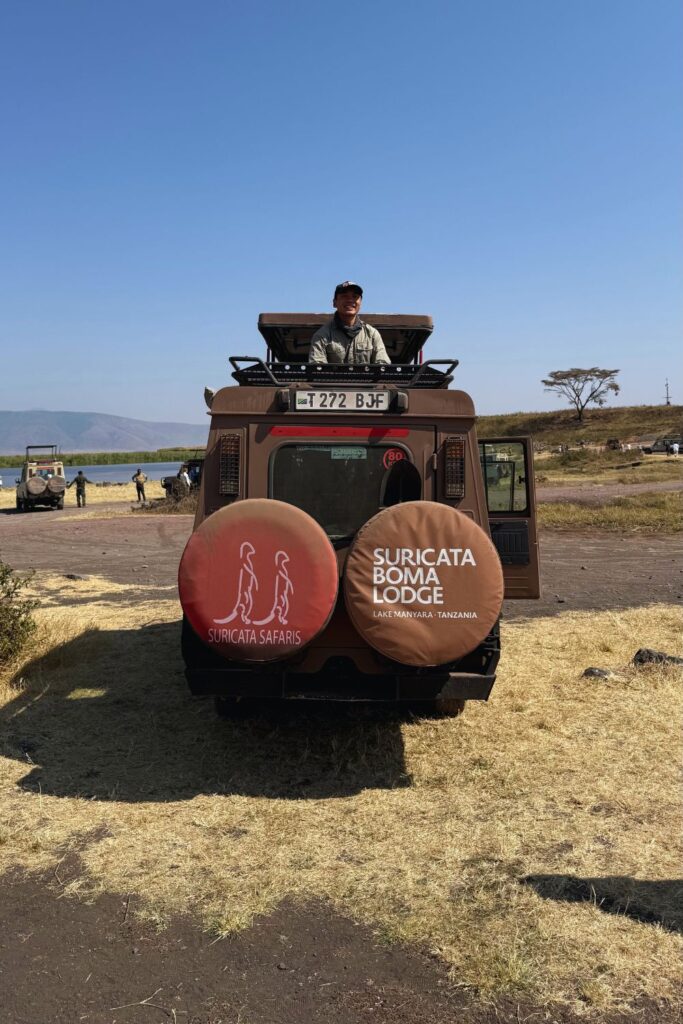
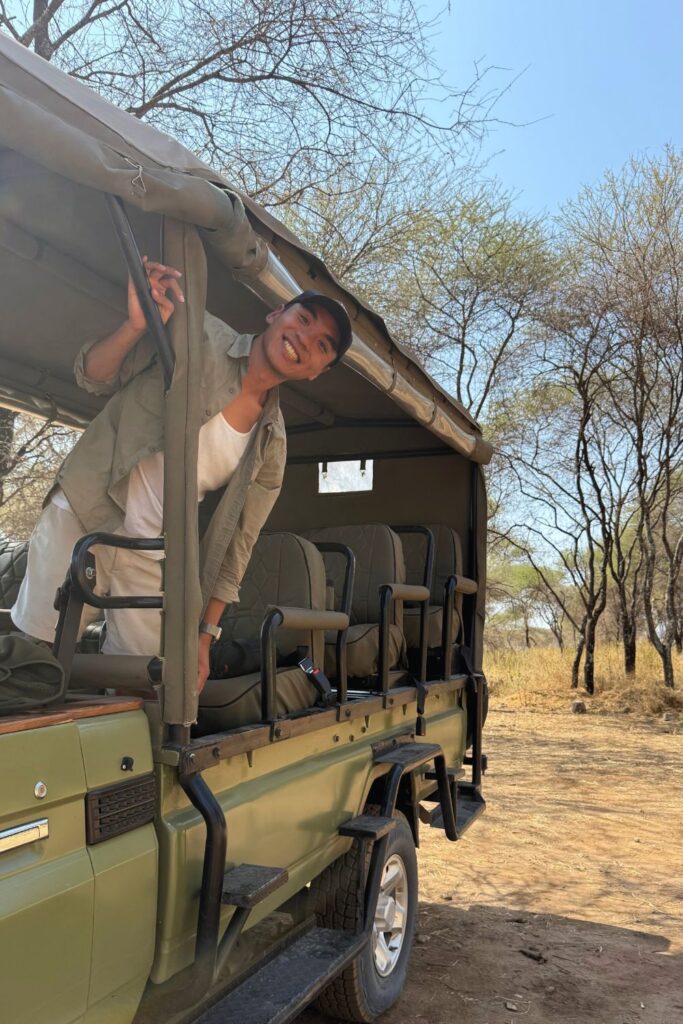
I had a chance to ride in both types during my safari. I was in the pop-up roof vehicle in Serengeti and Ngorongoro, and in the open-sided vehicle in Tarangire. Both worked well for game viewing, but I personally preferred the open-sided vehicle. It felt more spacious, and I liked having an unobstructed side view.
What is the group dynamic like?
There are typically 4–7 travelers in the vehicle, and you rotate seats each day so everyone gets a chance at a good viewing position. So don’t worry if you end up with a bad seat in the back on day one. The driver will make sure everyone gets a turn at the better seats.
You may not travel with the same people for the entire trip. Travelers can book packages of different lengths, so you may join a group that is already partway through its itinerary. When that group’s safari ends, you’ll switch vehicles and join another group that is following a different itinerary.
That’s what happened to me. I traveled with one group for the Serengeti and Ngorongoro, then switched to a different group for Tarangire.
Because the tour operator has to combine travelers with different routes and departure dates, the order in which you visit the parks may vary. For example, the itinerary listed on my tour company’s website was Tarangire → Serengeti → Ngorongoro, but my actual itinerary was Serengeti → Ngorongoro → Tarangire.
Personally, I would have preferred the original order, since Tarangire was the least impressive of the three parks in my opinion. But again, it’s a budget group safari, and you can’t afford to be choosy.
What are the animal encounters like?
Wildlife documentaries will have you believe that every safari is nonstop action, but they edit hours or even weeks of tracking into a few seconds of high-drama footage. In reality, most of the animals you see are resting, grazing, or just standing around.
Safari is a patience game. You can spend hours driving around or sitting in the vehicle, staring at open grasslands before your guide suddenly spots something. But waiting is part of the appeal. The fun isn’t just seeing the animals; it’s the anticipation of not knowing what you’re going to find.
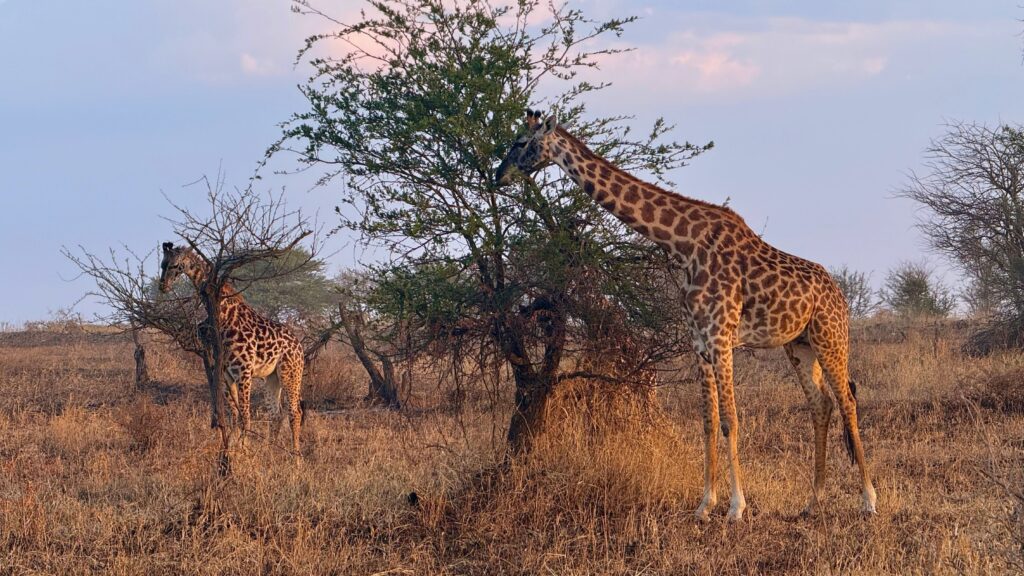
And despite being surrounded by wild animals, you generally don’t have to worry about them attacking the vehicle. Animals are used to seeing safari vehicles and often perceive the 4×4 and the people inside as one large object. That’s why your guide can sometimes drive surprisingly close to animals without them paying much attention to you.
Of course, they’re still wild animals, so follow your guide’s instructions and never assume an animal is harmless just because it seems relaxed.
What does the landscape look like?
I found the sweeping golden horizons of the Serengeti and the massive crater walls of Ngorongoro to be almost as impressive as the wildlife itself.
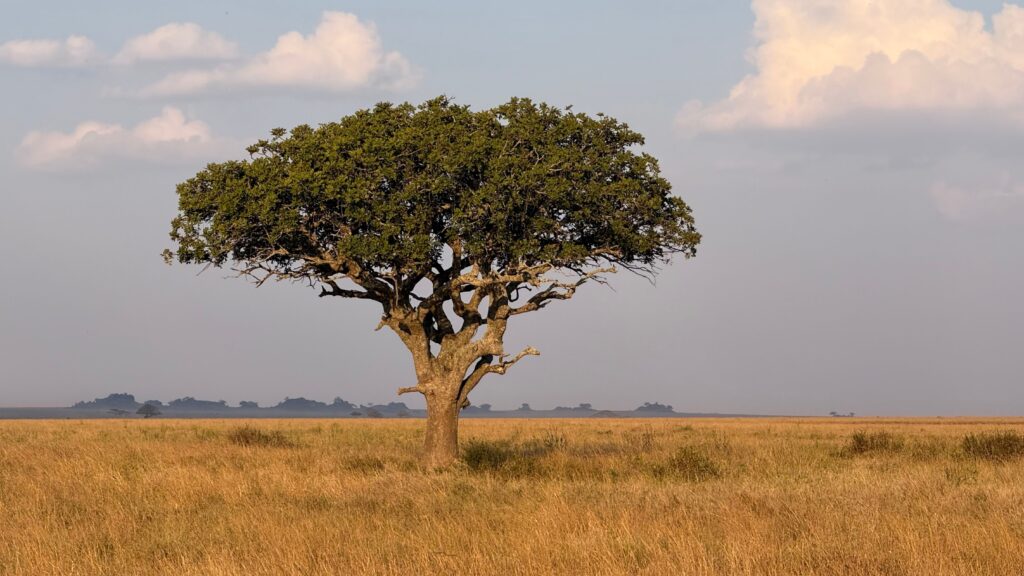
The Serengeti is endless, with huge stretches of grassland that seem to go on forever. You can drive for miles with nothing but grass, acacia trees, and the occasional herd of animals in the distance.
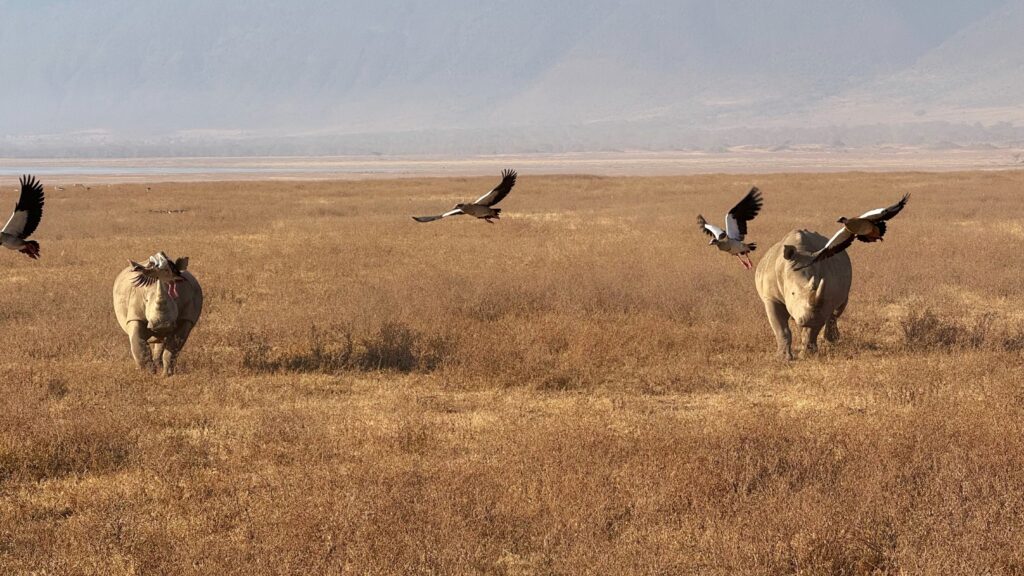
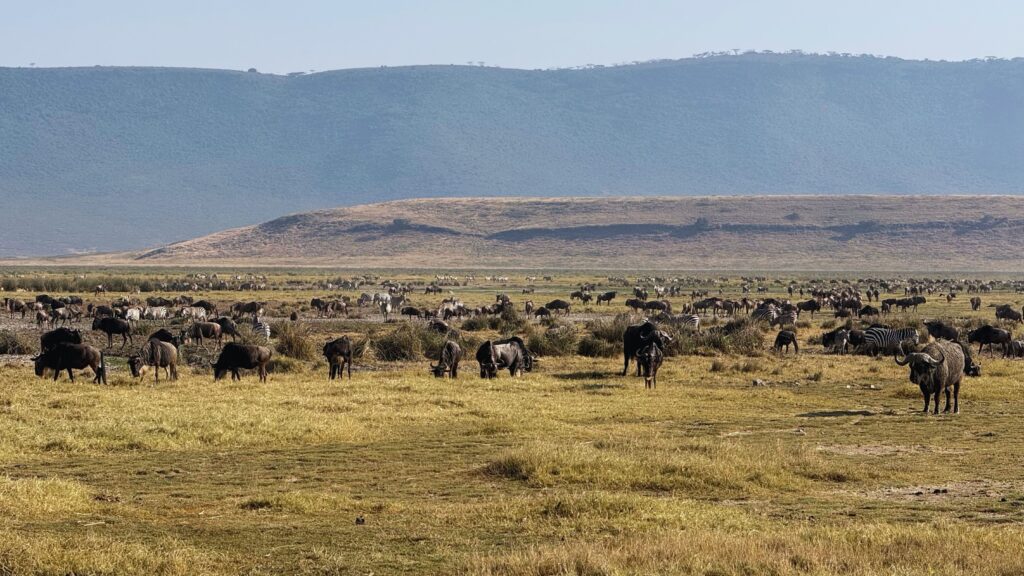
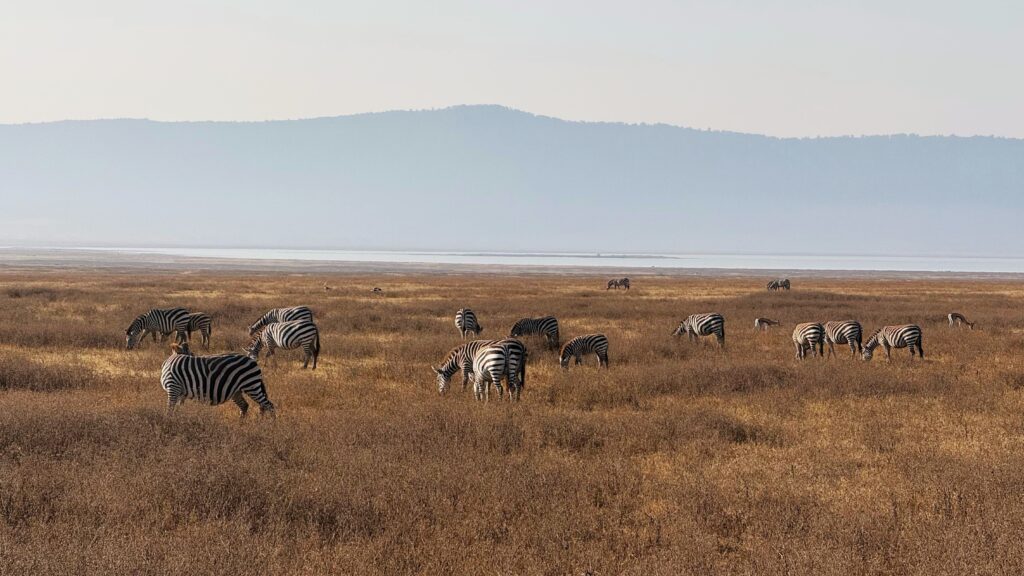
Ngorongoro feels completely different. Once you descend into the crater, you’re surrounded by steep walls that make the landscape feel almost enclosed. The crater floor has grasslands, wetlands, and patches of woodland, so there’s plenty of variety packed into a relatively small area.
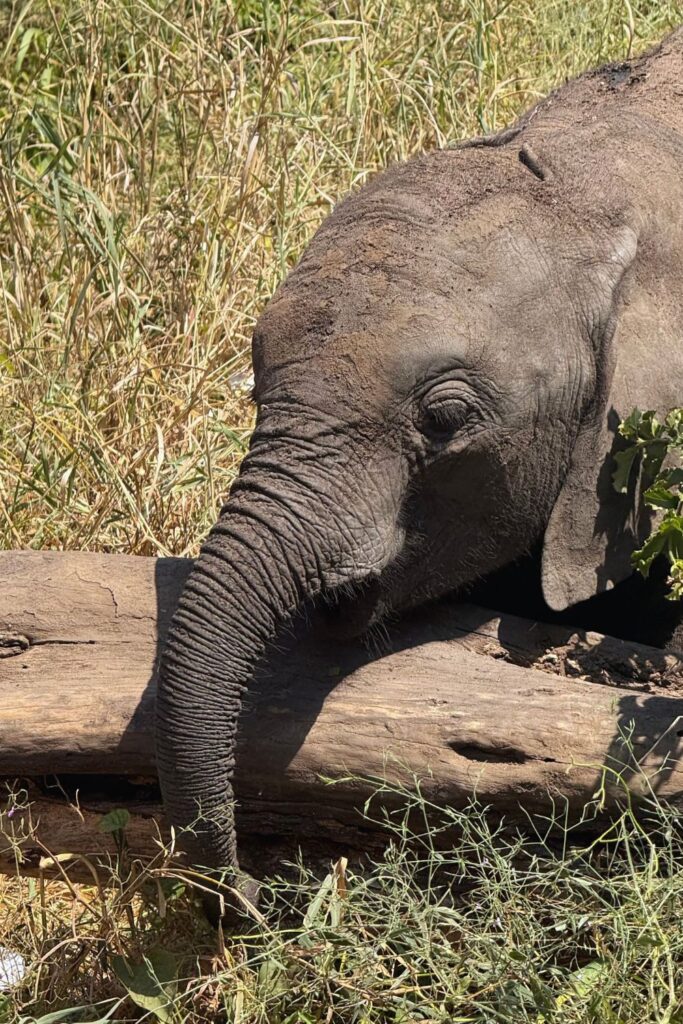
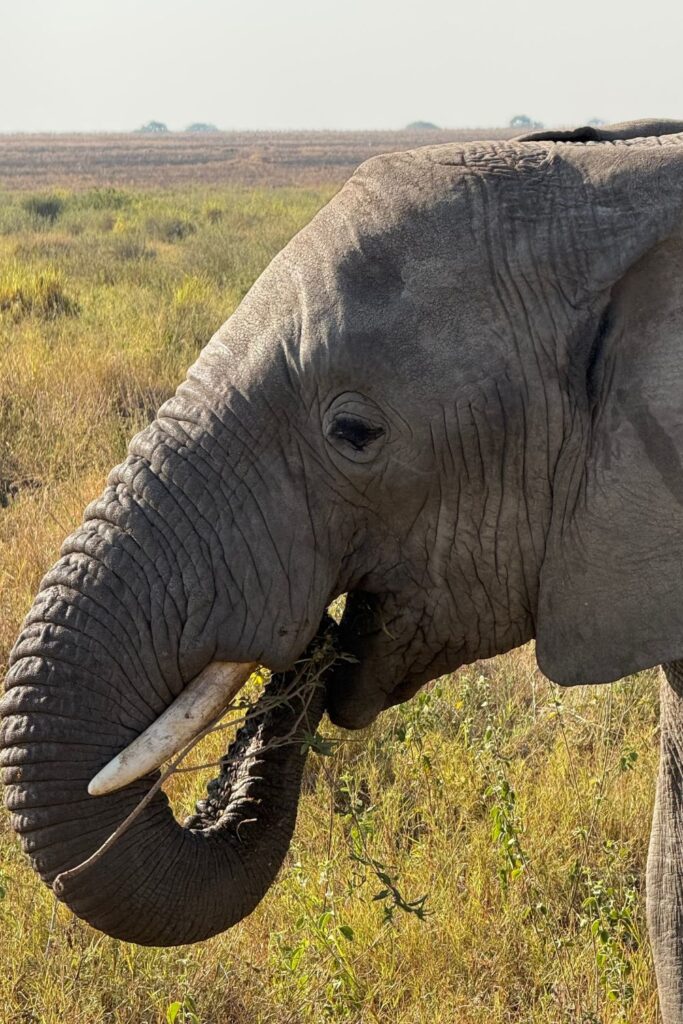
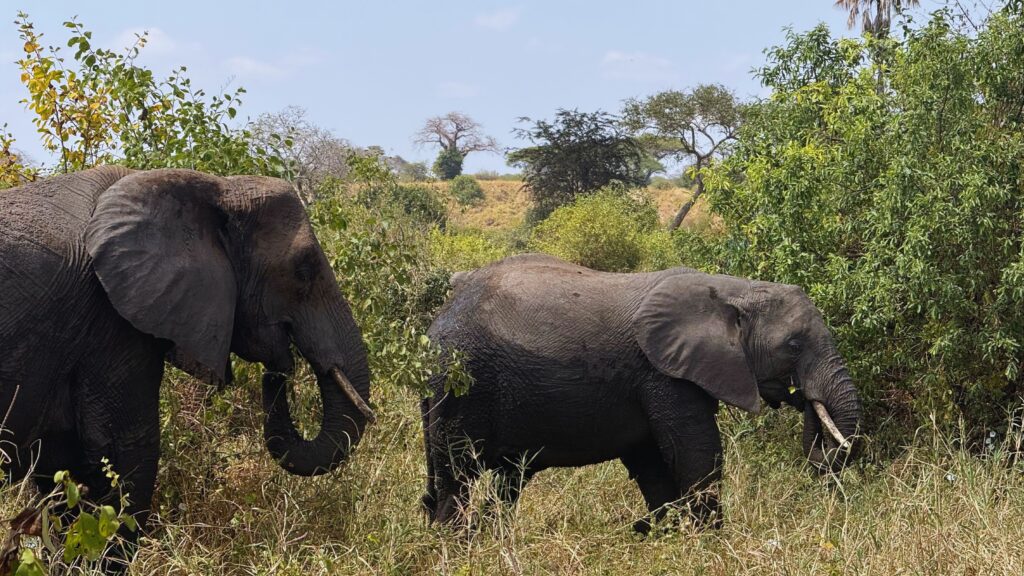
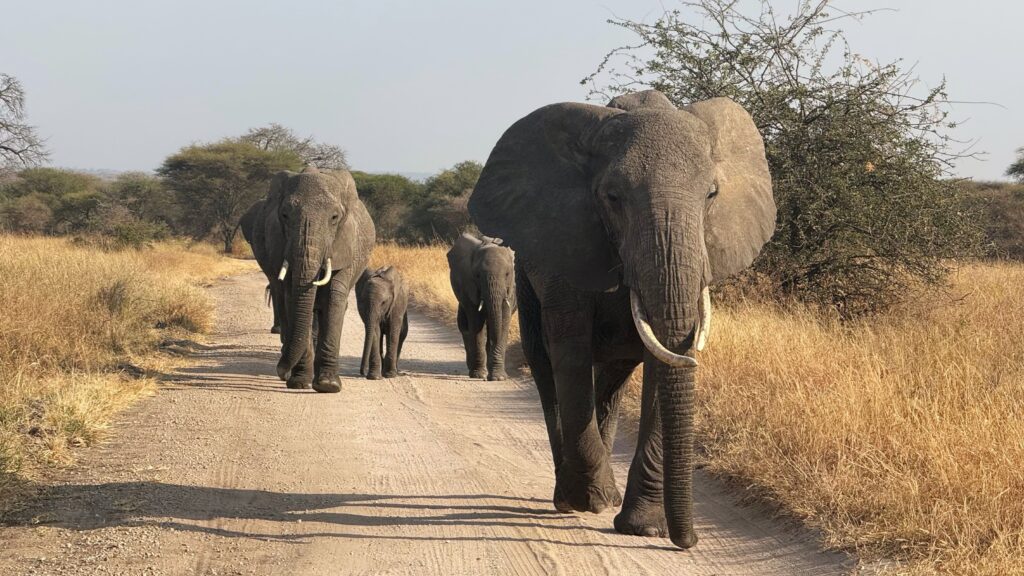
Tarangire stands out for its enormous baobab trees scattered across the landscape. The park is also known for its large elephant herds, so you may find yourself driving past groups of elephants with these massive thousand-year-old trees in the background.
What if I need to use the bathroom during game drives?
You’ll usually get a bathroom break at designated rest stops every couple of hours. If you really can’t wait, your driver may be able to find a safe place for a quick bush break, but this isn’t allowed everywhere.
For example, getting out of the vehicle for a bathroom break inside the Ngorongoro Crater is strictly prohibited. Sometimes your only option is to hold it until the next designated stop. (Don’t ask me how I know.)
What is camping like on a budget safari?
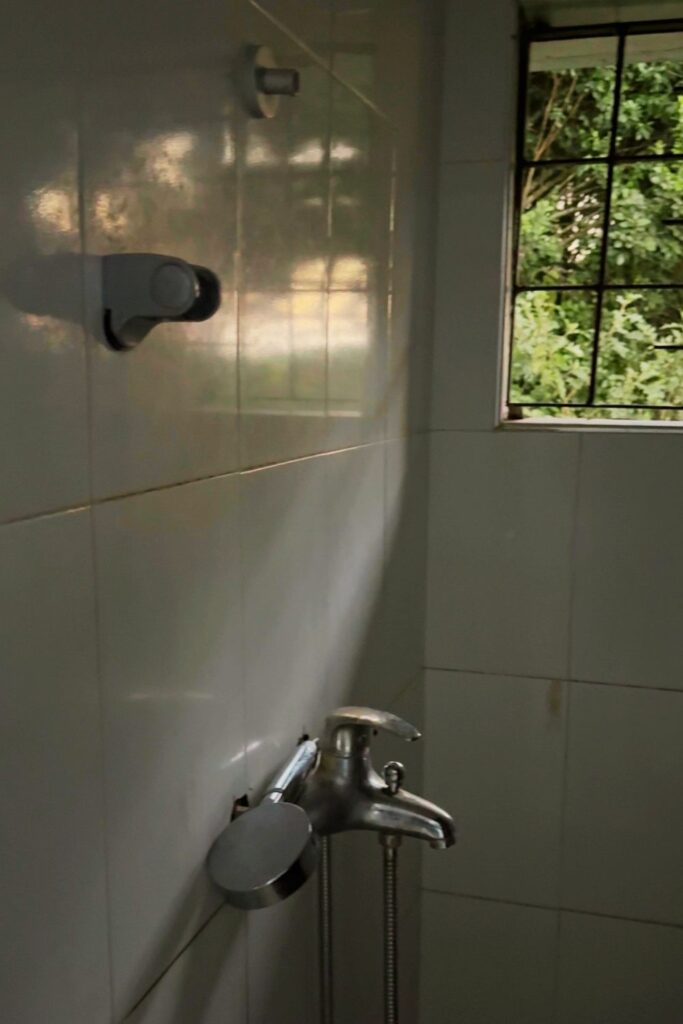
The camping setup is basic. You’ll typically sleep in a tent at a designated campsite, with shared bathrooms and showers. The quality of the campsites can vary quite a bit.
Some are well-maintained with clean bathrooms, showers, and a dining area, while others are much more bare-bones, with limited facilities and less upkeep. It’s worth asking your tour operator which campsites you’ll be staying at if this is important to you.
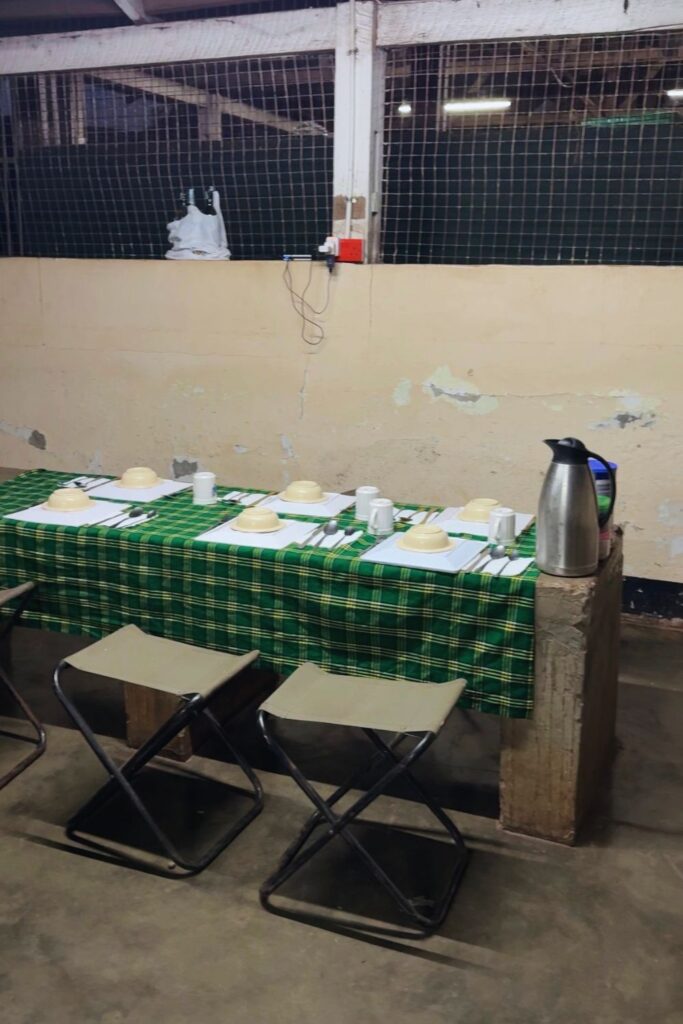
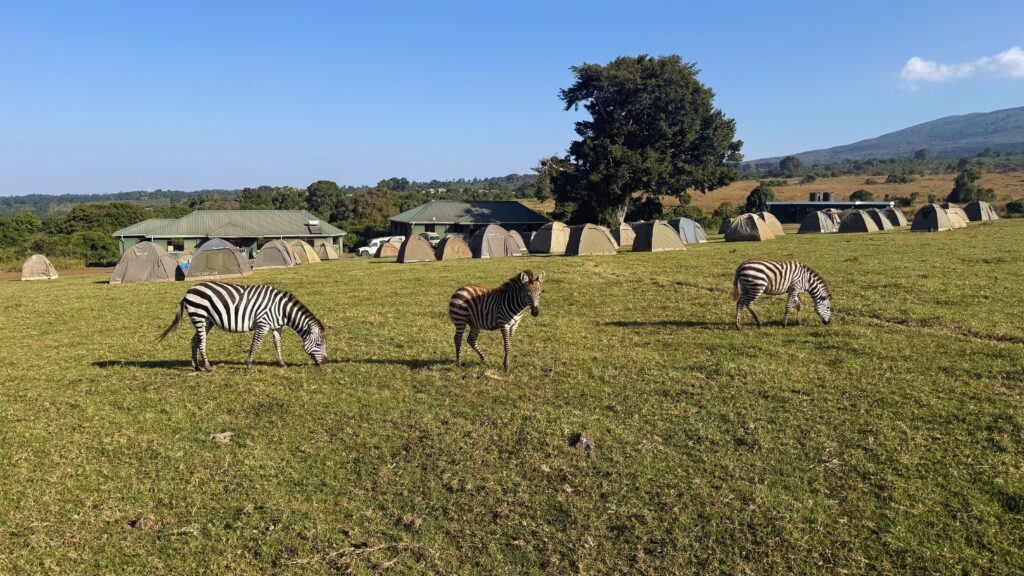
Tents are usually already set up for you, so you don’t have to worry about pitching your own tent after a long day of game drives.
Camping actually added to the experience for me. You give up some of the comforts of a lodge, but in return, you’re much more immersed in your surroundings. I could hear animals calling at night, sometimes even lions roaring, and occasionally wildlife would wander through the campsite.
The night sky was another highlight. The campsites I stayed at had very little light pollution, so the stars were incredibly bright. Coming from the suburbs in the U.S., I loved being able to look up and actually see the Milky Way.
Don’t expect much downtime, though. Most days start early with a morning game drive, followed by hours of wildlife viewing or driving to the next park. By the time you arrive at camp, eat dinner, shower, and get ready for the next morning, it’s usually time for bed.
What is the food like on a budget safari?
I was surprised by how good the food was. I expected camping meals to be pretty basic, with boxed lunches, sandwiches, and other food that could easily be prepared ahead of time. Instead, we had a private chef who traveled with our group and prepared fresh, hot meals for us at camp.
My safari package was full-board, so breakfast, lunch, and dinner were all included. We had some sort of soup as a starter, then meat and vegetable dishes as our mains. There were three vegetarians in our group, and the chef was able to accommodate them without any issues.
Is there Wi-Fi on safari?
Don’t expect much connectivity on safari. There’s no Wi-Fi during game drives, and cell service is extremely spotty. In some parts of the parks, you might get a bar or two of service, while in others, you’ll have no signal at all.
Of the three campsites I stayed at, only one had Wi-Fi. Even there, the connection wasn’t particularly strong.
If you’re going on safari, I’d recommend downloading anything you need before heading into the parks and treating the lack of service as a way to disconnect.
Which Tanzania Parks Should You Visit? Serengeti vs. Ngorongoro Crater vs. Tarangire vs. Lake Manyara
There are four main parks to consider for your northern Tanzania safari. If you have five days, you can hit all four. But if you have less time, it’s useful to know the differences so you can pick the parks that best fit your interests.
| Park | Landscape | Key Wildlife | What To Expect |
|---|---|---|---|
| Serengeti National Park | Sweeping, golden grass plains that stretch on and on. | Lions, cheetahs, leopards, giraffes, hippos, antelopes | Animals spread across vast distances. Long stretches of active tracking and not seeing anything. Highest chance to see the big cats. |
| Ngorongoro Crater | Massive volcanic caldera with lush greenery, central lakes, and steep rock walls. | Black rhinos, lions, wildebeests, buffalos, zebras, flamingos, hippos | Highest animal density in a small area with constant wildlife sightings. Best chance to spot the endangered Black Rhino. |
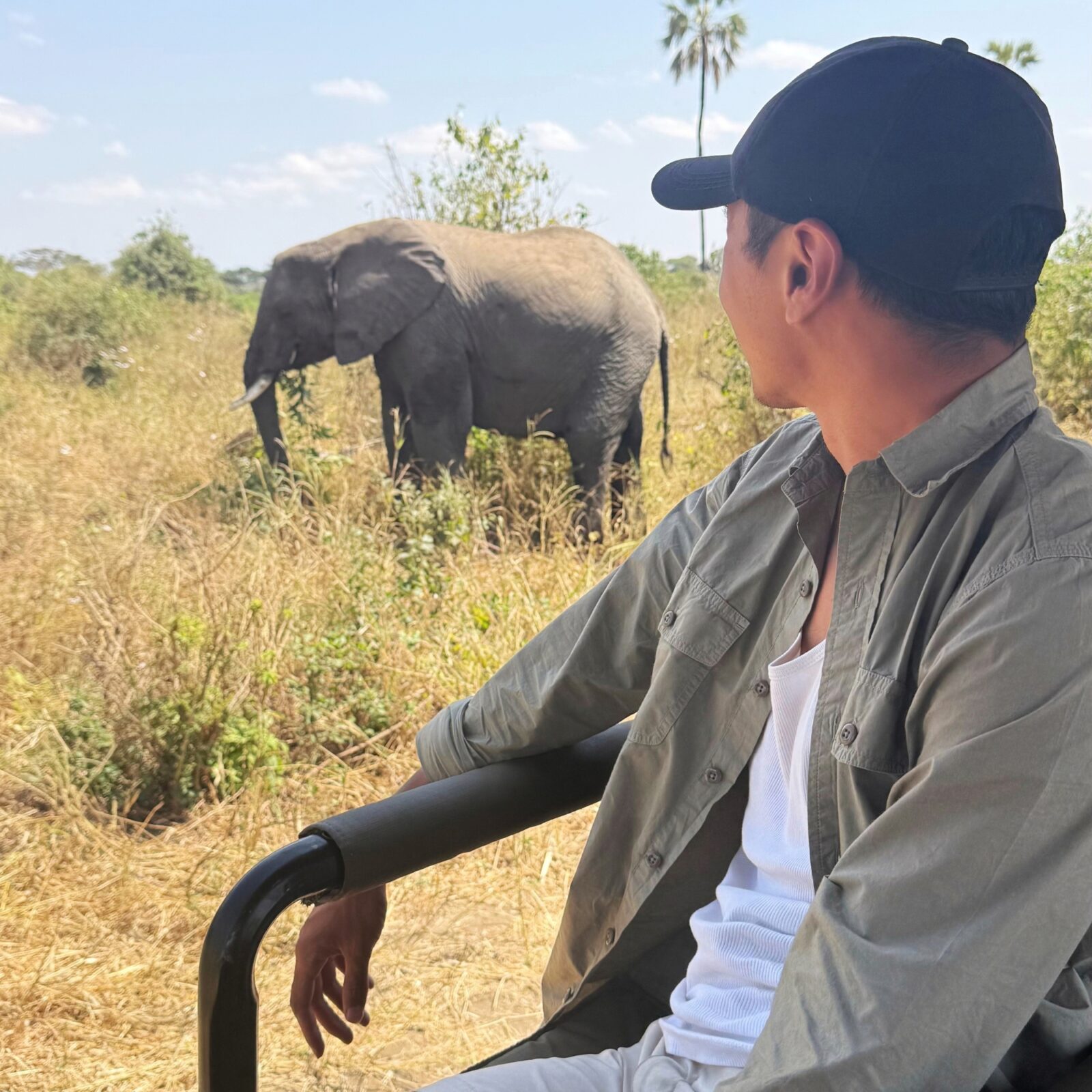
| Tarangire National Park | Grassland dominated by ancient, giant Baobab trees. | Massive elephant herds, giraffes, warthogs | Delivers the highest volume of elephant encounters (herds of 70–80 walking beside the 4×4). |
| Lake Manyara National Park | Dense groundwater forests, open grasslands, and a shallow alkaline lake. | Elephants, birds, baboons, tree-climbing lions | Compact park where wildlife is often easy to spot up close. Excellent for birding, with large flocks of pink flamingos. |
Which Parks to Visit If You Have 4 Days
Go to Ngorongoro, Serengeti, and Tarangire. This is what I chose, and I thought the three parks offered good variety in both wildlife and landscapes, so it didn’t feel like I was seeing the same things over and over again.
Skip Lake Manyara. The park has experienced significant flooding in recent years, which has affected access to some game-viewing areas and made animal sightings less predictable. The famous tree-climbing lions are also very rare to see. My guide told me he hadn’t seen one in 2026.
Which Parks to Visit If You Have 3 Days
Cut Tarangire and do Serengeti and Ngorongoro Crater. For me, the wildlife in Tarangire wasn’t as impressive as the other two destinations.
Tarangire also felt the most crowded. Unfortunately, I had a particularly bad experience there that left a sour taste in my mouth. At one point, dozens of safari vehicles swarmed around a single lion. Some of the vehicles even drove off-road and formed a circle around the lion, essentially trapping it in place for the tourists to get a better look.
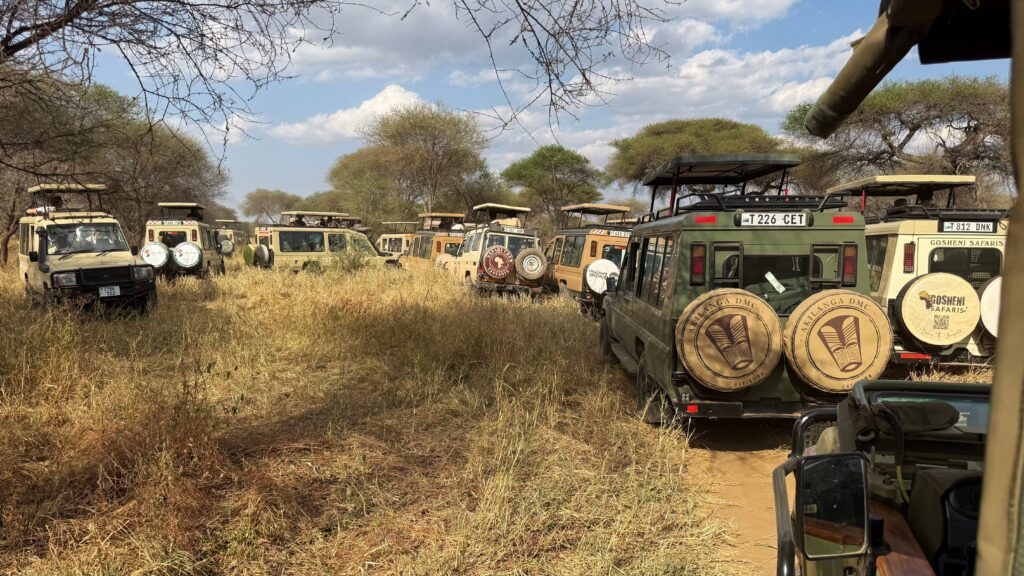
Obviously, that was my experience on one game drive and isn’t necessarily representative of every visit to Tarangire. But it did affect how I felt about the park. The main reason I’d still consider including Tarangire is if elephants are a major priority for you. The elephant sightings were the highlight of the park.
Does a budget Tanzania safari include the Mara River Crossing Great Migration?
Not necessarily. If you’re specifically hoping to see the famous Mara River crossing, simply booking a Tanzania safari during migration season isn’t enough.
The Mara crossings typically happen around July and August, when migrating wildebeest reach the northern Serengeti and cross the Mara River into Kenya. A budget safari that spends two days in the central or southern Serengeti probably won’t take you far enough north to reach the migration. This was the case with my 4-day budget Tanzania safari.
If the Mara crossing is a must-see, you’ll want to specifically look for an itinerary that includes the northern Serengeti during the migration period. Keep in mind that this can make a budget safari more expensive because of the additional distance, park fees, and accommodation costs.
When Is the Best Time For a Tanzania Safari?
Timing your Tanzania safari depends heavily on your budget and what you want to see. While wildlife can be spotted year-round, Tanzania generally has two distinct seasons: a wet and dry season. I went during the dry season and enjoyed good weather and animal sightings.
Dry Season (June to October): Peak Safari Season
- Best for: Overall wildlife viewing, clear skies, and viewing the Great Migration river crossings.
- Weather & conditions: Days are cooler, dry, and less humid. Vegetation thins out and water sources dry up, making animals congregate around rivers and waterholes for easier tracking.
- The reality: This is the most popular time to visit, meaning parks like Serengeti and Ngorongoro get crowded, and safari vehicle traffic at major animal sightings is high.
- Great Migration note: If seeing the famous river crossings in the Northern Serengeti is your top priority, you must visit between July and August. Short budget safaris sticking to Central or Southern Serengeti during this time will miss the migration.
Wet/Rainy Seasons (November to May): Low & Calving Season
- Short rains (November – December): Light showers that rarely interfere with game drives. The landscape turns lush and green, and birdwatching is at its peak.
- Long rains (March – May): Heavy rainfall, higher humidity, and muddy roads. Some budget camps close, but park fees and accommodation rates drop significantly.
- Wildebeest calving season (January – February): Hundreds of thousands of wildebeest calves are born in the Southern Serengeti, attracting massive numbers of lions, cheetahs, and hyenas for high-action predator activity.
What Should You Pack For a Tanzania Safari?
You don’t need a huge amount of gear for a Tanzania safari, especially if you’re only going for a few days. I packed pretty much like I would for any other warm-weather trip, with a few additions for early mornings, dust, and long days in the safari vehicle.
Clothing Essentials
- Layering is key: Pack comfortable, breathable clothes for warm daytime game drives, but bring warm layers (a fleece or light jacket) for early mornings and cold nights.
- Neutral colors: Choose neutral tones (khaki, beige, olive greens). Avoid dark blue or black, as they attract tsetse flies, and skip bright colors that can startle wildlife.
- Footwear: Bring both sneakers and sandals. I wore my sneakers during game drives and sandals around camp.
Safari Gear & Personal Items
- Binoculars: A high-quality pair of binoculars is essential for tracking distant animals, like rhinos across the Ngorongoro crater floor. If you forget to bring a pair, ask the tour company for a rental. Just make sure to not lose them like I did (don’t put them on the roof of the 4×4).
- Dust protection: Pack a scarf or buff and sunglasses to shield your mouth and eyes from dusty open-window drives.
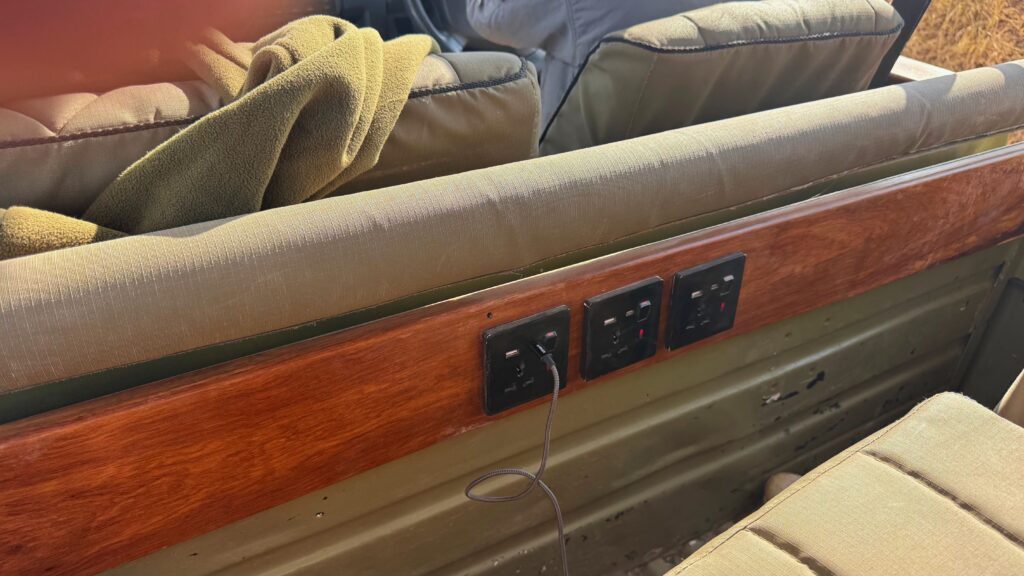
- Electronics & power: Bring a portable power bank to charge your camera or phone during long days in the park, along with a Type G (UK plug) adapter.
The biggest thing I’d recommend is packing light. You’re going to be moving between parks and campsites, and there’s no reason to drag a giant suitcase around for a short safari.
Is a Budget Tanzania Safari Worth It?
Yes, but only if you go in with the right expectations.
You’re giving up some comfort and flexibility, but you’re not giving up the core safari experience. I still spent four days seeing incredible wildlife in the Serengeti, Ngorongoro Crater, and Tarangire, and camping actually ended up being one of my favorite parts of the trip.
For me, paying less than $1,000 was worth the tradeoffs. If your priority is seeing wildlife rather than having a luxury experience, a budget safari can get you surprisingly close to the same experience for a fraction of the price. To see exactly what my four days on safari looked like, see this post.
What to Read Next: In-Depth East Africa Travel Guides
Planning an East Africa trip? These guides cover the itinerary, costs, and biggest experiences from my 5-week journey:
- 4-Day Tanzania Budget Safari: My Experience with Suricata Safaris: A day-by-day look at my $800 camping safari through Tarangire, Serengeti, and Ngorongoro Crater.
- 7-Day Lemosho Route: My Experience Climbing Kilimanjaro with Gladys Adventures: Follow my 7-day Lemosho Route experience, from the first day on the mountain through reaching Uhuru Peak.
- Kilimanjaro Cost Breakdown: How I Spent $2,908 on the Lemosho Route: See exactly what I paid for the trek, including the tour, tips, gear rental, insurance, and other expenses.
- 5-Week East Africa Itinerary: Ethiopia, Rwanda, Uganda, Tanzania & Kenya: See how I structured 35 days across five countries, including gorilla trekking, Kilimanjaro, a Tanzania safari, Zanzibar, and Ethiopia.
- How Much Does an East Africa Trip Cost? My Full $9,503 Budget Breakdown: See exactly where my money went, from tours and hotels to flights, food, transportation, visas, and tips.
Frequently Asked Questions
Can you do a Tanzania safari on a budget?
Yes. I did a 4-day safari covering the Serengeti, Ngorongoro Crater, and Tarangire for $950. The biggest ways to save are joining a group safari, camping instead of staying in lodges, and keeping the trip relatively short.
How many days should I spend on safari?
I’d recommend around 3–4 days if you’re traveling on a budget. That’s enough time to visit multiple parks without paying for several additional days of park fees, accommodation, food, and transportation. If you only have three days, I’d prioritize two days in the Serengeti and one day in the Ngorongoro Crater. If you have four days, you can add Tarangire, especially if seeing elephants is a priority.
What is the best time to go on a Tanzania safari?
The dry season from June through October is generally a good time for wildlife viewing, with less rain and thinner vegetation. If you’re trying to save money, consider comparing prices during the shoulder seasons. You may encounter more rain, but you can potentially find lower prices and fewer crowds.
Do I need to book a safari in advance?
I’d recommend booking in advance, especially if you’re traveling during the busy dry season or have specific parks and dates in mind. Booking ahead also gives you more time to compare companies and itineraries instead of choosing based on what’s available after you arrive.
Can I book a safari after arriving in Tanzania?
Yes, you can book a safari after arriving in Tanzania. Tour operators in Arusha and Moshi offer last-minute bookings, and you may be able to negotiate a better price depending on availability. The tradeoff is that you’ll have less control over the itinerary, accommodation, and group you’ll be traveling with. If you have specific dates or want to visit particular parks, booking ahead is the safer option.
What animals can you expect to see on a Tanzania safari?
Tanzania has incredibly diverse wildlife, but the main highlights vary by park. The Serengeti is best known for its big cats, the Ngorongoro Crater is a great place to see black rhinos, and Tarangire is known for its large elephant population.
How many people are usually in a safari vehicle?
Most group safaris have around 4–7 travelers in a vehicle, although the exact number depends on the company and vehicle. With a group safari, you’ll generally rotate seats so everyone gets a chance at different viewing positions.
What should I wear on safari?
Dress in comfortable layers. Mornings and nights can be surprisingly cold, especially around the Ngorongoro Crater, while temperatures can become much warmer during the day. I’d bring long pants, a fleece or light jacket, comfortable shoes, and a hat, along with clothes that you don’t mind getting dusty.
How much should I tip my safari guide?
Tipping is generally expected on safari, but the appropriate amount can vary depending on the length of your trip, group size, and level of service. Ask your safari company for its current tipping guidance before your trip and budget for tips separately from the safari price. I tipped $17 per day for my 4-day safari.
How do you charge your devices during a safari?
Most 4×4 safari vehicles feature charging ports so you can charge phones and camera batteries directly in the jeep during game drives. At campsites, you will find outlets in communal areas like dining halls and reception buildings. I recommend carrying a portable power bank with you as a backup.
Can you shower while on a budget camping safari?
Yes, each campsite has shared bathrooms for taking a shower, though the quality of the bathrooms varies camp to camp.
Can I do a safari and Zanzibar in one trip?
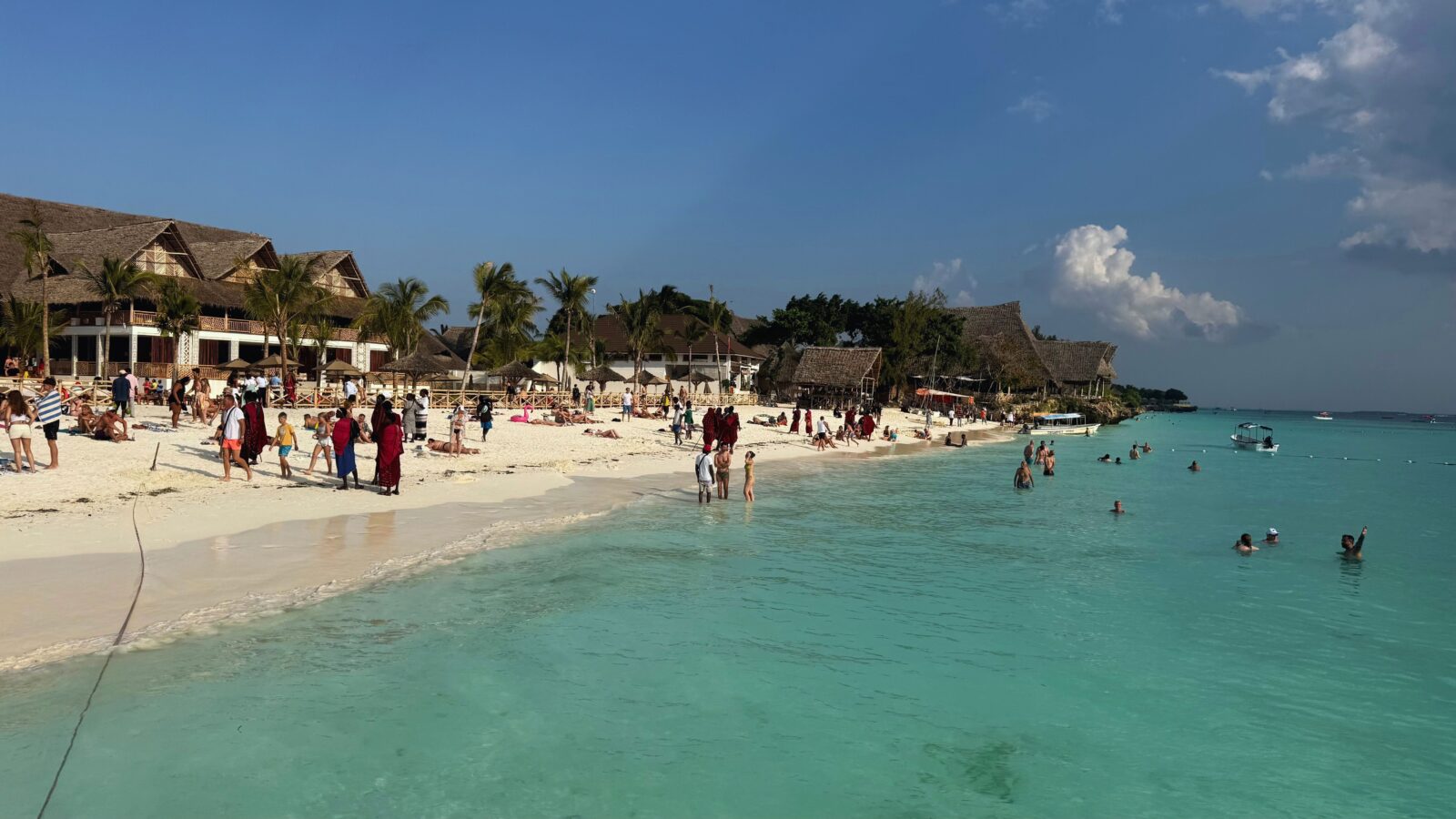
Absolutely. Zanzibar pairs really well with a Tanzania safari. I spent four days on safari before heading to Zanzibar, where I split my time between Stone Town and Nungwi.