When planning my East Africa trip, I knew I wanted to go on a safari, but I also didn’t want to blow my budget. I ultimately settled on a 4-day camping safari in Tanzania with Suricata Safaris, visiting the Serengeti, the Ngorongoro Crater, and Tarangire National Park. The tour package itself cost $800, and I spent $950 total after tips and incidentals.
In this post, I’ll walk you through what a budget safari is actually like, including the game drives, the campsites, and the day-to-day experience traveling with a group. At the end, I’ll give you my honest take on Suricata Safaris and whether they’re worth booking.
Table of Contents
Planning your Tanzania safari? Get these before you go.
📱 Tanzania eSIM: I used Airalo’s Africa Safari package since I was going to Tanzania, Uganda, and Kenya during my East Africa trip. If you’re just visiting Tanzania, Airalo also offers a Tanzania-specific eSIM.
🏨 Arusha hotel: Depending on your safari package, accommodation before and after the safari may or may not be included. If it isn’t, you can browse hotels in Arusha and find an option that fits your budget.
🚕 Airport pickup: Book a transfer beforehand so you don’t have to negotiate with taxi drivers or figure out transportation after a long flight. Your driver will be waiting for you when you arrive, making it one less thing to worry about.
🛡️ Travel insurance: I recommend getting travel insurance for a Tanzania safari, especially if you’re combining it with a Kilimanjaro trek, which requires mandatory travel insurance. Use VisitorsCoverage to compare plans and find one that fits your trip.
🎟️ Other activities: If you have extra time before or after your safari, check out other activities in Arusha or Moshi to round out your trip.
4-Day Tanzania Budget Safari Cost
In total, I spent $950 on my four-day budget safari, not including airfare to and from Tanzania. Here’s the itemized breakdown:
| Expense | Amount | Notes |
|---|---|---|
| Base Safari Package | $800 | 4-day group camping rate with Suricata Safaris |
| Tips | $70 | Tipping guidance is $15–$20 per guest, per day |
| Incidentals | $80 | Lost binoculars |
For incidentals, I borrowed a pair of binoculars from the tour company and proceeded to lose them on the first day. Pro tip: don’t leave your binoculars on the roof of the safari vehicle. I ended up paying $80 to replace them.
What is included in the base safari package?
- Park entrance fees: All national park entrance fees, transit fees, and Ngorongoro Crater service fees
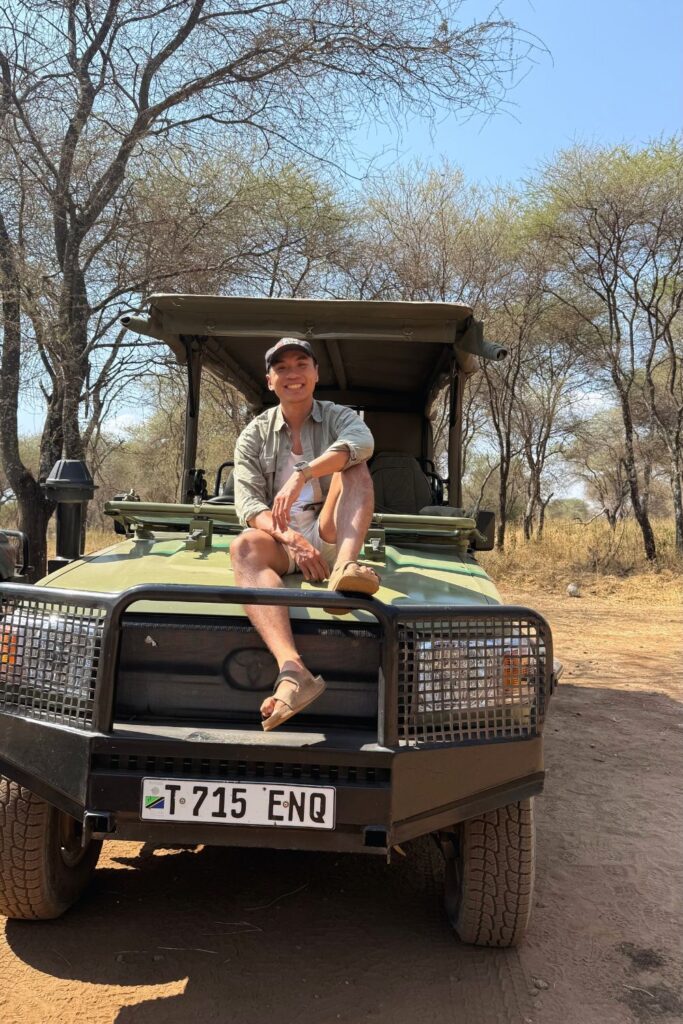
- Transportation: 4×4 Land Cruiser for game viewing
- Meals & water: Full board meals on safari cooked by a private camp chef and bottled mineral water during game drives
- Accommodation: Pre- and post-safari hotel stay at Jevas Hotel in Arusha; all campsite stays
- Camping equipment: Waterproof tent, sleeping mattress, and sleeping bag
- Airport transfer: Transportation to/from Arusha Airport (ARK) or Kilimanjaro International Airport (JRO)
What is not included in the base safari package?
- International flights & visas: Flights to Tanzania and the entry visa
- Tips: Mandatory cash tips for your driver-guide and private chef
- Personal expenses: Alcoholic beverages, soft drinks at hotels, laundry, and travel insurance
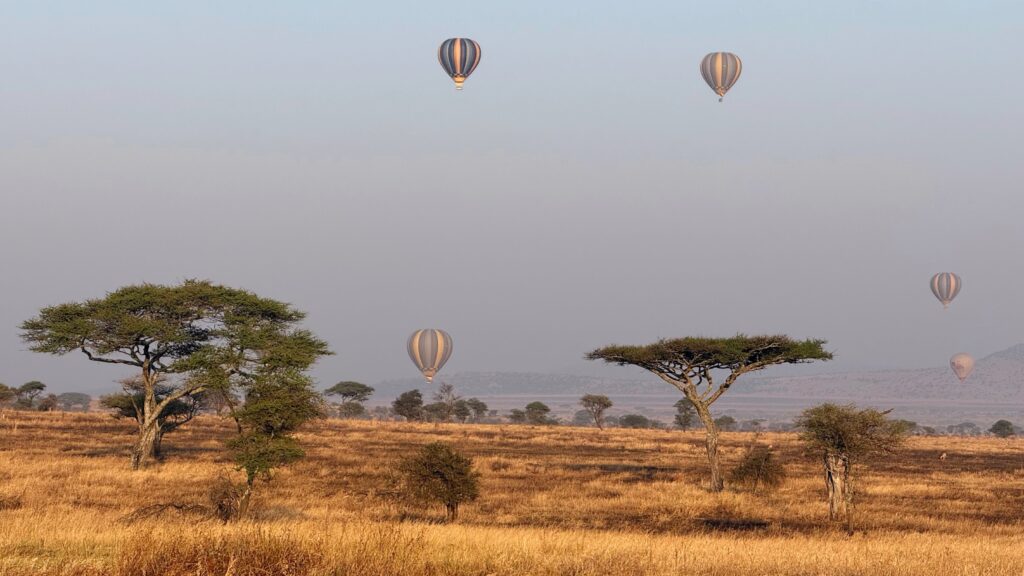
- Optional activities: Serengeti Hot Air Balloon Flight ($600/person) or Maasai Village Cultural Visit ($15/person)
Paying for a Tanzania safari
- Online deposits: Suricata Safaris requires a 20% deposit online via card to secure your reservation.
- Paying the remaining balance: You can pay the remaining 80% balance upon arrival in Arusha in USD cash or via credit card. If you’re paying by credit card, there’s a 5% surcharge.
- USD cash requirement: For cash payments, all dollar bills must be printed post-2009. Tanzanian banks and operators strictly enforce this policy and will reject older notes.
How much do you tip on safari?
Tipping is expected, and the company guidance was $15–20 per day. You give your tip (in cash) at the end of the tour to the driver-guide, who will then distribute a portion of it to the chef. If you need cash, make sure to pull it out in Moshi or Arusha because that’s where you have the best access to ATMs.
4-Day Tanzania Budget Safari Overview
This is a day-to-day overview of the 4-day itinerary. The game drive times listed below are based on my experience and can vary. For more information on finding a safari that works for you, check out my full safari planning guide.
| Day | Activity | Game Drive | Accommodation | Meals |
|---|---|---|---|---|
| 0 | Airport pickup at JRO or ARK; free day in Arusha | n/a | Jevas Hotel | None |
| 1 | Transit through Ngorongoro Conservation Area to Serengeti National Park; afternoon game drive | 14:30–18:30, 4 hours | Dik-Dik Campsite | Breakfast, lunch, dinner |
| 2 | Morning game drive in the Serengeti; afternoon transit to Ngorongoro Crater Rim | 7:30–13:00, 5.5 hours | Simba Campsite | Breakfast, lunch, dinner |
| 3 | Morning game drive in the Ngorongoro Crater; afternoon transit toward Tarangire | 7:00–11:00, 4 hours | Twiga Campsite | Breakfast, lunch, dinner |
| 4 | Morning game drive in Tarangire National Park; afternoon game drive and transit back to Arusha | 10:30–13:30, 14:30–17:00, 5.5 hours | Jevas Hotel | Breakfast, lunch |
Here are some useful things to know about the itinerary:
- The order in which you visit the parks may vary. My order was Serengeti → Ngorongoro → Tarangire, but you might do Tarangire → Serengeti → Ngorongoro instead. This is because group safari operators need to combine travelers with different routes and departure dates to fill their vehicles.
- If you have a choice, visit Tarangire first. Of the three parks I visited, Tarangire was the least impressive to me. If you end on Tarangire, it can feel underwhelming.
- You may not travel with the same group for the entire safari. You might join a group that is already partway through its itinerary. When that group’s safari ends, you may switch vehicles and join another group following a different itinerary. I traveled with one group for Serengeti and Ngorongoro, then switched to a different group for Tarangire.
- You rotate seats every day, so don’t worry if you get a bad one on the first day. The driver will make sure everyone gets a turn at the better seats. My first group had six people including me, while my second group had five.
- Game drive times may be shorter than advertised. I found the actual game drive times to be shorter than the ones listed on the Suricata Safaris website. For example, the itinerary lists both Serengeti game drives as 6–7 hours. In my experience, the first was about 4 hours and the second was about 5.5 hours.
- If you do the optional hot air balloon, you’ll miss a portion of the Serengeti morning game drive. You will rejoin your group mid-morning after you’re done with the activity.
4-Day Tanzania Budget Safari Day-to-Day Breakdown
This is a recap of each day during my safari. Your experience may be different depending on your itinerary, group, and conditions, but hopefully this gives you a better idea of what to expect.
Day 1: Arusha to Serengeti
I got picked up from Jevas Hotel in the morning and drove to Twiga Campsite in Mto wa Mbu, where I met up with the rest of my group. They started their safari the day before and had already visited Tarangire.
We drove through the Ngorongoro Conservation Area on our way to Serengeti National Park, stopped for lunch, and then headed out for our first game drive.
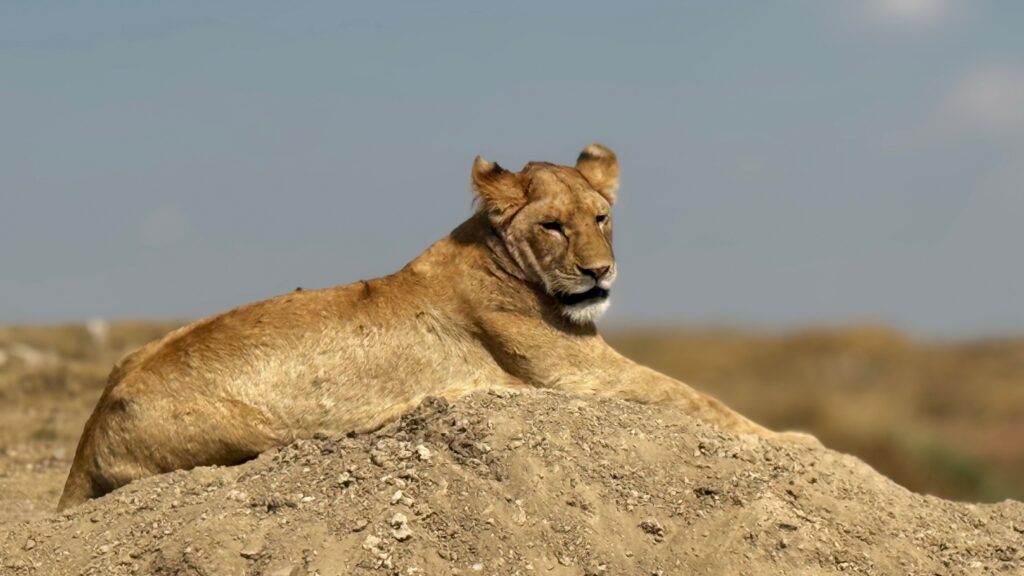
We didn’t have to wait long for some incredible sightings. We came across cheetahs and lions, and even tracked a leopard, although all we managed to see was its tail before we had to leave.
This brings us to one of the downsides of a group safari: we had a schedule to stick to. We needed to get to camp by a certain time so the chef could start preparing dinner for us. Who knows? If we’d stayed for another few minutes, we might have gotten a better look at the leopard.
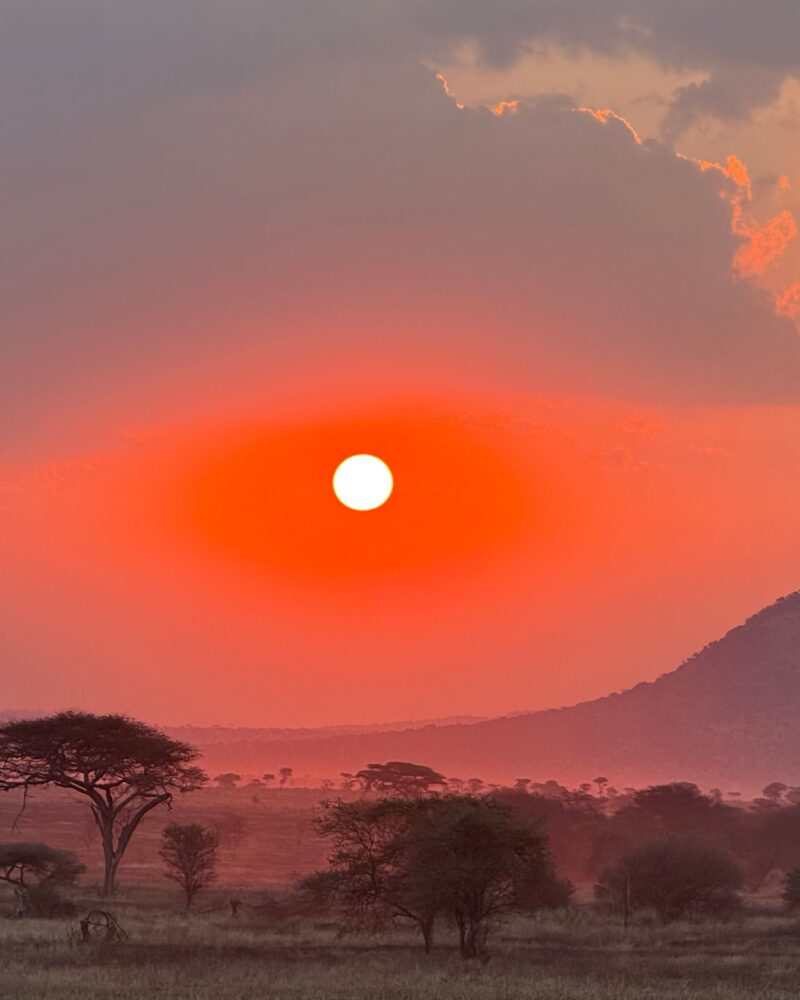
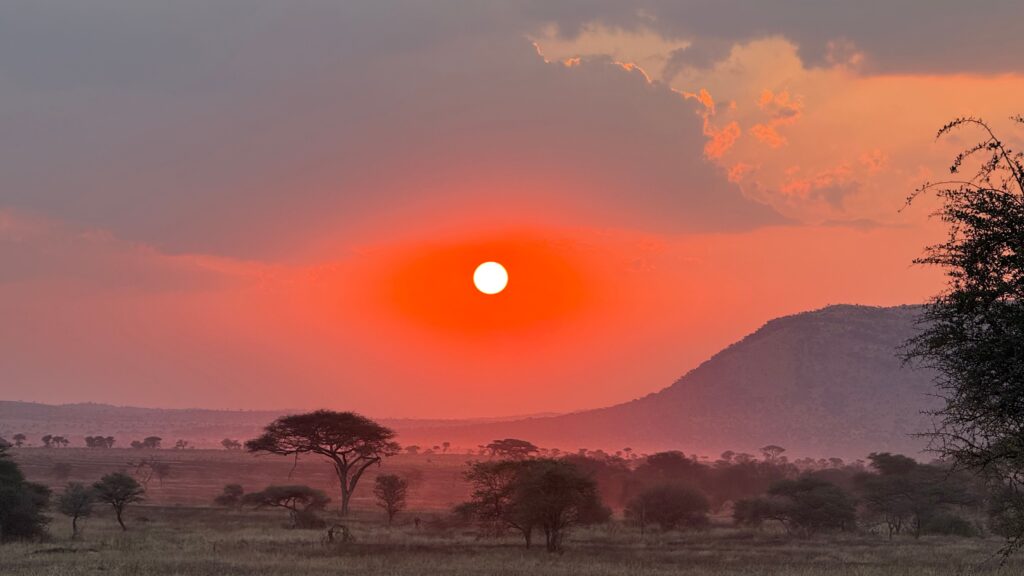
Our safari truck also broke down during the game drive, and we waited about 30–45 minutes while the driver fixed it. But we ended the day with one of the best sunsets I’ve ever seen, which made the whole breakdown feel pretty inconsequential.
Day 2: Serengeti to Ngorongoro
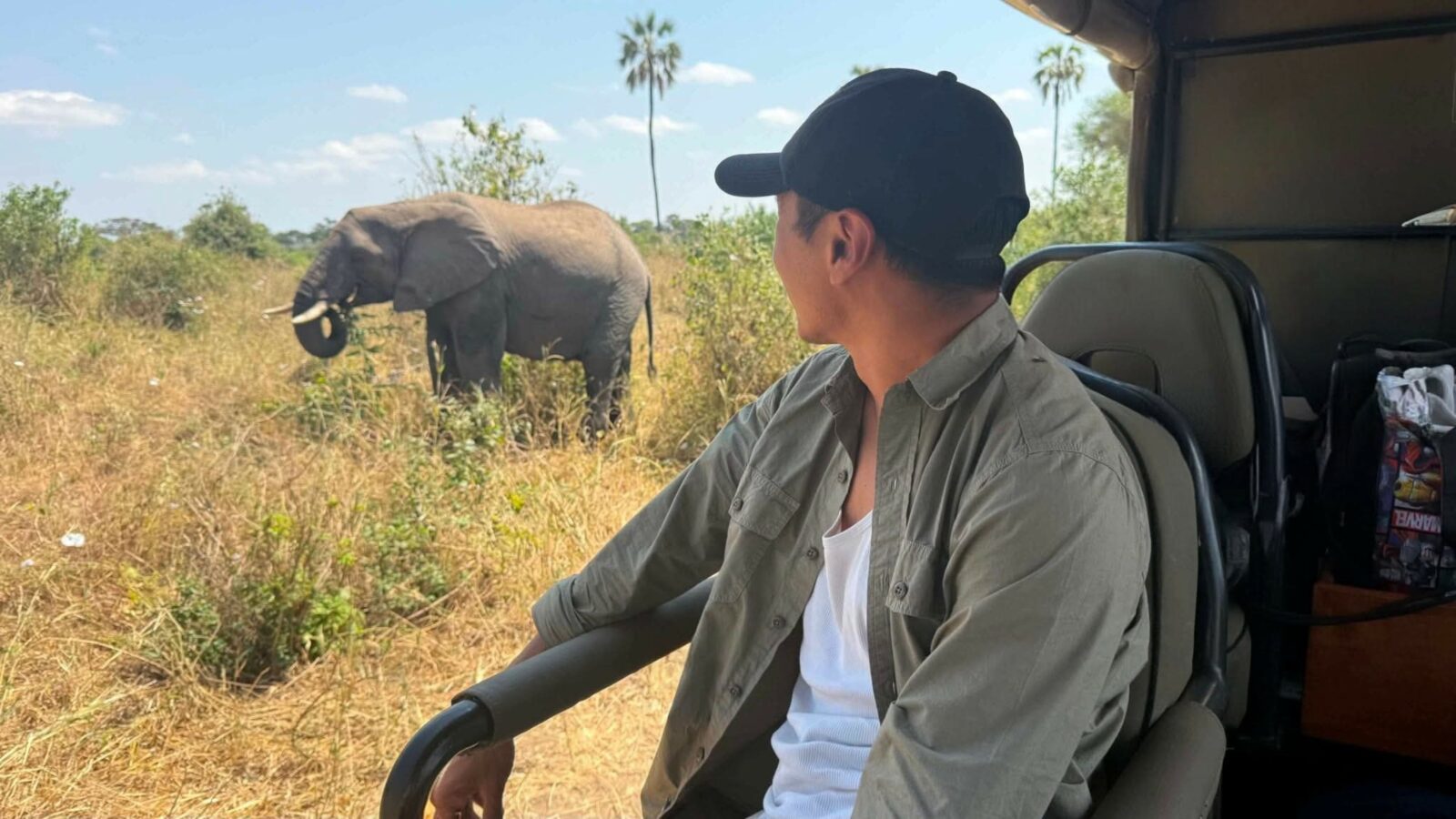
We woke up bright and early for a morning game drive, when predators are generally more active. Some memorable sightings included elephants, hippos, and various bird species like the secretary bird.
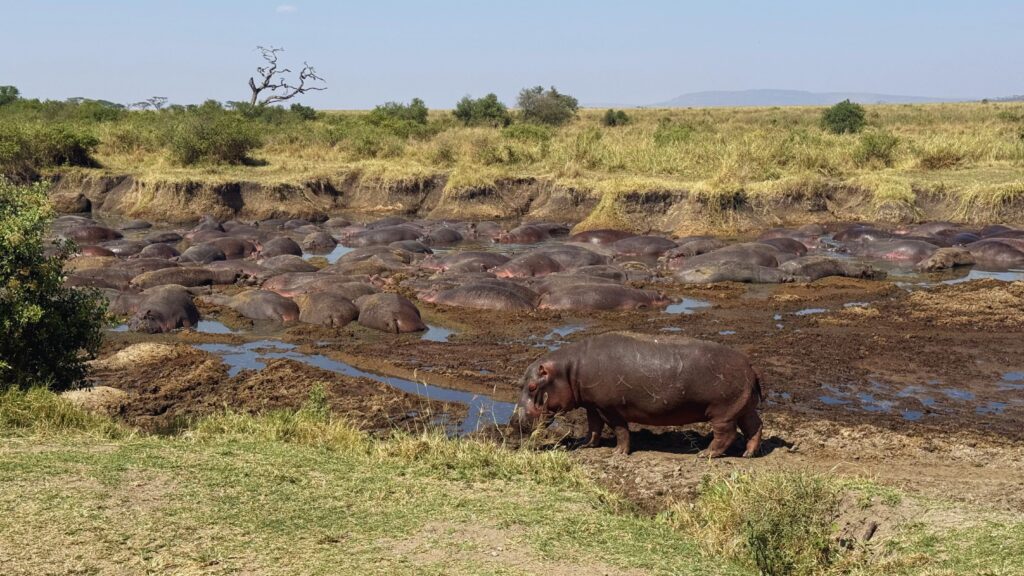
During this game drive, I realized what makes safaris so exciting. It’s not just about the animals themselves, but the uncertainty of what you’re going to see. You can drive around for an hour without seeing much, then suddenly the radio starts going off with chatter about a potential sighting. It creates this constant sense of anticipation, and when you finally spot something, it feels like a little reward.
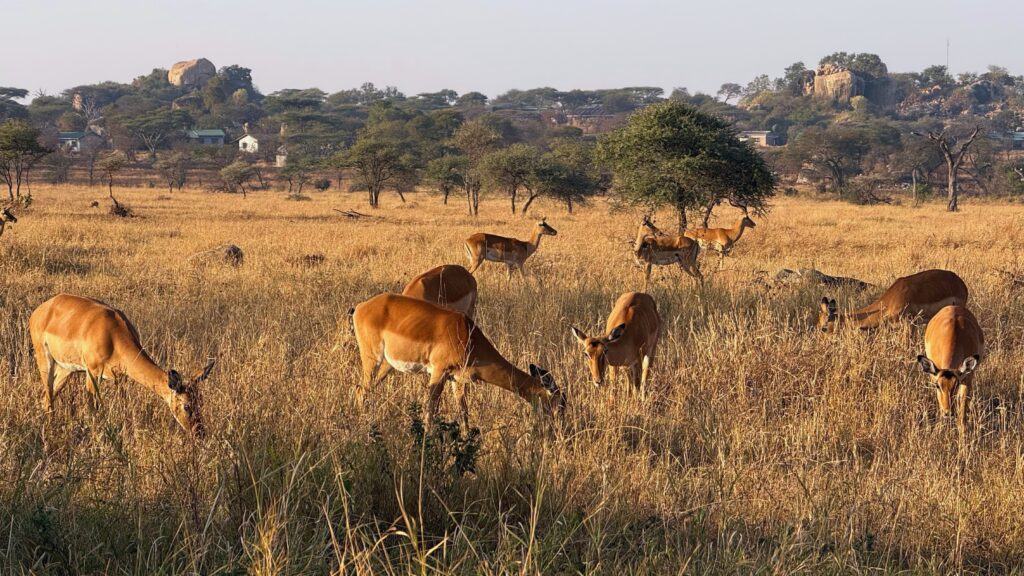
After lunch, we left the Serengeti and made our way toward the Ngorongoro Crater Rim, where we’d be spending the night. I was surprised to see zebras and elephants roaming around the campsite. Our guide also pointed out the big ficus tree at camp and explained its importance to the local culture, ecosystem, and wildlife.
Another thing I wasn’t prepared for was how cold it got at night. The temperature dropped significantly after sunset, so definitely bring layers if you’re camping around the Ngorongoro Crater Rim.
Day 3: Ngorongoro to Mto wa Mbu
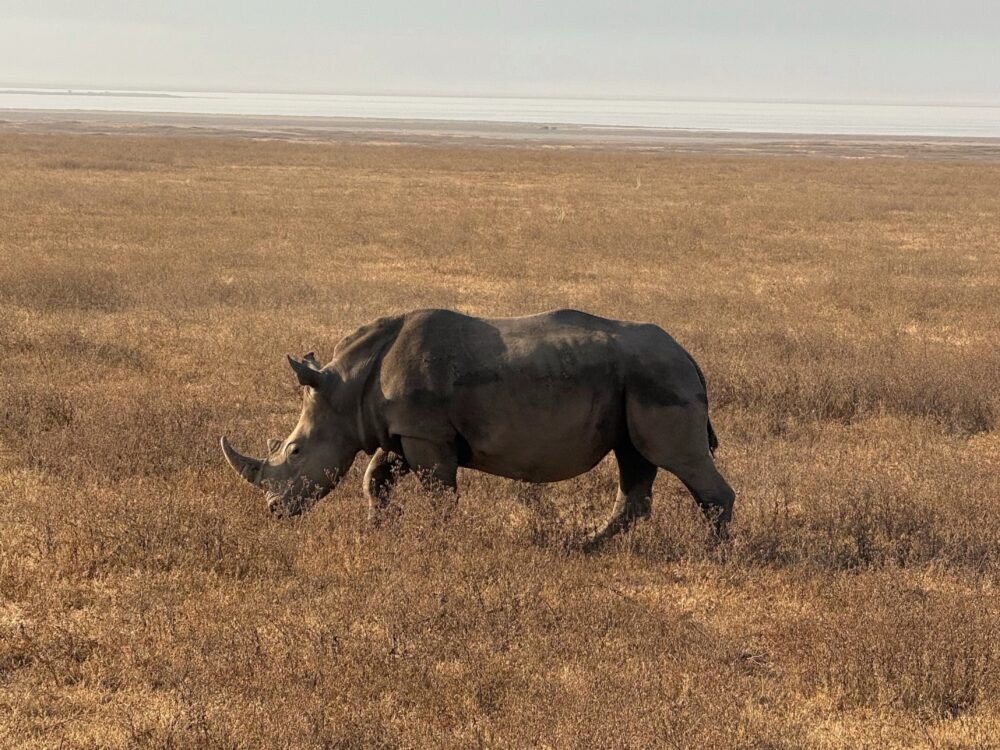
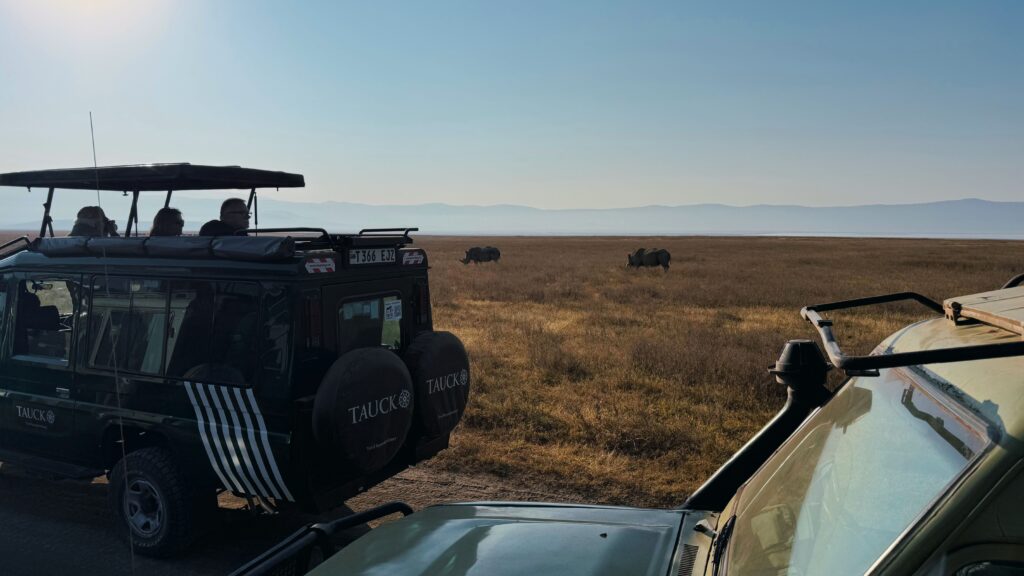
We woke up early and descended into the Ngorongoro Crater for our morning game drive. We were lucky enough to spot two black rhinos, one of the rarest animals you can see in the crater. There are only a small number of black rhinos in the Ngorongoro Conservation Area, so seeing two in the same morning was a pretty special sighting.
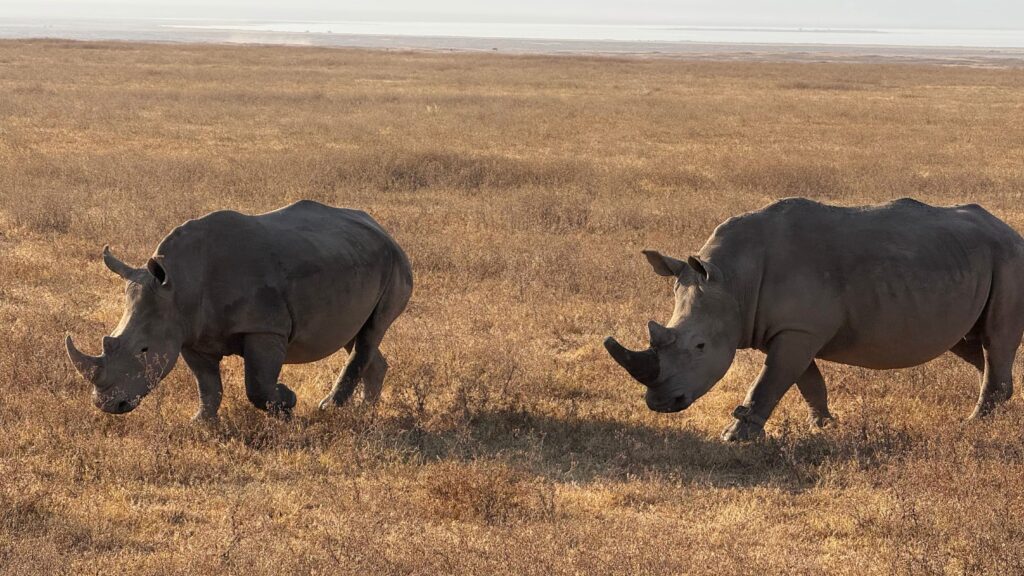
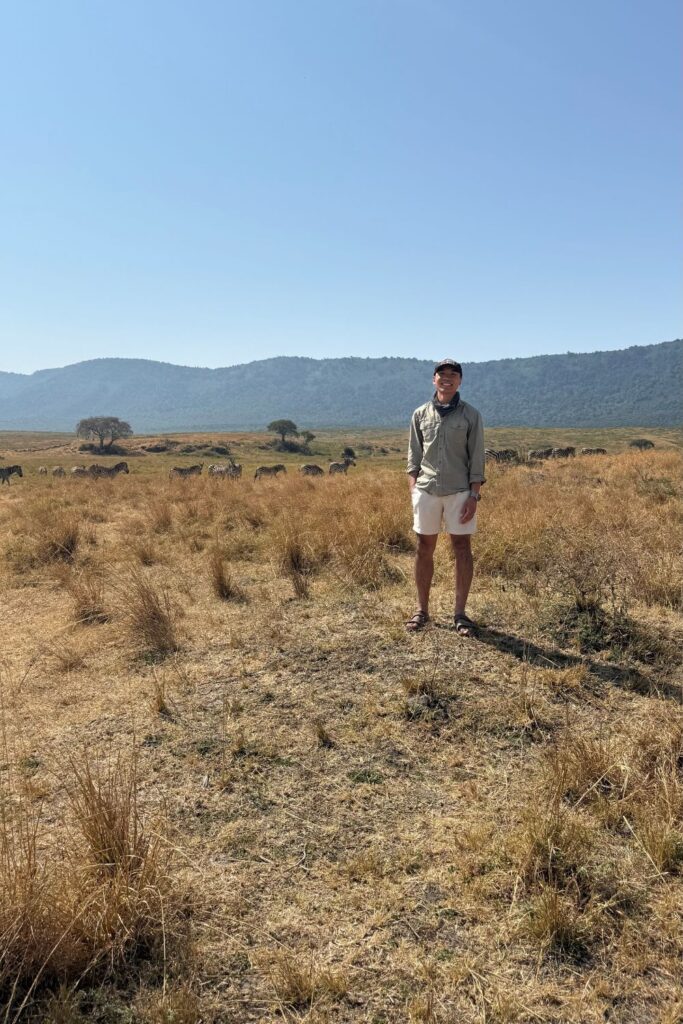
Unlike the Serengeti, where you can drive for long stretches without seeing much, wildlife in Ngorongoro is much more concentrated. We saw large groups of wildebeest, zebras, and buffalos, along with hippos and flamingos.
We took a break at a beautiful rest stop overlooking the lake. One thing to know is that our group didn’t eat lunch inside the crater. Two of my group members were disappointed because they’d heard this is something tour groups do. While it would have been nice to have lunch surrounded by the beautiful scenery, the reality of a budget safari is that you have to work accept the itinerary set by the safari operator.
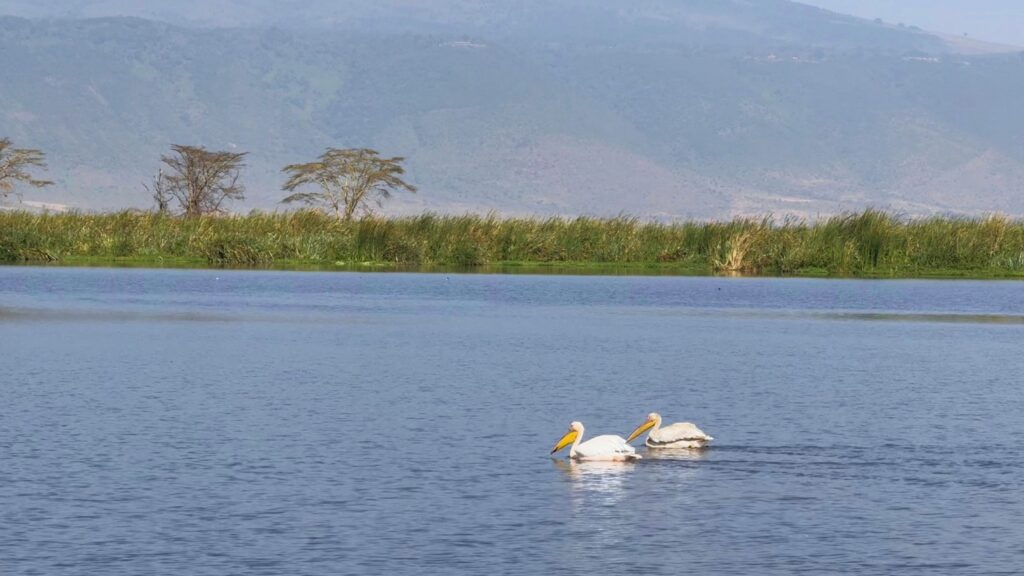
We exited the crater and stopped for lunch on the way back to Mto wa Mbu. Once we arrived, I said goodbye to the rest of my group since they had finished their safari, while I still had one more day. My guide also wasn’t continuing with me, so I’d be joining a new group the following day.
That afternoon, I had the option to take a guided walking tour around Mto wa Mbu village. We visited rice fields, banana plantations, a traditional brewery, an artist gallery, and a wood-carving workshop.
I really enjoyed the tour and would recommend it. It didn’t feel as manufactured as some other cultural tours I’ve done. There was no staged singing or dancing, and we didn’t intrude into anyone’s home. We simply walked through different parts of the community and saw people going about their everyday lives.
It was also a nice change of pace after spending the past few days almost entirely focused on nature and wildlife. I got to learn some interesting tidbits about Tanzanian culture and see a little more of what life is like outside the national parks.
Day 4: Mto wa Mbu to Tarangire to Arusha
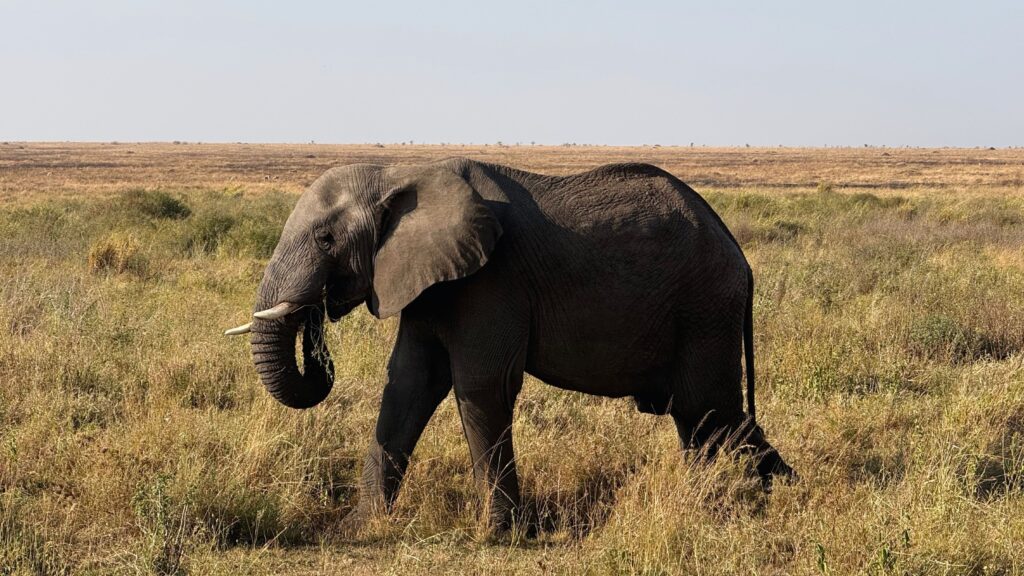
After breakfast, I met up with my second group and we drove from Mto wa Mbu to Tarangire National Park for our morning game drive. The park is famous for its elephants, and we came across several large herds.
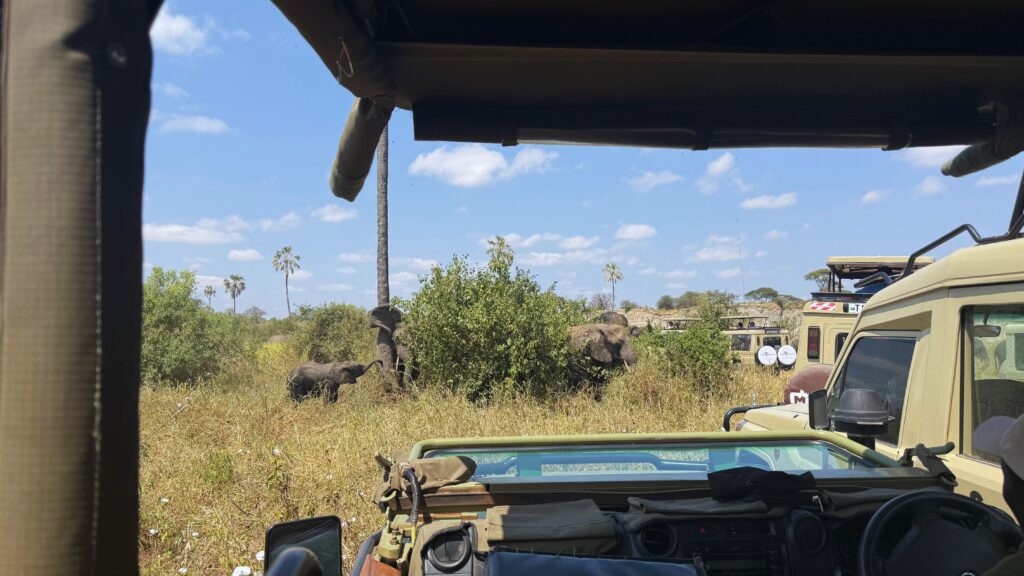
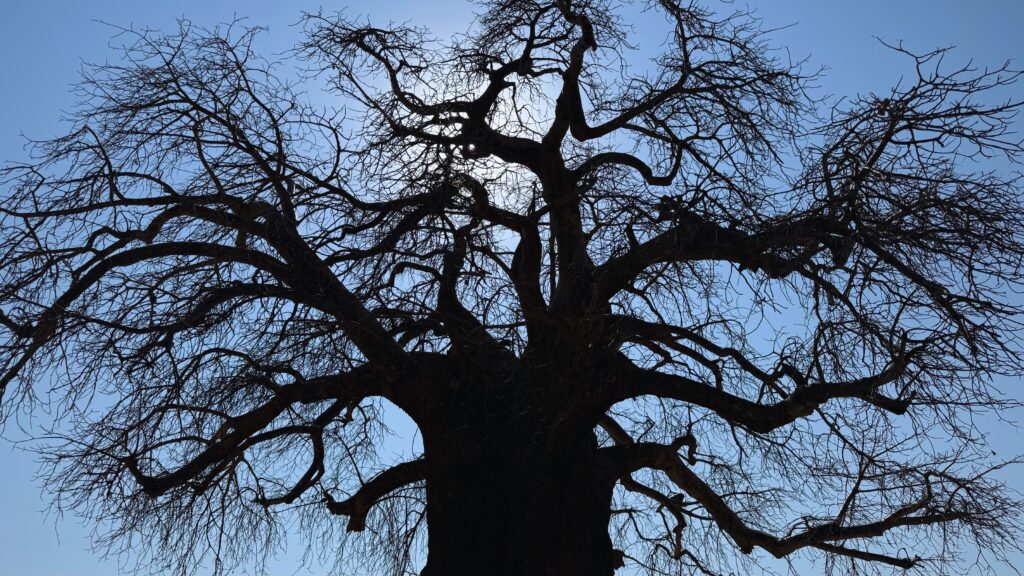
We then took a break for lunch before continuing on our afternoon game drive. We stopped by what we were told was the largest baobab tree in the park for some pictures before continuing our game drive. These unusual trees can store large amounts of water in their trunks, allowing them to survive long dry periods. Some can live thousands of years!
We didn’t see much for a while. Then, suddenly, the radios started going off about a potential lion sighting. Our driver sped toward the location, and we soon found dozens of safari vehicles surrounding a single lion.
Some vehicles had even driven off-road and formed a circle around the lion, essentially trapping it in place so tourists could get a better look. I know everyone was excited to see a lion, but I couldn’t help feeling bad for it.
This was probably the most uncomfortable wildlife encounter of my safari. If you’re visiting during peak safari season, roughly June through October, be prepared for some parts of the parks to get crowded around popular animal sightings.
After our afternoon game drive, we drove back to Arusha and arrived in the evening, officially wrapping up my four-day safari.
What Are the Campsites Like on a Budget Safari?
The three campsites we stayed at varied quite a bit in terms of comfort, facilities, and how close they felt to nature. Dik-Dik felt remote and wild, Simba struck a nice middle ground, and Twiga was much closer to a glamping-style experience.
Dik-Dik Campsite
Dik-Dik Camp was the most raw and bare-bones of the three. The facilities weren’t particularly well-kept, but I actually liked this campsite the most because it really felt like you’re living in the remote wilderness. We only had to share it with one other group during my stay.
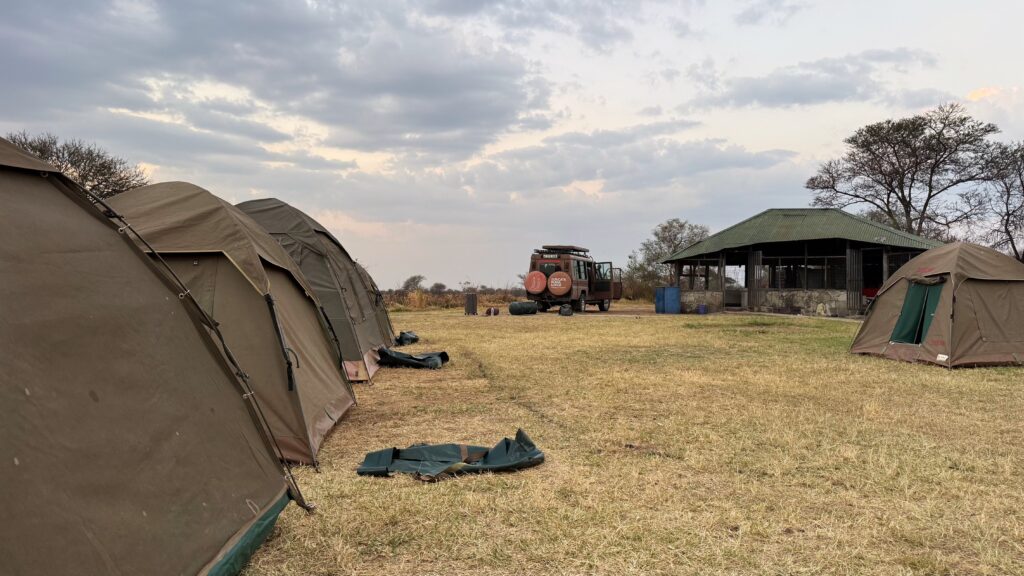
At night, I could hear animals calling in the distance and rustling around outside the tent. Combined with the lack of light pollution, it felt like the closest I got to actually sleeping in the wilderness.
Simba Campsite
Simba Camp was more of a middle ground. The facilities were clean and well-maintained, and the campsite was fairly busy without feeling overwhelmingly crowded. Wildlife also wandered through the campsite, with zebras and elephants sometimes just a few yards away.
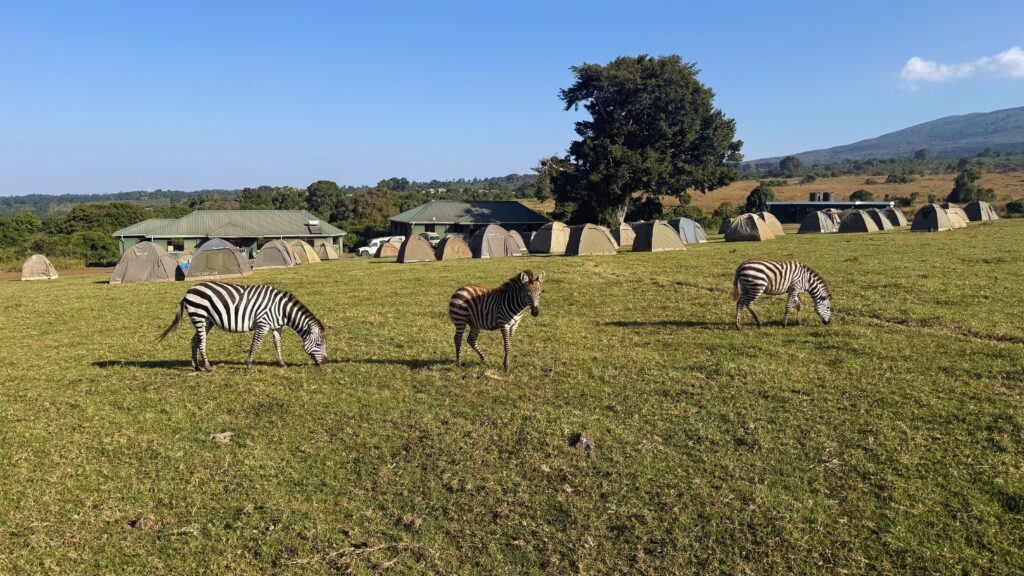
Be aware that Simba sits on the Ngorongoro Crater rim at high altitude, so it gets surprisingly cold at night and in the early morning. I definitely wasn’t expecting to be bundled up in layers while camping in Tanzania.
Twiga Campsite
Twiga Camp felt the least like traditional camping. It’s located in Mto wa Mbu town, outside the national parks, with tents set up on a manicured lawn surrounded by lodge-style facilities. It was also the most crowded of the three.
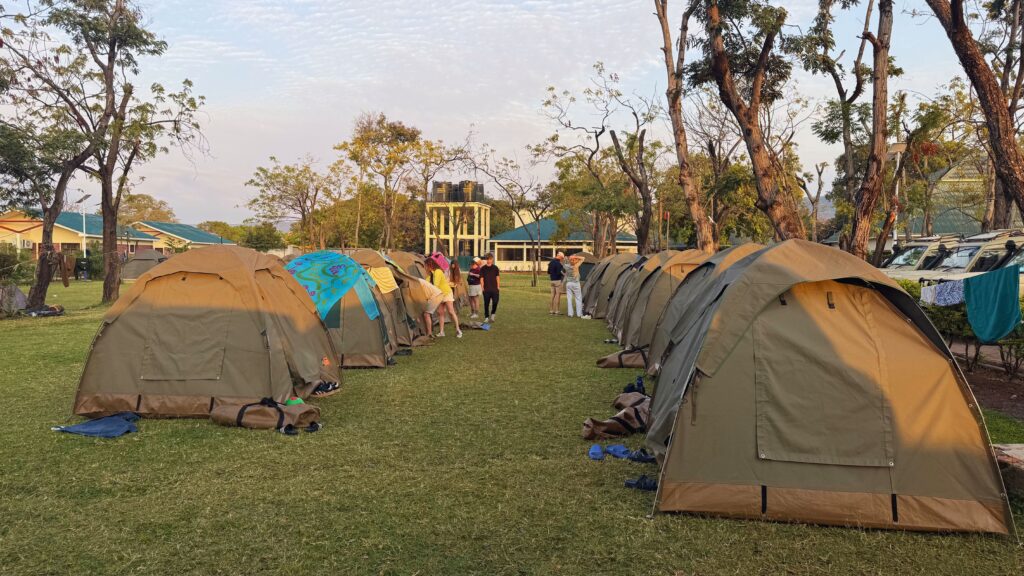
Twiga has the best amenities out of the three, with a store, swimming pool, and the biggest and cleanest bathrooms. It was also the only one to have Wi-Fi, though the connection wasn’t very strong. If you’re looking for a comfortable camping experience, you’ll probably like this one the most.
My Experience With Suricata Safaris: An Honest Review
My experience with Suricata Safaris was mixed. If you only care about the actual safari experience, I had a good time and would consider recommending them. If you’re looking for polished communication, smooth logistics, and strong customer service, my experience was less positive.
Want to search for other safari operators? Take a look at my full planning guide.
The Good
The actual safari was the strongest part of the experience. The game drives were fantastic, we saw a lot of wildlife, and the food was better than I expected for a budget camping safari.
I had two different guides during the trip, and both were knowledgeable about the parks and the animals we encountered. They answered our questions and shared interesting information throughout the game drives, which added a lot to the experience.
The Bad
I had two main issues with the company. The first was poor communication leading up to the safari. I had difficulty arranging an airport transfer, and I was told that my safari briefing would take place at 15:30. When nobody showed up, I sent multiple messages but didn’t get a response. Hours passed before someone finally arrived at 18:30.
That said, your experience may depend heavily on which agent you get. I spoke with other travelers who booked through Suricata, and they told me their agents were very responsive.
The second issue was the pressure to leave reviews. During a break at the Ngorongoro Crater, my guide pulled out a QR code for us to scan and then monitored us to make sure we were actually writing a review for him. Later, he checked TripAdvisor to see who had actually posted a review and even told one person, “You forgot to mention my name.”
When he noticed that I still hadn’t left a review, he aggressively pushed me to do it. I told him I would write one later, but he questioned why I was waiting and pointed out that everyone else had already left a review.
I found the whole situation uncomfortable. I prefer to write reviews after I’ve finished an experience and had time to think about it, rather than while I’m still on the tour with the person being reviewed. I understand that there may be some sort of incentive behind the reviews, but the whole thing just left a sour taste in my mouth.
My Final Thoughts
Despite the issues I had with communication and customer service, I still got the classic African safari experience I had imagined before the trip. However, I wouldn’t overlook the problems I encountered outside of the game drives. The safari itself may be solid, but the experience dealing with the company wasn’t nearly as smooth.
What to Read Next: In-Depth East Africa Travel Guides
Planning an East Africa trip? These guides cover the itinerary, costs, and biggest experiences from my 5-week journey:
- How to Book a Budget Tanzania Safari: Complete Cost & Planning Guide: Learn how to compare safari operators, choose a route, and plan a budget-friendly Tanzania safari.
- 7-Day Lemosho Route: My Experience Climbing Kilimanjaro with Gladys Adventures: Follow my 7-day Lemosho Route experience, from the first day on the mountain through reaching Uhuru Peak.
- Kilimanjaro Cost Breakdown: How I Spent $2,908 on the Lemosho Route: See exactly what I paid for the trek, including the tour, tips, gear rental, insurance, and other expenses.
- 5-Week East Africa Itinerary: Ethiopia, Rwanda, Uganda, Tanzania & Kenya: See how I structured 35 days across five countries, including gorilla trekking, Kilimanjaro, a Tanzania safari, Zanzibar, and Ethiopia.
- How Much Does an East Africa Trip Cost? My Full $9,503 Budget Breakdown: See exactly where my money went, from tours and hotels to flights, food, transportation, visas, and tips.
Frequently Asked Questions
How much does a 4-day Tanzania budget safari cost?
I spent $800 on the four-day safari itself and $950 total after tips and incidentals. My safari package included park fees, transportation, meals, camping equipment, campsite stays, and pre- and post-safari hotel nights. Your total cost will depend on the tour operator, itinerary, accommodation, and what is included.
Is a budget camping safari in Tanzania worth it?
For me, yes. The camping was basic, but I still had great game drives and saw tons of wildlife. The main trade-off is that budget group safaris come with less flexibility. You have a set itinerary, shared transportation, and less control over the schedule.
What are the downsides of a group safari?
The biggest downside for me was the lack of flexibility. You have to follow the group’s schedule, so you can’t always stay longer at an animal sighting or change the itinerary based on what you want to see. You may also have to switch vehicles or groups during the trip. In exchange, group safaris are significantly cheaper than private safaris.
How many people are usually in a group safari vehicle?
It depends on the operator and vehicle, but my groups had five and six travelers, including me. Everyone rotated seats each day so that each person had a chance to sit in the better viewing positions.
What is camping like on a Tanzania safari?
The camping is fairly basic, although the quality of the campsites can vary. Tents are usually already set up for you, and the safari chef prepares your meals. Some campsites have clean bathrooms, showers, and other amenities, while others are much more bare-bones. At some campsites, you may also have wildlife roaming nearby.
How cold does it get on a Tanzania safari?
It can get surprisingly cold at night, especially around the Ngorongoro Crater Rim. I wasn’t expecting to need multiple layers while camping in Tanzania, so I’d definitely pack warm clothes if your itinerary includes camping at higher elevations.
Which parks should I visit on a 4-day Tanzania safari?
For my four-day safari, I visited the Serengeti, Ngorongoro Crater, and Tarangire. I liked the variety between the three parks. The Serengeti was the highlight for big cats, Ngorongoro had the rare black rhinos, and Tarangire was particularly good for elephants.
Which parks should I visit if I only have three days?
If you only have three days, I’d focus on the Serengeti and Ngorongoro Crater. These were the two parks that stood out most to me, especially if seeing big cats and a wide variety of wildlife is your priority.
Is Lake Manyara National Park worth visiting?
For a short safari, I’d skip Lake Manyara and prioritize the Serengeti, Ngorongoro Crater, and Tarangire if you have time. Lake Manyara is a compact park with diverse habitats and wildlife, but I don’t think it adds as much to a short itinerary as the other three parks. The famous tree-climbing lions are also very rare to see.
What animals can you expect to see on a Tanzania safari?
Tanzania has incredibly diverse wildlife, and the animals you see will depend on the parks you visit and the time of year. The main highlights of my safari were big cats in the Serengeti, black rhinos in the Ngorongoro Crater, and large elephant herds in Tarangire. I also saw hippos, zebras, wildebeest, buffalos, giraffes, flamingos, and plenty of birds.