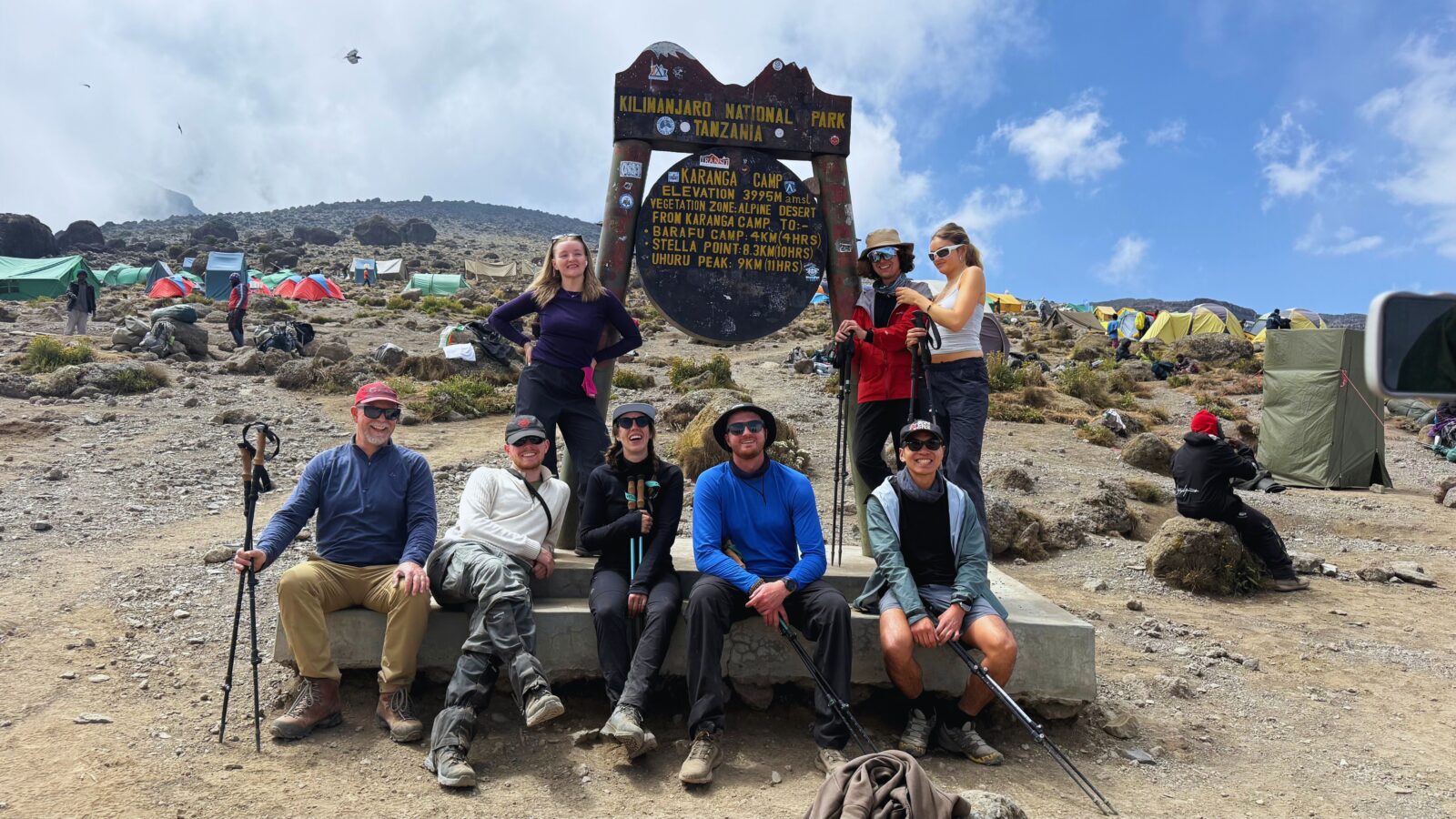
Climbing Kilimanjaro has been a dream of mine for years. I was supposed to climb it with my sister in July 2020, but then COVID hit. Six years later, I finally got to make it happen. My sister couldn’t join me this time, so I was determined to do it for both of us.
I chose the 7-day Lemosho Route with Gladys Adventures. Over the course of the trek, we went through rainforest, moorland, and alpine desert before reaching Uhuru Peak.
Here’s what the experience was actually like, from the food to the campsites to the altitude. At the end, I’ll also share my honest thoughts on Gladys Adventures.
Table of Contents
My Kilimanjaro Trek At a Glance
- 🏷️ Cost:$2,908 (budget breakdown post)
- 🥾 Route: 7-day Lemosho
- 👤 Group size: 8 hikers
- 👥 Crew-to-climber ratio: 4:1
- 🧭 Tour operator: Gladys Adventures
- ⛺ Accommodation: Mountain tents
- 📍 Starting point: Londorossi Gate (2,250 m / 7,380 ft)
- ⛰️ Highest point: Uhuru Peak (5,895 m / 19,341 ft)
- 🏁 Ending point: Mweka Gate (1,640 m / 5,380 ft)
Overview of the 7-Day Lemosho Route with Gladys Adventures
The 7-day Lemosho Route starts on the western side of Kilimanjaro and gradually makes its way toward Uhuru Peak.
Here’s the full itinerary, exactly as I climbed it with Gladys Adventure. The overnight elevation is what’s listed on their website. The distances and hiking times are based on my experience as tracked by my Apple Watch.
| Day | Route | Overnight Elevation | Distance | Time |
|---|---|---|---|---|
| 1 | Londorossi Gate → Mti Mkubwa Camp | 2,650 m / 8,694 ft | 5.60 km / 3.48 mi | 2h 48m |
| 2 | Shira Ridge → Shira 2 Camp | 3,810 m / 12,500 ft | 16.77 km / 10.42 mi | 8h 06m |
| 3 | Lava Tower → Barranco Camp | 3,900 m / 12,795 ft | 12.62 km / 7.84 mi | 6h 09m |
| 4 | Barranco Wall → Karanga Camp | 3,995 m / 13,160 ft | 5.38 km / 3.34 mi | 4h 16m |
| 5 | Karanga → Barafu Camp | 4,673 m / 15,331 ft | 4.18 km / 2.60 mi | 2h 51m |
| 5.5 | Barafu Camp ↔ Uhuru Peak | — | 13.49 km / 8.38 mi | 9h 41m |
| 6 | Barafu Camp → Millenium Camp | 3820 m / 12,533 ft | 4.09 km / 2.54 mi | 1h 34m |
| 7 | Millenium Camp → Mweka Gate | — | 14 km / 8.7 mi | 5h |
You summit Kilimanjaro on the fifth night of a 7-day Lemosho trek. After spending the afternoon resting at Barafu Camp, you’ll wake up around midnight, have a light meal, and start the climb in the dark. The goal is to reach Uhuru Peak around sunrise, when the temperatures are warmer, and you can see the surrounding landscape.
Planning your Kilimanjaro trek? Get these before you go.
📱 Tanzania eSIM: I used Airalo’s Africa Safari package since I was going to Tanzania, Uganda, and Kenya during my East Africa trip. If you’re just visiting Tanzania, Airalo also offers a Tanzania-specific eSIM.
🏨 Moshi hotel: Depending on your tour package, accommodation before and after the tour may or may not be included. If it isn’t, you can browse hotels in Moshi and find an option that fits your budget.
🚕 Airport pickup: Book a transfer beforehand so you don’t have to negotiate with taxi drivers or figure out transportation after a long flight. Your driver will be waiting for you when you arrive, making it one less thing to worry about.
🎟️ Other activities: If you have extra time before or after your safari, check out other activities in Moshi or Arusha to round out your trip.
Day-to-Day Breakdown of the 7-Day Lemosho Route
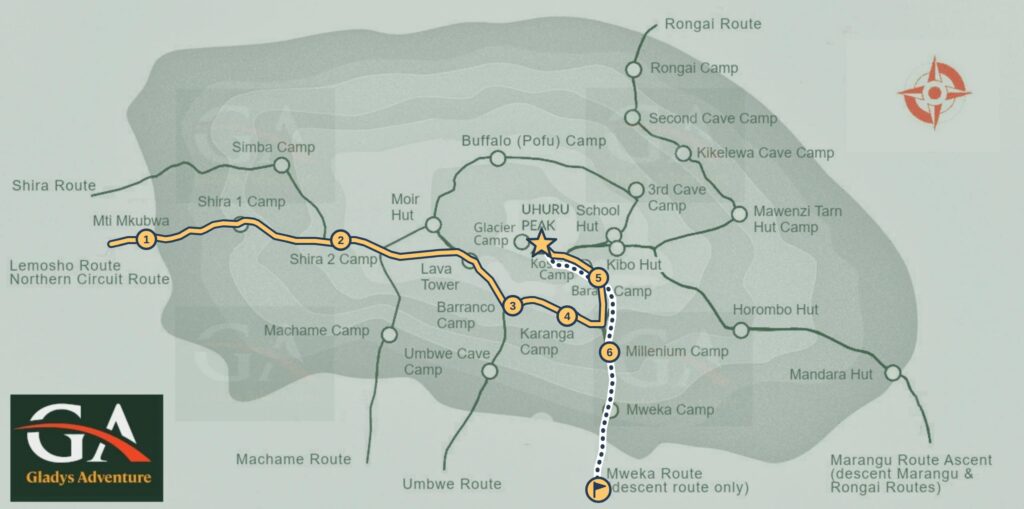
The map below is from the Gladys Adventures website, with the 7-day Lemosho Route I took overlaid on top. The solid yellow line is the ascent, while the dotted line is the descent. The numbered circles show where we slept each night.
Day 1: Londorossi Gate to Mti Mkubwa Camp
Day 1 started with a frantic rush to finish packing. I didn’t even have time for breakfast, so I showed up at the Gladys Adventures office hungry. Pro tip: pack everything the night before.
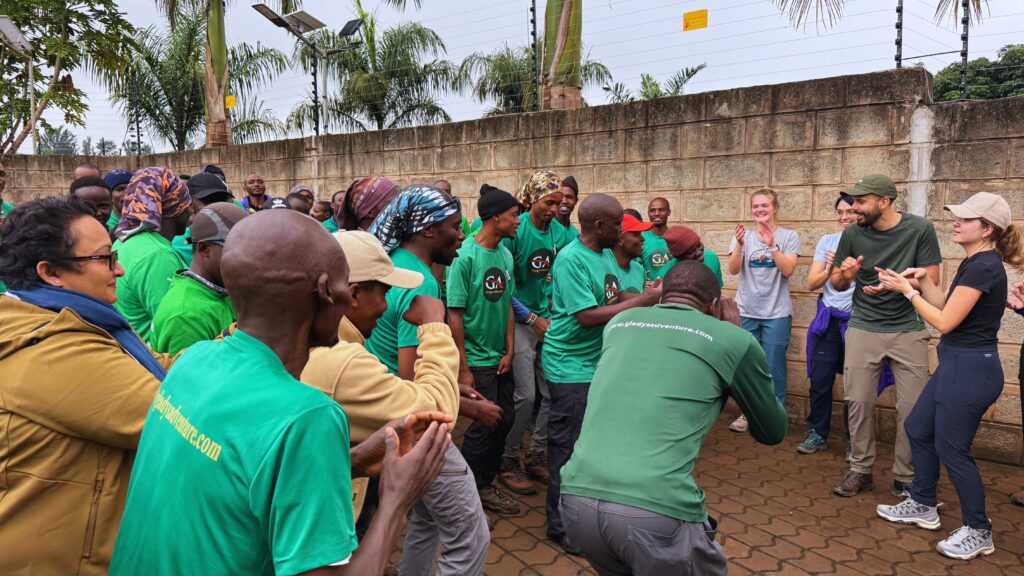
Thankfully, the rest of the day went more smoothly. At the trekking office, our mountain crew greeted us with a lively show of song and dance. It was such a fun way to start the trek and definitely set the right tone. From there, we drove several hours toward Londorossi Gate.
We ate lunch at the gate before officially beginning the trek. This was when I realized I might have been spoiled by the food on this trip. We got a proper hot meal while some other groups nearby were eating packed sandwiches. I remember thinking, “Yeah, I’m glad I’m with Gladys.”
We finally started hiking around 2:30 PM. The first thing our guide told us was pole pole, which means “slowly, slowly” in Swahili. And he wasn’t kidding. We were walking at what felt like an almost comically slow pace, especially compared to how I normally hike.
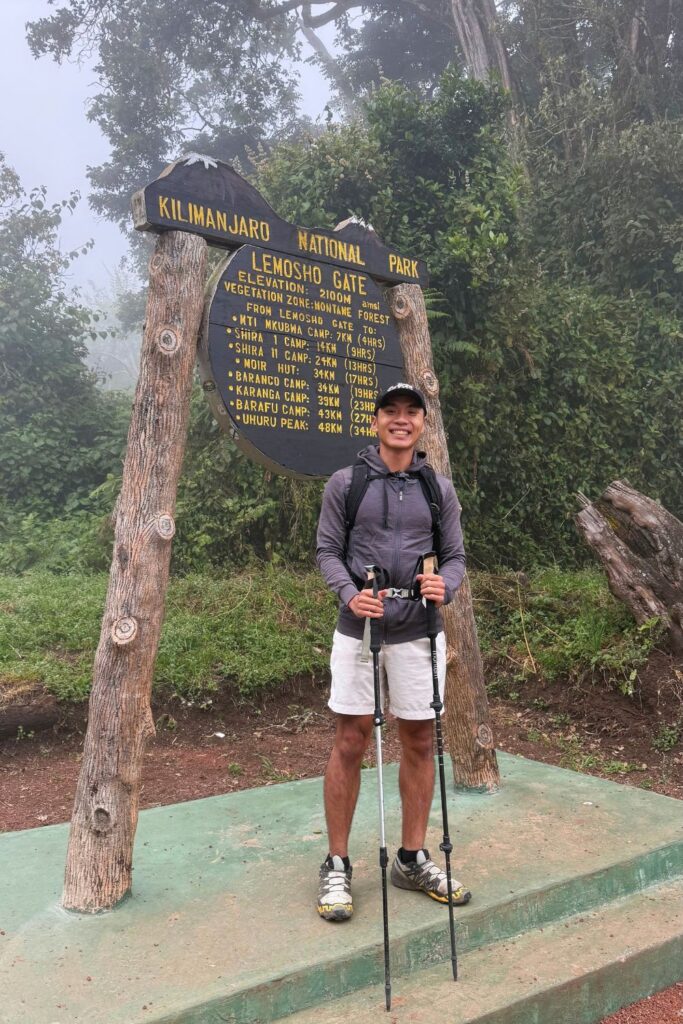
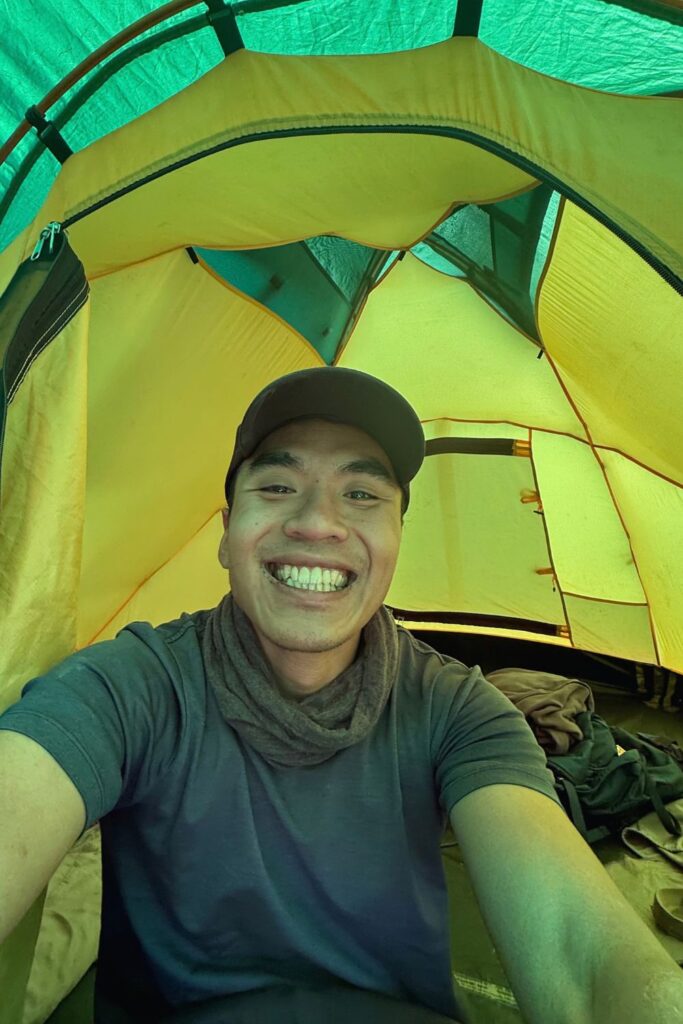
But there was a reason for it. The goal wasn’t to get to camp as quickly as possible. We had a long week ahead of us, and our bodies needed time to adjust to the altitude. Our guide kept reminding us to slow down, take our time, and conserve our energy.
Today was short and easy, but I had a feeling it was only going to get harder from here.
Day 2: Mti Mkubwa to Shira 1 to Shira 2
Today was split into two parts. The first was a steep climb up to Shira 1 Camp. On the way up, we got some live entertainment from one of the porters who played Hakuna Matata on his harmonica. It was a vibe.
We exited the rainforest and reached Shira 1 Camp before 1 PM. This is where the 8-day Lemosho Route would stop for the day, but after having lunch, we kept going. We still had another 6.2 miles (10 km) to cover before reaching our camp.
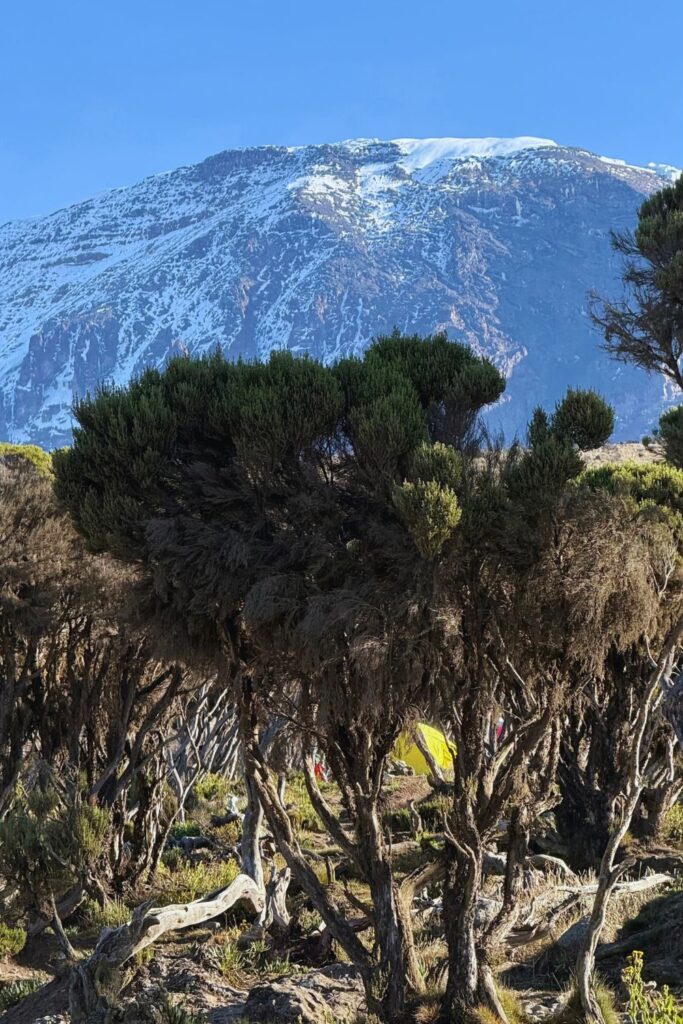
The landscape changed to heath/moorland, and the skies eventually cleared. We got our first good view of Mount Kilimanjaro. It felt surreal knowing that we’d be standing at the summit in just a few days.
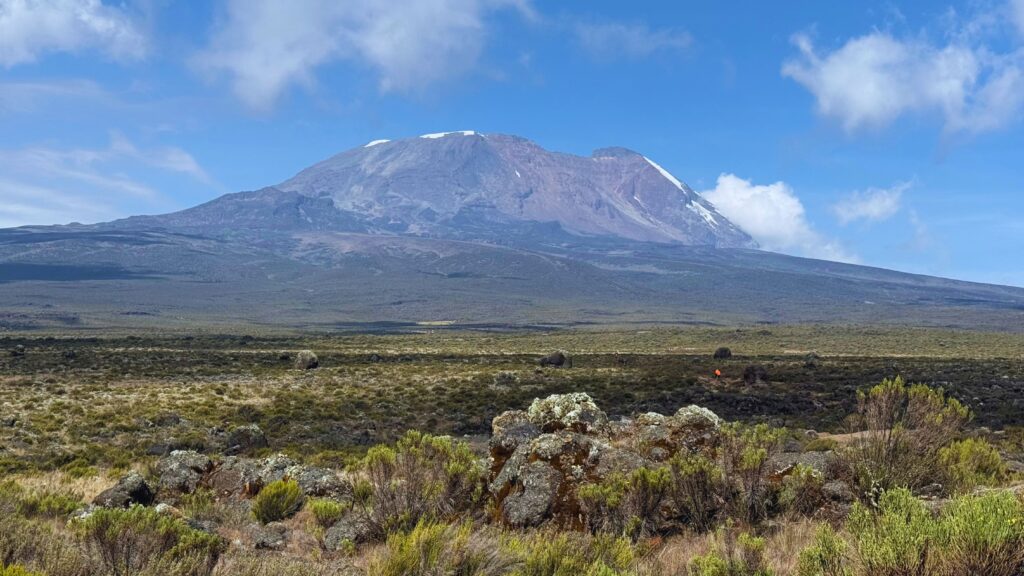
We finally arrived at camp around 5 PM, and I was still feeling good overall. The elevation hadn’t gotten to me yet (knock on wood).
After dinner, I spent a few minutes looking at the stars. There was almost no light pollution, and the view was incredible. That was probably the first moment when it really hit me: I’m actually climbing Kilimanjaro. I’m really out here camping for a week with the goal of standing on the summit of Africa’s highest peak.
The past two days had moved so quickly that I hadn’t really stopped to appreciate what I was doing. Looking up at the stars that night, I finally had a chance to slow down and take it all in.
Day 3: Shira 2 to Lava Tower to Barranco Camp
Today started off super cold, but it warmed up pretty quickly once we got moving. The first section was a gradual uphill climb to Lava Tower, a 4,630-meter (15,190-foot) rock formation and one of the highest points we’d reach before summit day.
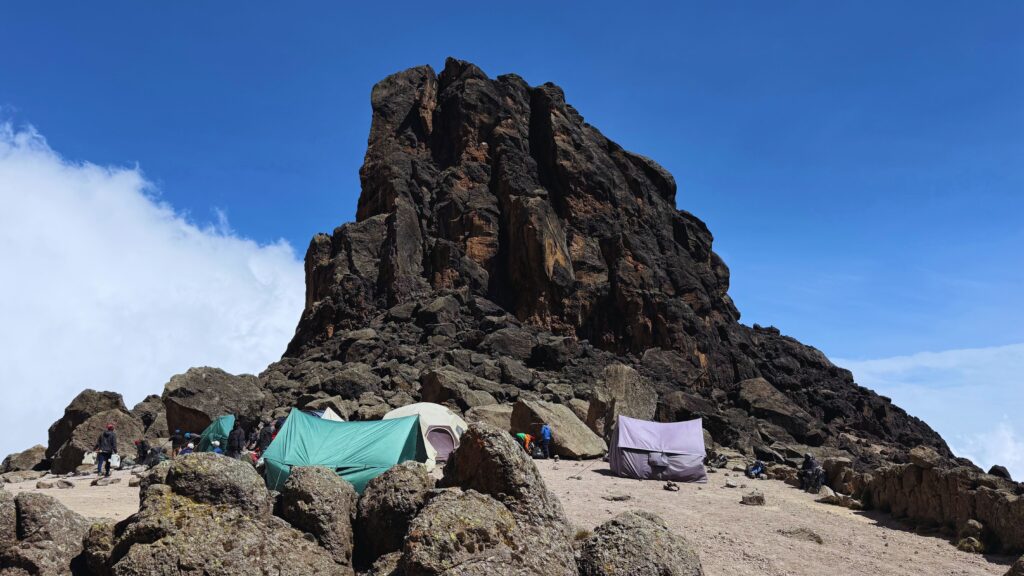
I was breathing a little harder than I had been the previous day, but nothing too bad. As we got closer to Lava Tower, I could see the campsite ahead. I remember thinking, No more pole pole. Let’s run there. We were so close. It took some serious self-control, but I managed to hold back.
The guides had warned us that we might start feeling the effects of the elevation at Lava Tower, especially headaches or nausea. Thankfully, I didn’t have either. My blood oxygen reading was 94, which was actually my highest reading so far, so I’ll take the win.
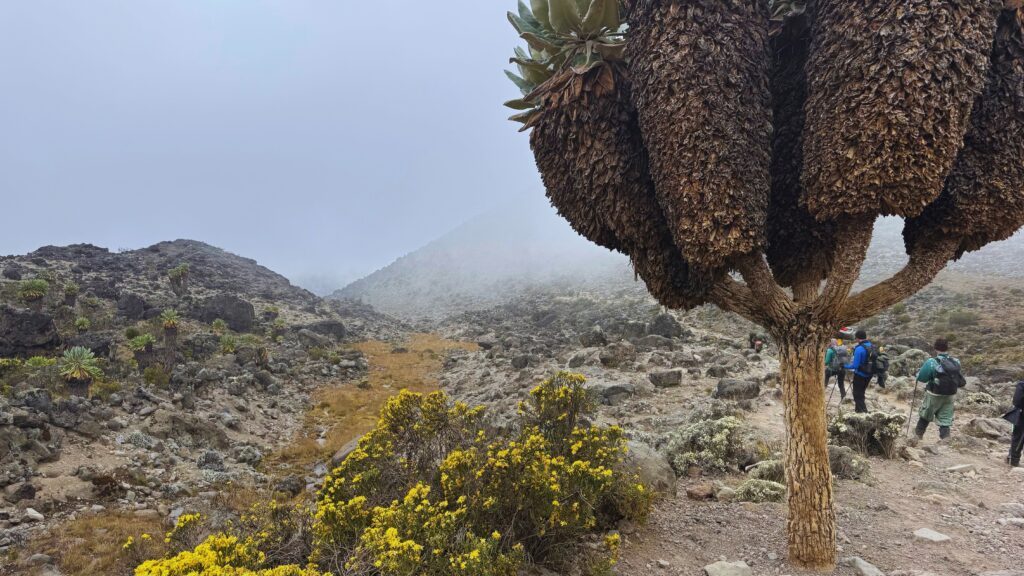
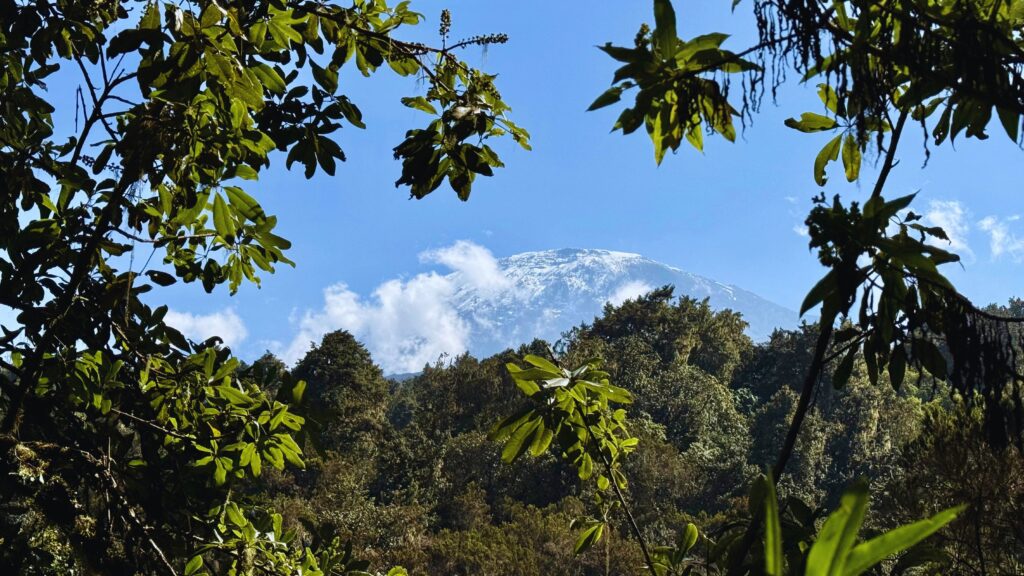
After lunch, we had a shorter and easier hike down to Barranco Camp. The landscape had changed to alpine desert. We passed through a misty section filled with these strange-looking trees called giant groundsels. This was my favorite scenery so far; it felt like we were hiking on another planet.
That evening, we spent some time hanging out with the guides. One of the guides, Emmanuel, told us about how his family celebrates Christmas. He said that he and his relatives would return to their hometown for a big celebration, where they sacrifice a goat and drink lots of banana wine.
The guides also talked about how much Kilimanjaro has changed over the years. The mountain has gotten warmer, and there are far fewer glaciers than there used to be. Hiking Kilimanjaro has also become much more accessible. There weren’t designated campsites in the past, so hikers would simply find a place to stop and rest. There were fewer guides and porters, and the experience was much less comfortable than it is today.
I really appreciated hearing these stories from the people who live and breathe Kilimanjaro. Hopefully, we’ll hear more over the next few days.
Day 4: Barranco Camp to Barranco Wall to Karanga Camp
I can’t believe we’re already at the halfway point of the trek. The past two days have been tiring, hiking pretty much all day. Luckily, today’s a short day.
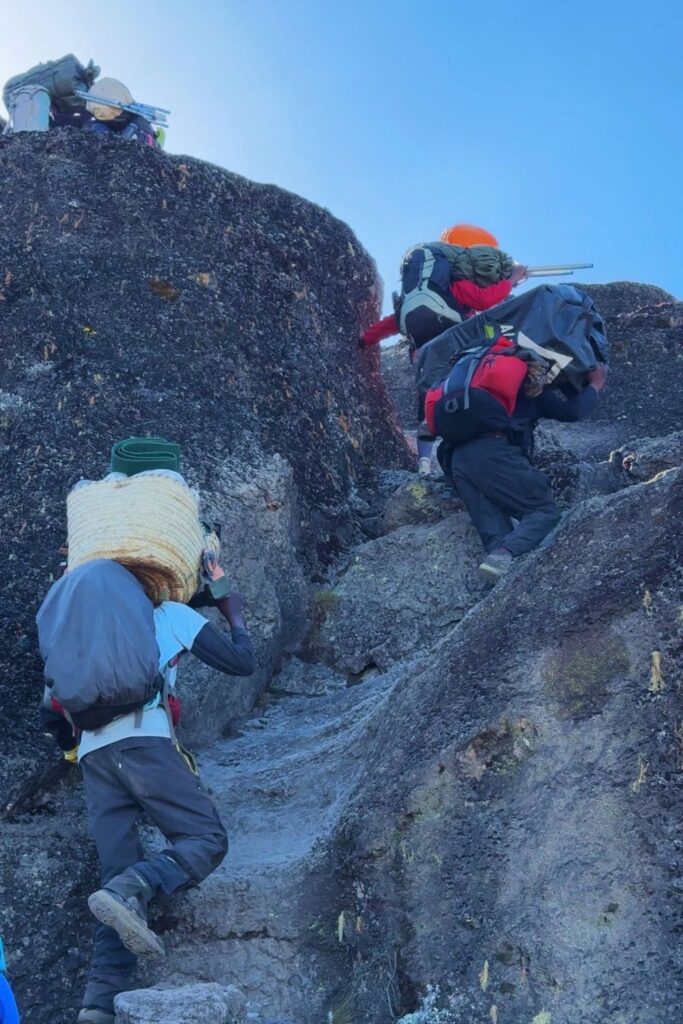
We only had a morning climb up Barranco Wall before reaching Karanga Camp. This ended up being my favorite section of the trek so far. I liked how the trail was a little more technical than what we’d done before, with some rock scrambling.
What really impressed me was seeing the porters navigate the same rocks while carrying heavy packs on their backs. They’d pass us carrying loads of supplies, often moving faster than we were. It really put into perspective how physically demanding their jobs are.
At one point, we saw a helicopter come in to airlift someone off the mountain. It landed for just a few minutes before taking off again. It served as a sobering reminder that altitude sickness is real and that things can change quickly on the mountain.
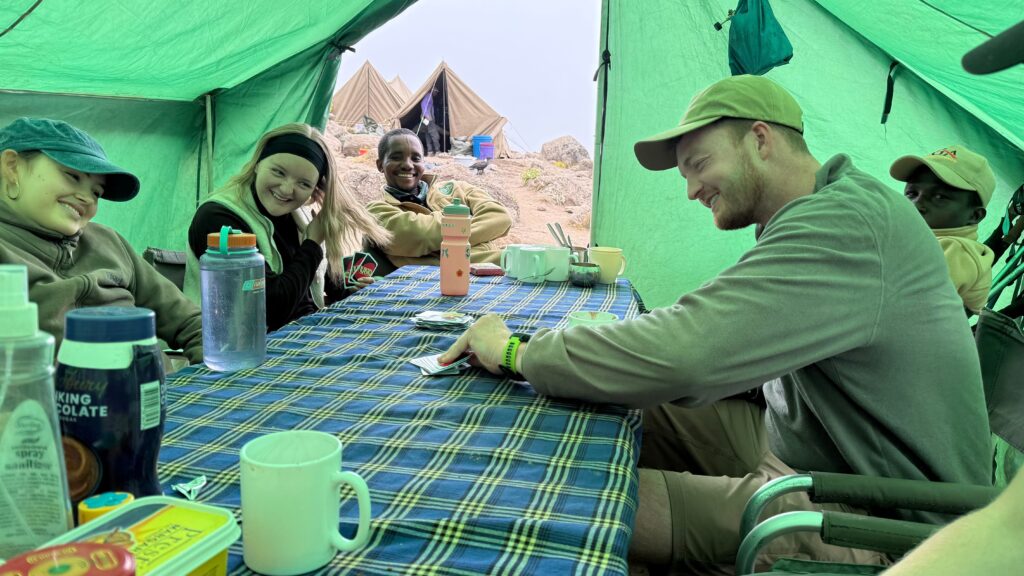
After reaching camp, we had lunch and then enjoyed the rest of the afternoon to ourselves. I spent some time playing UNO with some of the group and the guides. The actual game wasn’t the entertaining part; it was all the banter surrounding it.
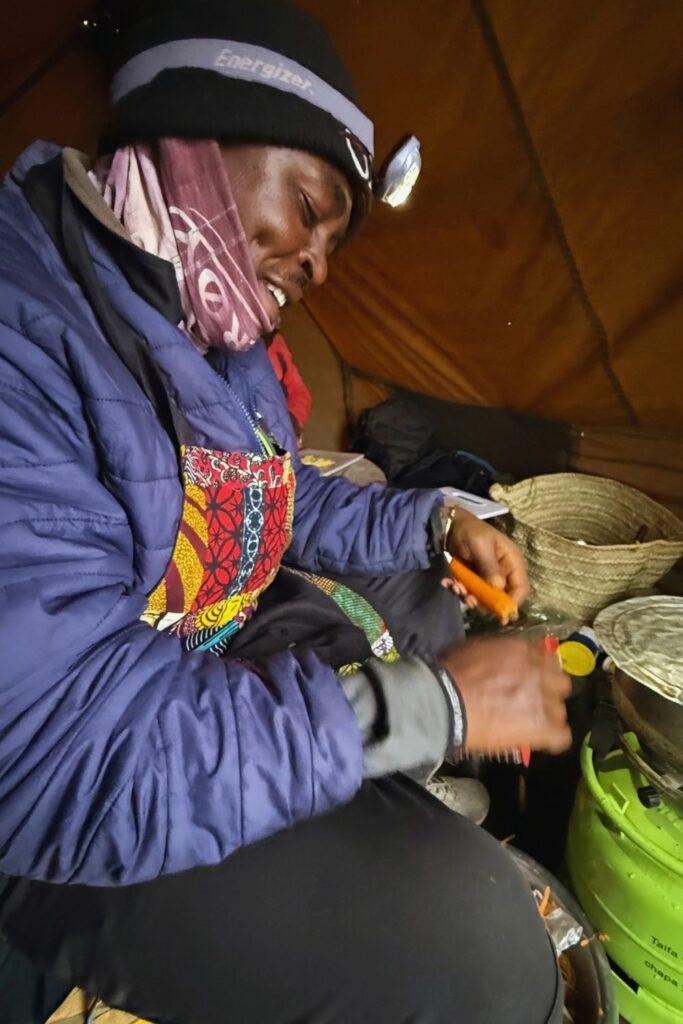
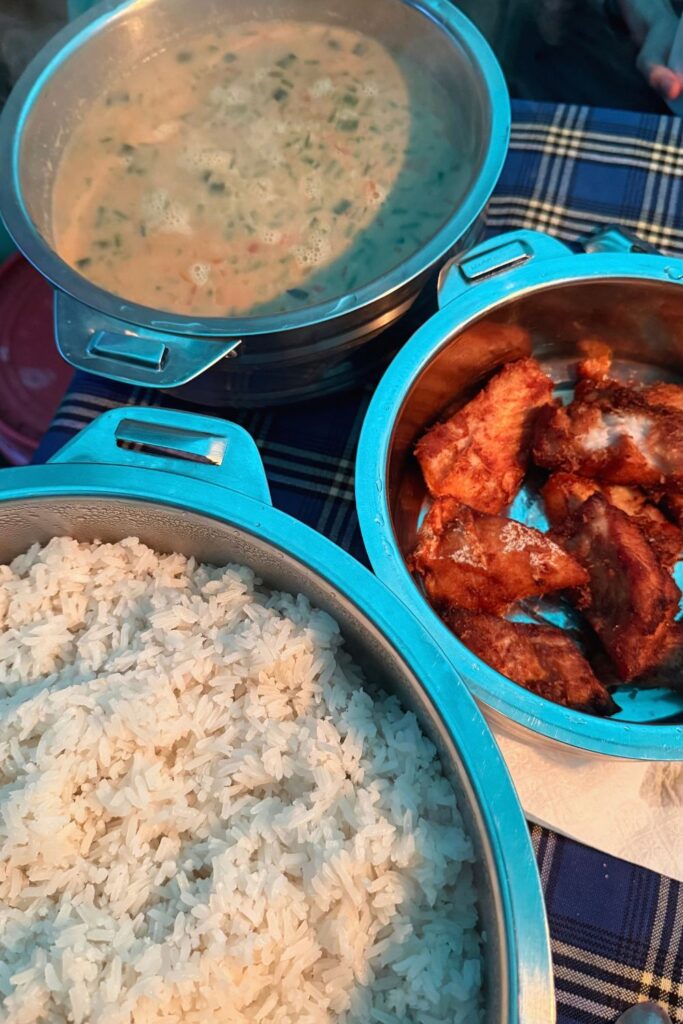
Later, we watched Chef Peter work his magic in the kitchen. Seeing the cooking operation up close gave me a much greater appreciation for how hard the cooks work. They’re up early preparing breakfast, then carrying everything they need to set up lunch, taking it all down, hiking to the next campsite, and doing it all over again for dinner. Doing that for seven days straight must take serious effort.
It’s crazy to think that tomorrow night is summit night. On one hand, I’m nervous. It’s going to be freezing, and I have no idea how my body is going to handle the altitude once we get even higher. On the other hand, the past few days have given me some reassurance. I’ve been feeling completely fine at altitude so far. I even hiked today’s section in a T-shirt and shorts, so I was choosing to believe I’ll be fine with the cold. Fingers crossed.
Day 5: Karanga to Barafu Camp
I woke up this morning to some of the best views from camp so far. We were up in the clouds, with a clear view of Mount Kilimanjaro in the distance.
Since we had some time this morning, we were given a proper introduction to the entire mountain crew. In total, there were 31 of them supporting the eight of us, which works out to a ~4:1 ratio.
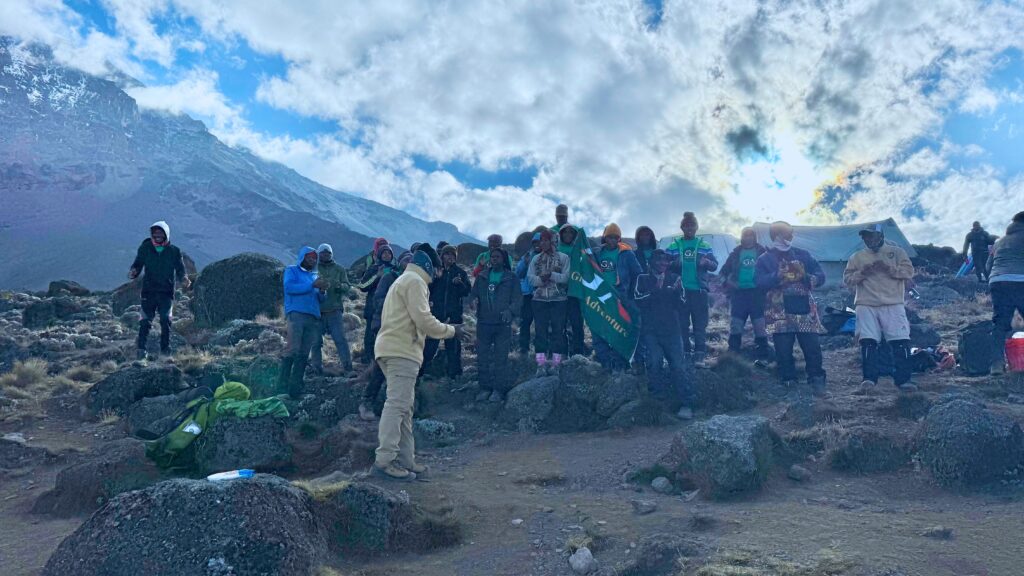
The porters are the backbone of the whole operation. They carry everything except our day bags, set up and break down our tents, and even clean our boots after we finish hiking each day. At this point, I was starting to understand why people describe a guided Kilimanjaro trek as a surprisingly luxurious camping experience.
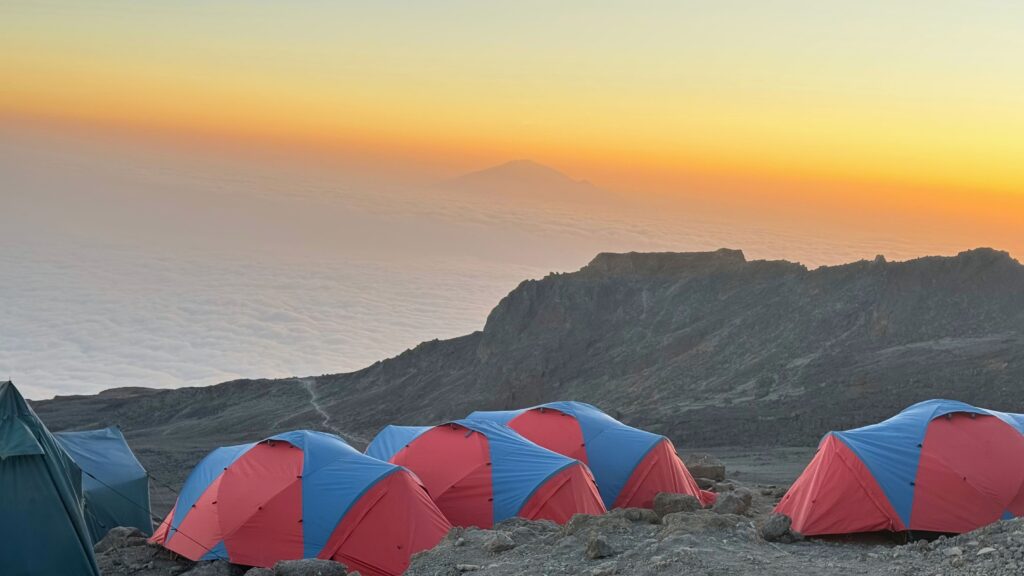
Today, we had a short but steep ascent to Barafu Camp, our base camp for the summit push. Once we reached camp, we got briefed on what to expect tonight.
I asked Erick, the lead guide, if people cry when they reach the summit. He said lots of people do, and he thought I would too. I didn’t think I would. I’ve summited plenty of other mountains before, and I never really felt an emotional rush afterward. But who knows? Maybe Kilimanjaro would be different.
We rested for the rest of the day in preparation for the big night. I couldn’t fall asleep, but it still felt good to lie down. Before I knew it, it was time.
Summit Night: Barafu Camp to Uhuru Peak
We got woken up at 11 PM, had a light breakfast, and started the big climb. The guides told us the hike from Barafu Camp to Uhuru Peak would take about 5–7 hours on average. Wow. Seven hours of hiking in complete darkness in the freezing temperature. That’s going to be a challenge.
During the hike, we saw two people who had to turn back. One needed an oxygen tank, while another was drunk and was swaying as he walked. Not exactly something you want to see on your way to the summit.
Thankfully, the elevation wasn’t much of an issue for me. It got harder to breathe as we climbed higher, but other than that, I felt fine. My only low point was the mental struggle when we were about a mile from Stella Point. I remembered thinking, Man… this trail just keeps going. Can we be done already?
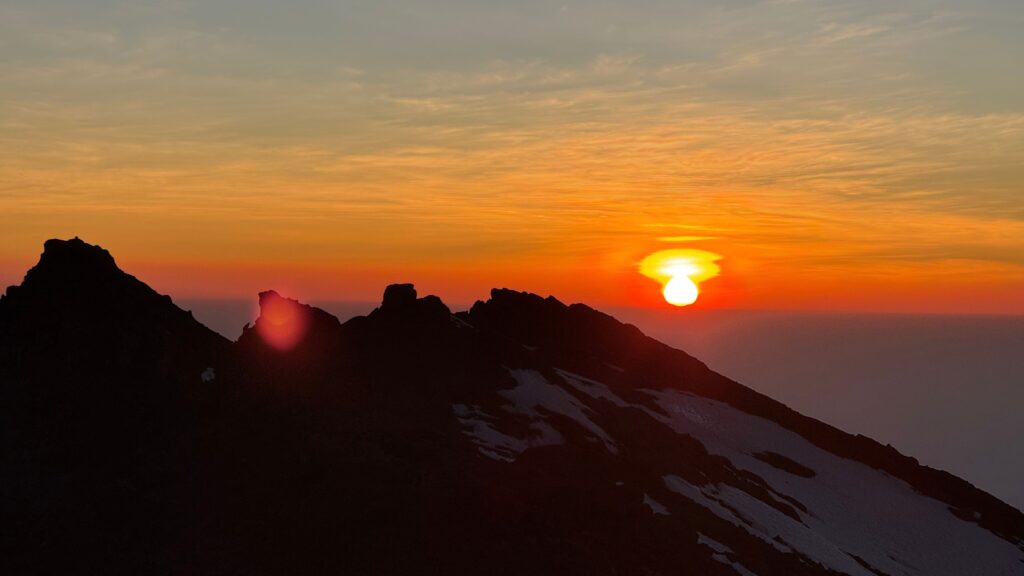
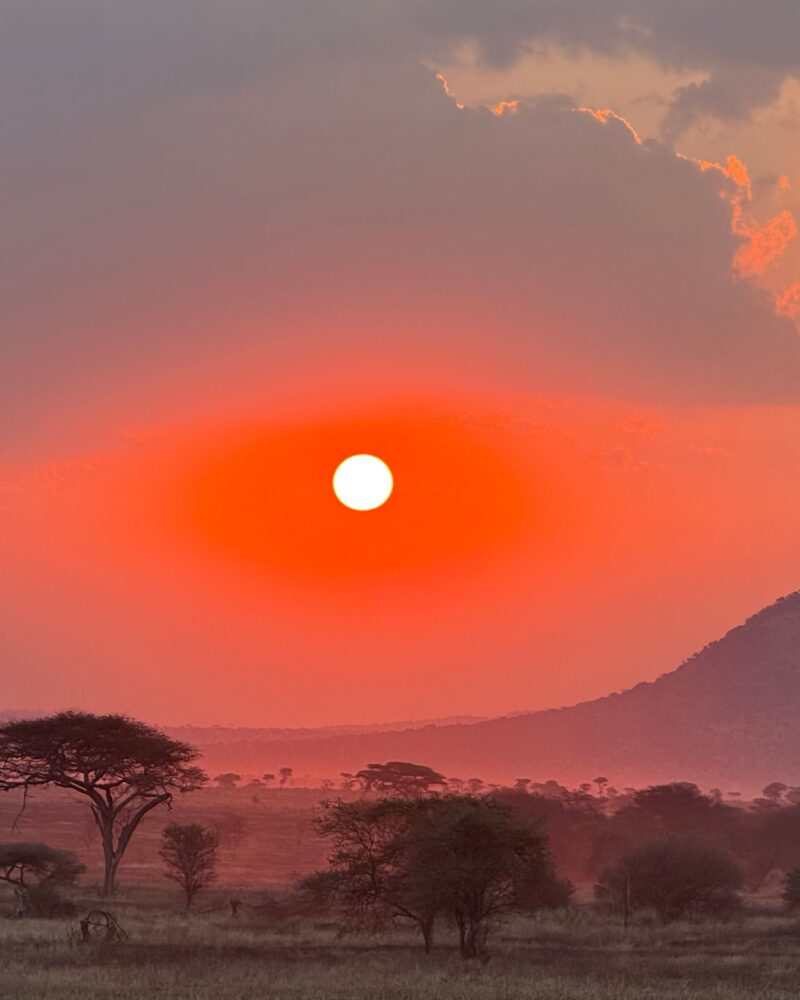
But then I started seeing the sun come up, and that gave me something to focus on. We got to see the first sliver of sunlight before watching the sun slowly rise into a full circle over the horizon.
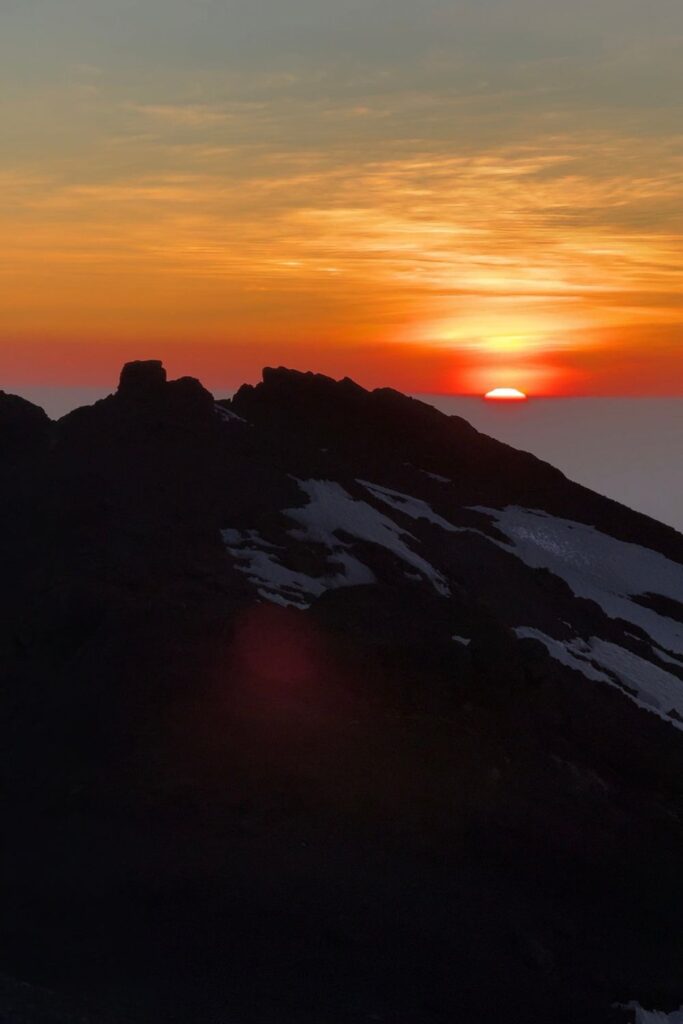
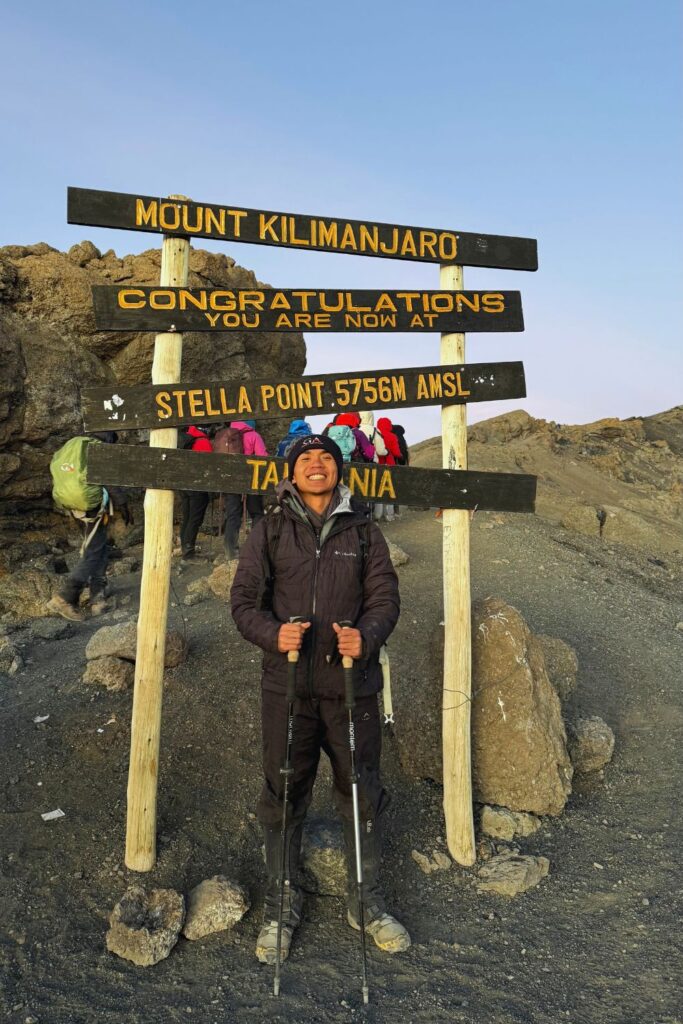
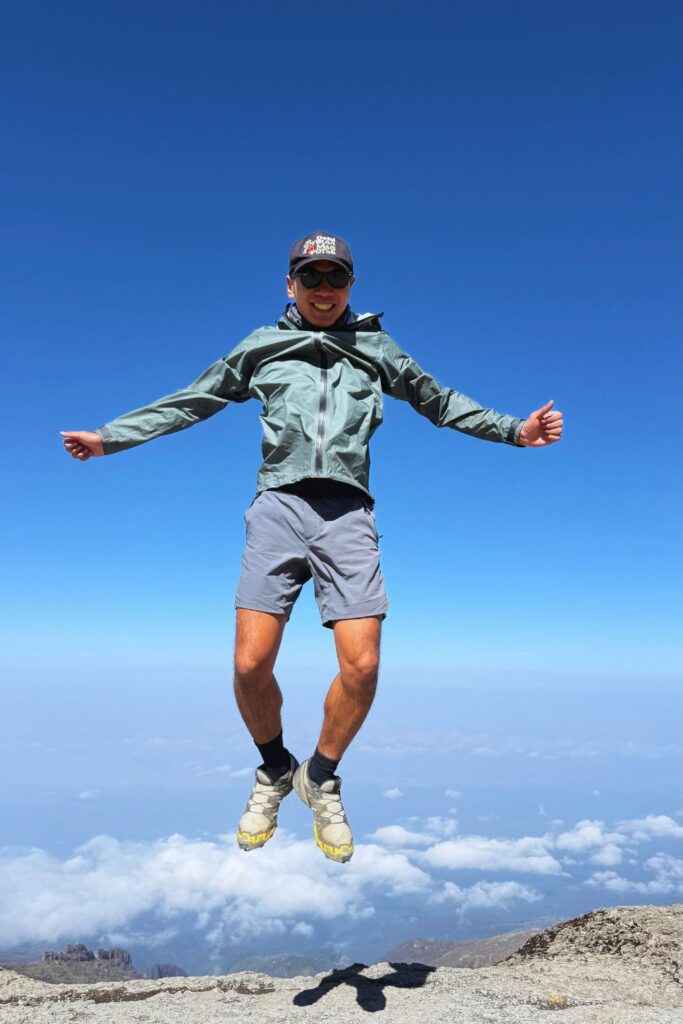
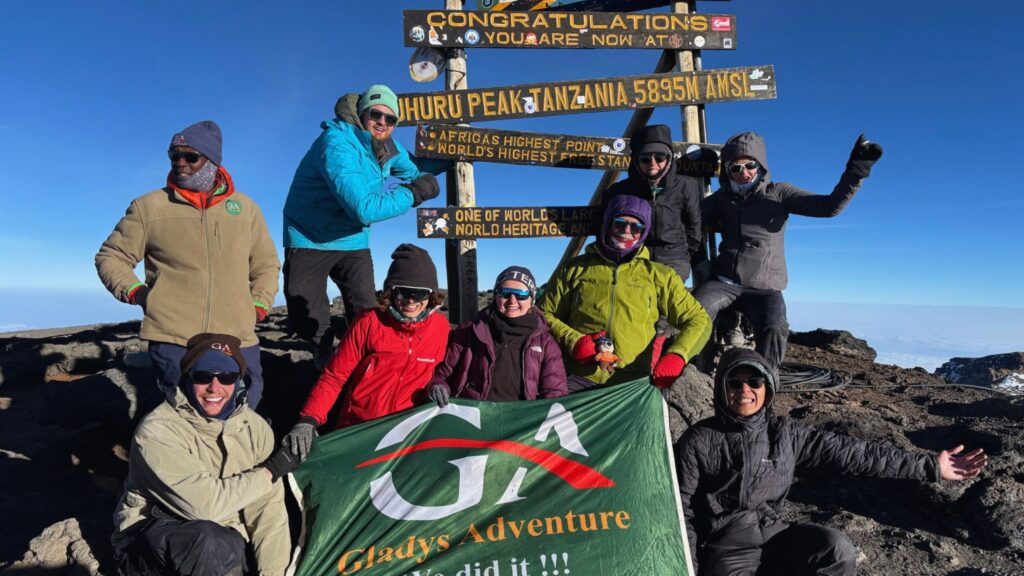
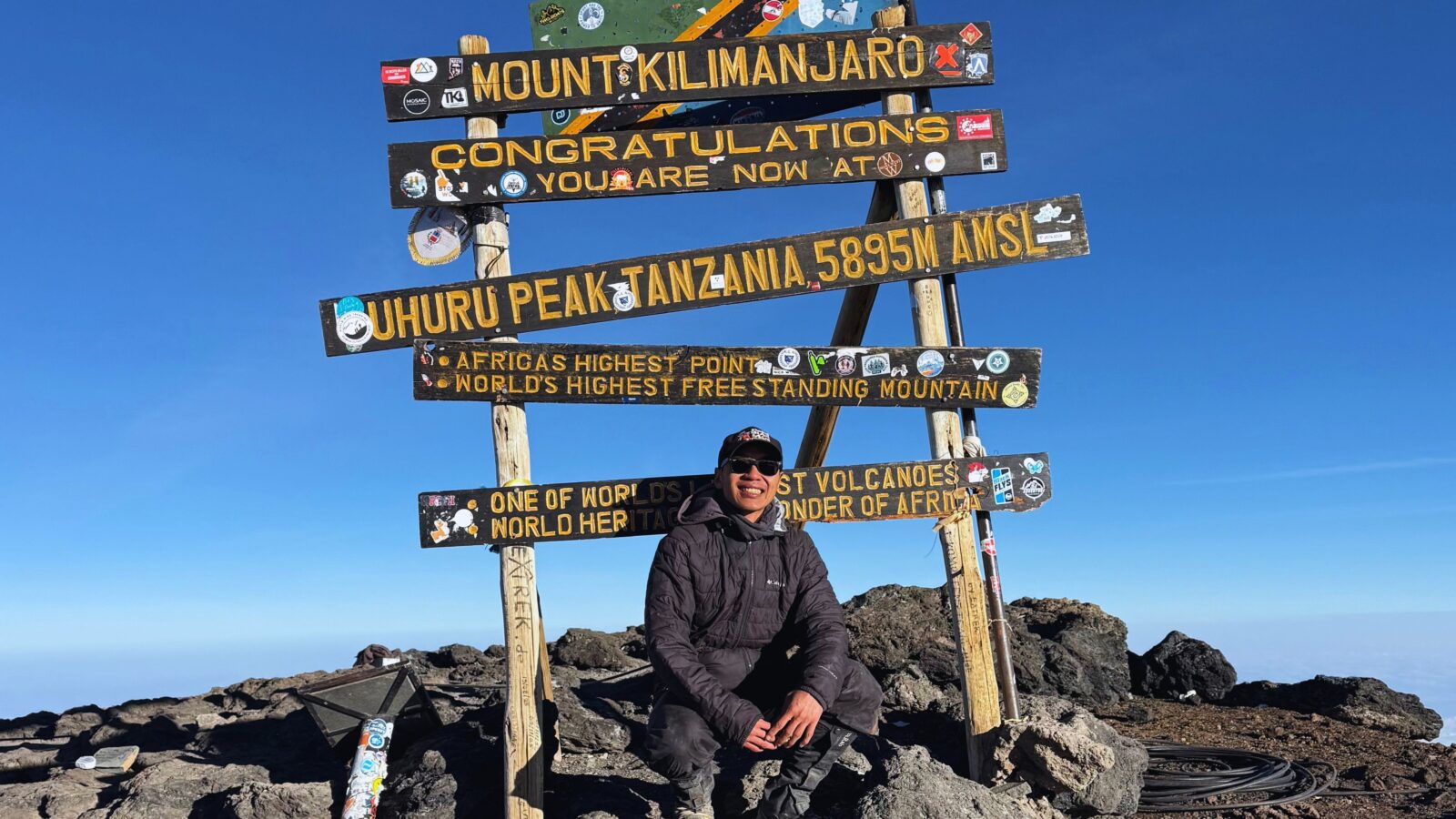
That sunrise gave me a second wind. I was smiling the entire way from Stella Point to Uhuru Peak. After seven hours, we finally reached the summit. Remember the previous day how I said I wouldn’t feel anything? Well, Kili was different.
I didn’t cry, but I definitely felt emotional. It was a combination of a few things. First, there was the sheer awe of standing on the roof of Africa. Like, we’re on top of the highest free-standing mountain in the world. How fucking cool is that?
Then there was the personal effort. I was proud of all the work I’d put in over the past week to get to this point.
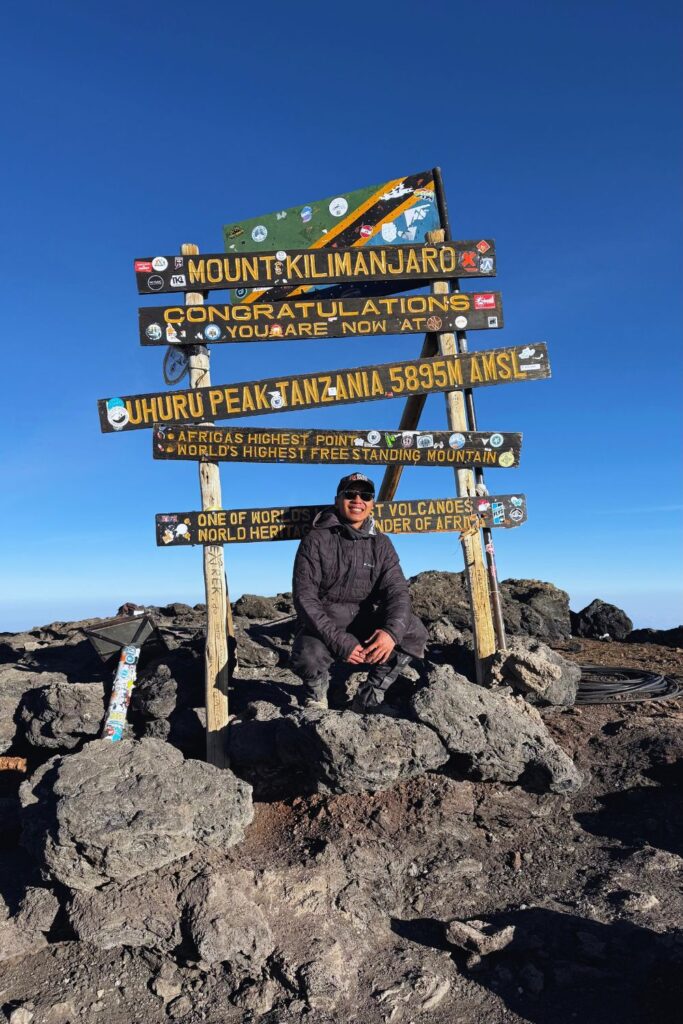
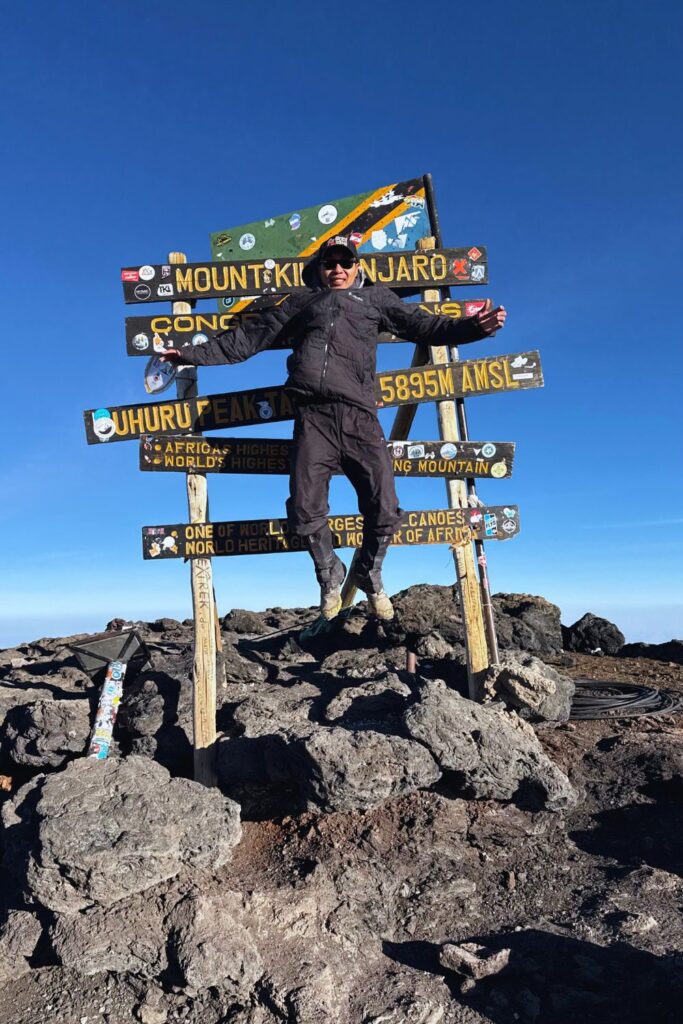
And then there was the camaraderie with the rest of the group. All eight of us summited. We were hugging and congratulating each other on a job well done. Throughout the climb, everyone had been checking in on each other and asking how everyone was doing. We’ve really grown to be one team during this climb.
Lastly, I also couldn’t have done it without the guides, cooks, and porters supporting us every step of the way. Reaching the summit felt like a shared accomplishment.
Day 6: Barafu Camp to Millenium Camp
We only spent a few minutes at Uhuru Peak before heading back down. It was one of those gravelly descents where you really had to watch where you were stepping. I figured it would be easier to run down and work with the momentum rather than walk, so that’s what I did.
We got back to Barafu Camp around 10:30 AM, but the day wasn’t over yet. We still had another section ahead of us. We were given two options: a shorter hike to Millenium Upper Camp or a longer hike to Mweka Camp. Given the intense summit push, our group couldn’t be bothered to hike much more, so we chose the shorter option.
After lunch, we trekked another 2.6 miles to our campsite. We arrived around 1:30 PM and got some much-needed (and much-earned) rest for the rest of the day.
Day 7: Millenium Camp to Mweka Gate
Final day of the trek! We descended through the Mweka Route, and I loved watching the scenery change back to jungle.
The only bad part was that the trail was really muddy and slippery. Like, how anticlimactic would it be if I fell and injured myself on the final stretch after successfully summiting Kilimanjaro? Luckily, we took our time going down and survived.
After five hours, we finally reached Mweka Gate and were greeted with a “Congratulations!” sign. It’s hard to believe that just one week ago, I was beginning my ascent with seven days of climbing ahead of me.
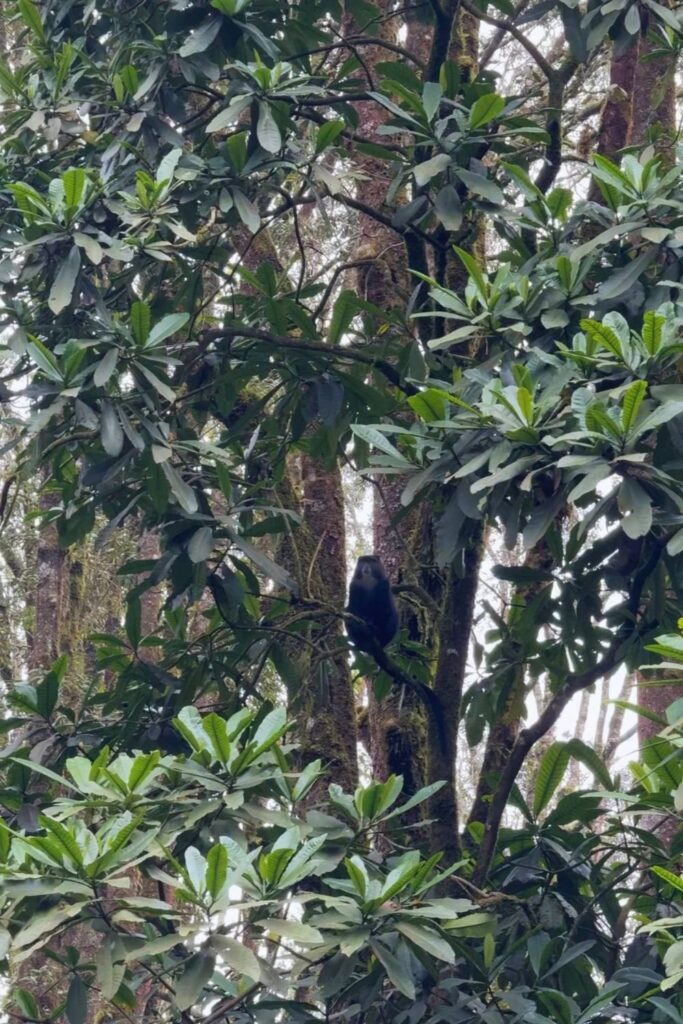
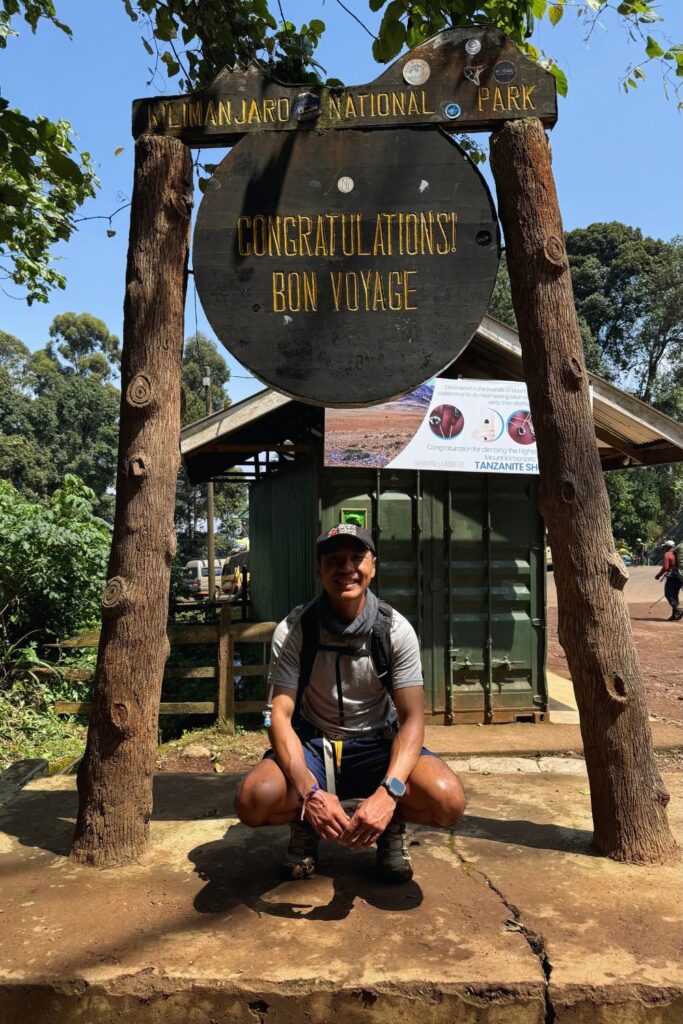
Now, I was standing at the finish line, looking back at everything we’d just been through: all the early mornings, the long hikes, the freezing nights, the summit push, the sunrise at Stella Point, and finally standing at Uhuru Peak. Just like that, it was over.
We had our last meal prepared by Chef Peter and then headed back to the Gladys Adventures office, where we were presented with certificates for successfully summiting Kilimanjaro.
Then the emotions started rushing in. There’s something bittersweet about knowing that you can climb Kilimanjaro hundreds of times, but you’ll never share it with this exact group of people together again. And that’s all the more reason to cherish this memory.
What I Wish I Knew Before Climbing Kilimanjaro
Now that I’ve gotten the on-the-ground experience, here are some things I wish someone had told me before starting the trek.
How physically difficult is Kilimanjaro?
For me, hiking Kilimanjaro wasn’t physically challenging. You’re going pole pole (“slowly, slowly”) for most of the climb. While there are some steep sections, the trail itself isn’t very technical. The trickiest section is Barranco Wall, but even that is more scrambling than actual climbing.
I did zero preparation beforehand and was fine. However, I felt comfortable doing that because I’ve done multi-day hikes before, including the Salkantay Trek in Peru, Ala-Kul in Kyrgyzstan, and the W Trek in Chile.
If you don’t have that kind of experience, I’d recommend doing some preparation beforehand. You don’t need an elaborate training plan, but getting used to long days on your feet and hiking with a daypack will make the trek much more manageable.
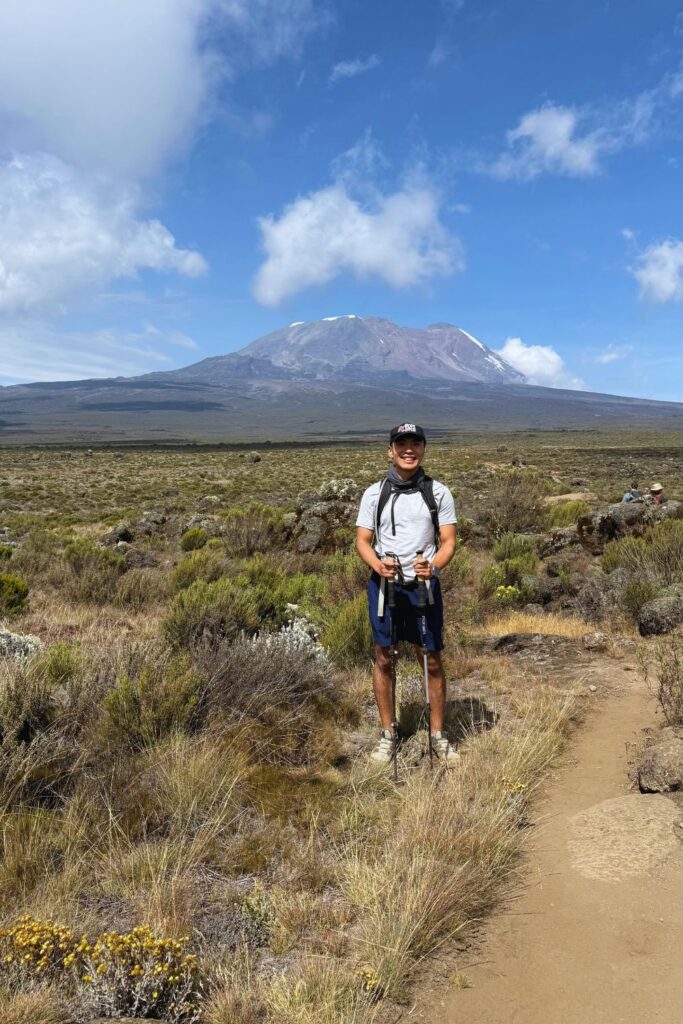
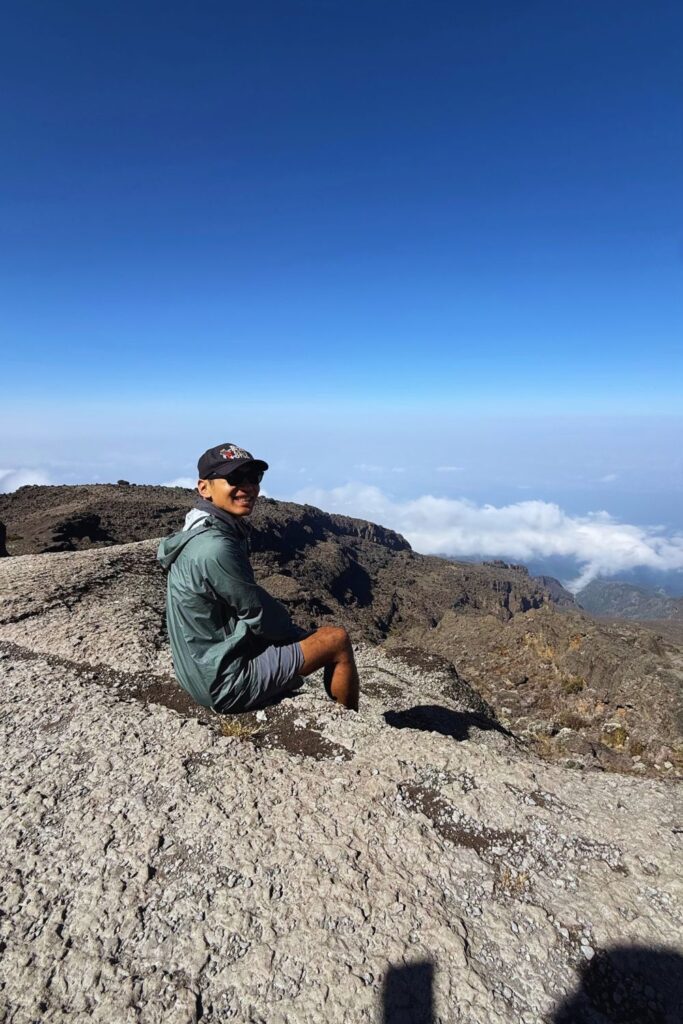
How much does altitude affect you on Kilimanjaro?
While I handled the altitude fairly well, altitude sickness can affect anyone. How your body responds to high elevation is difficult to predict, and it’s not simply a matter of how fit you are. Even well-trained athletes can struggle with altitude.
The guides also closely monitor your condition throughout the trek. Twice a day, they checked our vitals, including our blood oxygen levels and heart rate, to make sure everyone was adjusting well to the elevation.
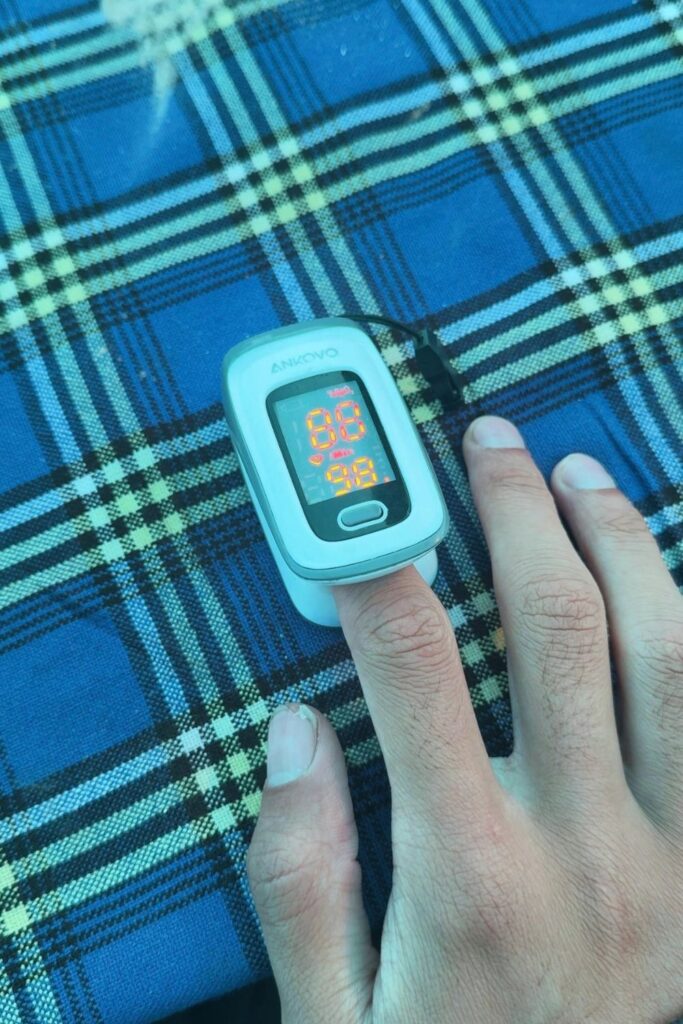
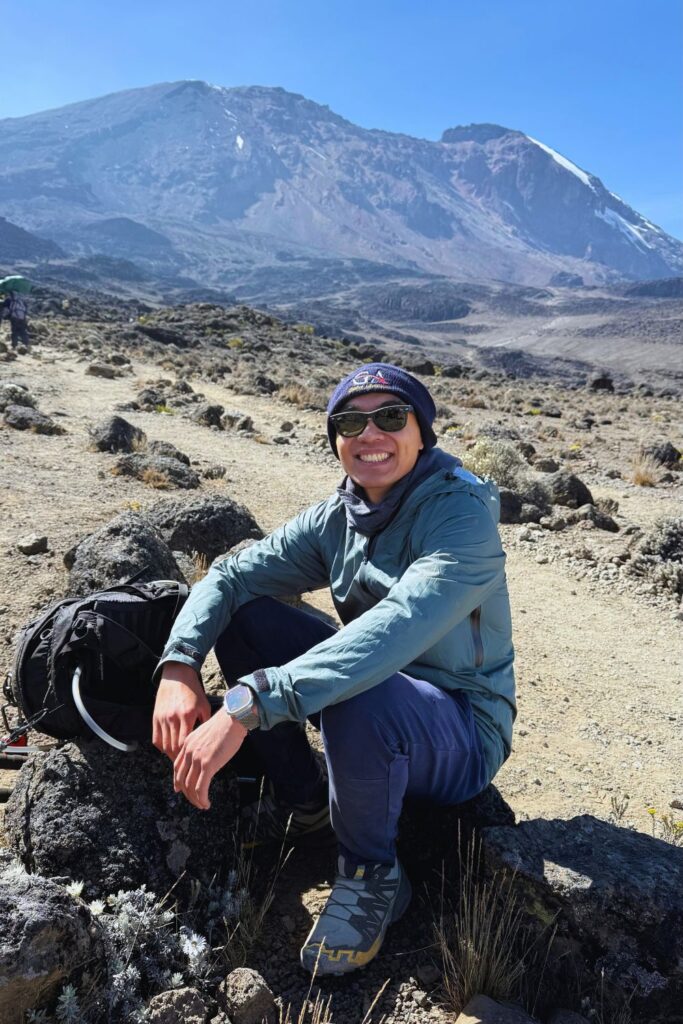
That’s why the slow pace and acclimatization days are so important. You can train your legs for the hike, but you can’t train your body to know exactly how it will respond to nearly 6,000 meters of elevation.
What is the bathroom situation like on Kilimanjaro?
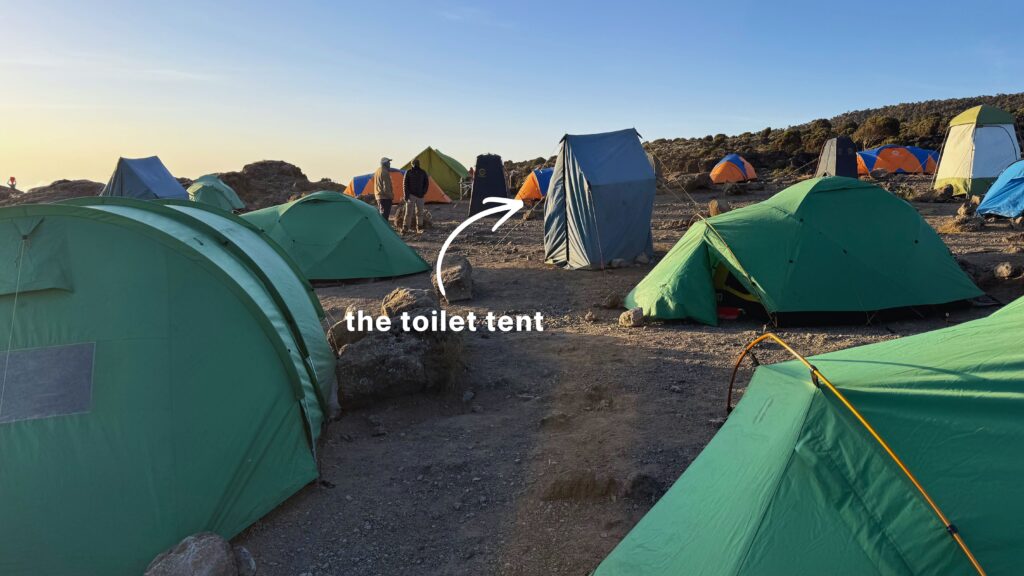
For our group, we had two private toilets that were regularly cleaned and disinfected by a crew member. And they actually flushed (!), so you didn’t even have to see whatever the person before you left behind. After experiencing some horrible mountain bathrooms, this was a very pleasant surprise.
What should I know about doing a group trek?
The group you’re with matters more than you think. You’re spending a week with the same people, sharing meals, hiking for hours, and pushing through exhaustion together. By the end of the trek, you’re going to know these people pretty well.
If you’re booking a group trek, it might be worth asking the tour operator about the typical group size and who else is booked on your departure. You may also want to ask about the general demographics of the group, such as age range, nationality, or whether it’s mostly solo travelers, couples, or friends traveling together.
You obviously can’t guarantee you’ll click with everyone, but having an idea of who you’ll be spending seven days with can help set expectations.
Do I need to have the perfect gear to trek Kilimanjaro?
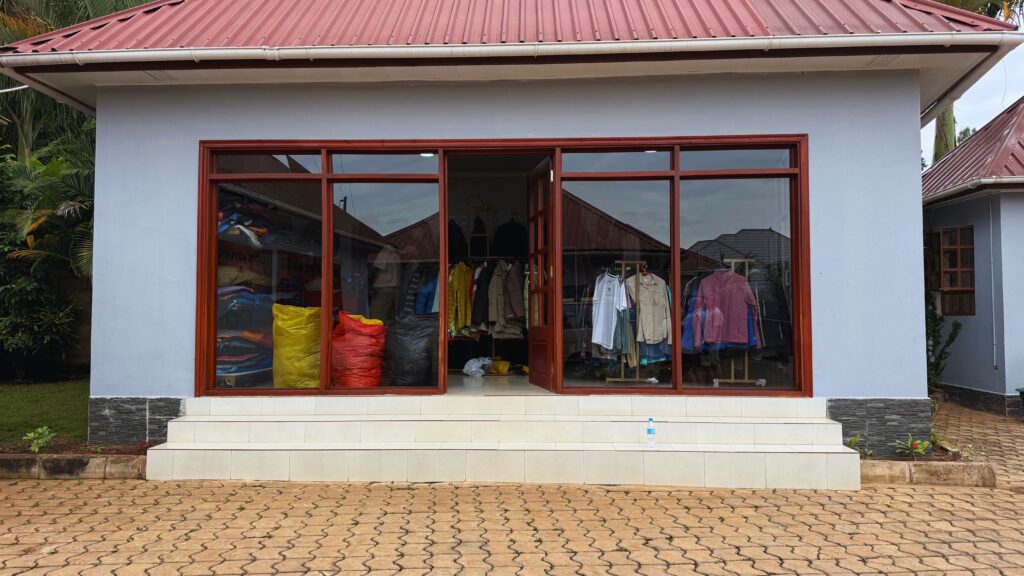
Do not stress out about having the perfect gear list. Your guides do a full equipment check before you start the trek, and anything you’re missing can usually be rented. In fact, renting is a good option if you’re doing Kilimanjaro as part of a longer trip and don’t expect to use things like trekking poles, gaiters, or heavy outerwear again.
How much should I tip the mountain crew?
Your trekking company will give you guidance of how much to tip. To see what you can expect, read my Kilimanjaro cost breakdown post. I tipped $333 for the 7-day trek.
I recommend tipping well. Your guides, cooks, and porters are doing an enormous amount of work behind the scenes to get you up the mountain. They’re carrying equipment, setting up camp, preparing meals, cleaning, and making sure you’re safe and comfortable throughout the trek.
Make sure you budget for tipping before your trip. It’s an important way to thank the people who made your trek possible.
Climbing Kilimanjaro with Gladys Adventures: An Honest Review
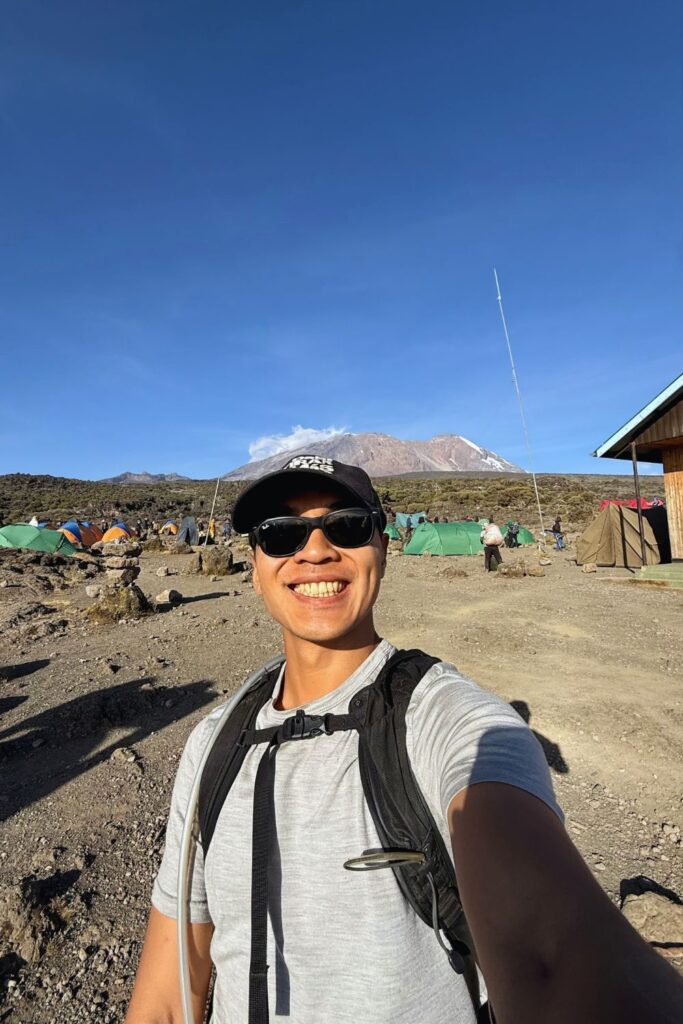
If you’ve read through my day-to-day recap, you can probably tell how I feel about my experience with Gladys Adventures. In short, I couldn’t have asked for a better company to do my Kilimanjaro climb with. They exceeded my expectations in every way.
The logistics were seamless
Everything behind the scenes was handled smoothly. Airport and hotel transfers, accommodation, transportation to and from the mountain, and the logistics around the trek all went according to plan. I never felt like I had to worry about what was happening next. I could just focus on hiking.
The route pacing was excellent
I also thought the pacing of the 7-day Lemosho Route was great. The first day was short, which gave us an easy introduction to the trek. We then had two tough hiking days, followed by two easier days, giving us time to recharge before the summit push.
By the time summit night arrived, I felt like I’d had enough time to acclimatize without completely exhausting myself beforehand.
The camping experience was comfortable
I went into the trek expecting to spend a week roughing it on a mountain. Instead, I felt really well taken care of.
We had wake-up drinks brought to our tents in the morning and delicious hot meals prepared for us every day. The porters also handled the setup and breakdown of camp, carried our supplies, and even cleaned our boots after the day’s hike.
The guides genuinely care about you
Throughout the trek, the guides were constantly checking on how we were feeling, doing health checks, adjusting the pace when necessary, and making sure everyone was eating and drinking enough.
The level of care stood out during summit night. They stressed from the beginning that no favor was too small. At one point, I was wearing thick gloves and didn’t want to take them off, so I literally asked one of the guides to get my water bottle out of my backpack for me.
You might think you’re an experienced hiker who doesn’t need much support, but Kilimanjaro humbles you, and you learn to lean on your guides.
It was more than just a climb
The trek was also a cultural exchange. I appreciated how willing the guides were to answer our questions about Kilimanjaro, Tanzania, their local tribes, and their own lives.
As someone who loves languages, I especially enjoyed how the crew taught us basic Swahili phrases and encouraged us to use them whenever we could. It made our interactions with the crew feel much more personal than simply having them take care of us throughout the trek.
The conversations we had with the guides and porters ended up being some of my favorite moments of the trek. We got to know the people who live and work around Kilimanjaro, and that made the experience much more enriching.
What could have been better?
Honestly, I struggle to find much to criticize.
If I had to pick one thing, the tipping ceremony at the end felt a little impersonal. We handed over the tips, waited while the guides counted the money, and then left. I would’ve liked to have had one final chance to see the rest of the crew at the office and say goodbye properly.
Would I recommend Gladys Adventures?
Yes, 100%. The logistics were seamless, the route was well paced, the camping experience was far more comfortable than I expected, and the food was excellent. But what really made the experience was the crew. The guides, cooks, and porters worked incredibly hard to make sure we were safe, comfortable, well-fed, and enjoying ourselves.
Final Thoughts on Climbing Kilimanjaro with Gladys Adventures
You can read all the guidebooks and watch all the videos you want, but nothing can truly describe how special it is to hike Africa’s highest mountain.
As cliché as it sounds, Kilimanjaro wasn’t just about reaching the summit; it was about the seven days it took to get there and the human connection built along the way.
I loved learning Swahili from the guides.
I loved hearing their stories.
I loved watching the cooks work.
I loved the ridiculous conversations around the dinner table.
Climbing Kilimanjaro was one of the best things I’ve ever done, and it’s an experience I’ll hold onto for the rest of my life.
What to Read Next: In-Depth East Africa Travel Guides
Planning an East Africa trip? These guides cover the itinerary, costs, and biggest experiences from my 5-week journey:
- 7-Day Lemosho Route: My Experience Climbing Kilimanjaro with Gladys Adventures: Follow my 7-day Lemosho Route experience, from the first day on the mountain through reaching Uhuru Peak.
- How to Book a Budget Tanzania Safari: Complete Cost & Planning Guide: Learn how to compare safari operators, choose a route, and plan a budget-friendly Tanzania safari.
- 4-Day Tanzania Budget Safari: My Experience with Suricata Safaris: A day-by-day look at my $800 camping safari through Tarangire, Serengeti, and Ngorongoro Crater.
- 5-Week East Africa Itinerary: Ethiopia, Rwanda, Uganda, Tanzania & Kenya: See how I structured 35 days across five countries, including gorilla trekking, Kilimanjaro, a Tanzania safari, Zanzibar, and Ethiopia.
- How Much Does an East Africa Trip Cost? My Full $9,503 Budget Breakdown: See exactly where my money went, from tours and hotels to flights, food, transportation, visas, and tips.
Climbing Kilimanjaro FAQ
How much does it cost to climb Kilimanjaro with Gladys Adventures?
The price depends on the route, number of days, group size, and what is included in your package. You’ll also want to budget separately for tipping, gear rentals, flights, visas, and personal expenses. I paid $2,908 for my trek (see this post for a full breakdown).
How big was your Kilimanjaro group?
There were eight hikers in our group, supported by a crew of 31 guides, cooks, and porters.
Why did you choose the 7-day Lemosho Route?
Two reasons: the relatively high summit success rate and the changing scenery. The route gives you more time to acclimatize than the shorter itineraries, while taking you through different terrains, from rainforest and moorland to alpine desert before reaching the summit.
How difficult is the 7-day Lemosho Route?
The trail itself wasn’t particularly technical, although there are some steep sections and some scrambling on Barranco Wall. For me, altitude was much more challenging than the physical terrain. The slow pace and acclimatization schedule helped a lot. The toughest days were Day 2 and Day 3 (where we hiked the whole day) and of course summit night.
Did you take anything during the Kilimanjaro trek?
Yes, I took Diamox and Malarone. Discuss with your doctor.
What are the side effects of Diamox?
One of the side effects is that you have to pee often. Between that and all the water you’re encouraged to drink at altitude, you’ll be making plenty of bathroom trips throughout the day.
Do you need to train before climbing Kilimanjaro?
I did zero formal training before my climb and was fine, but I wouldn’t recommend that approach for everyone. I already had experience with several multi-day hikes, so I was accustomed to being on my feet for several hours a day over multiple days. If you don’t have that experience, I’d recommend preparing with long hikes and getting comfortable carrying a daypack.
How did the Gladys guides handle altitude and safety?
The guides regularly checked how we were feeling and monitored our heart rate and blood oxygen levels twice a day. They also adjusted the pace when necessary, made sure we were eating and drinking enough, and emphasized pole pole, meaning “slowly, slowly,” throughout the trek.
What was the camping experience like with Gladys Adventures?
It was much more comfortable than I expected. We stayed in mountain tents, had wake-up drinks brought to our tents, ate hot meals every day, and had porters handle the setup and breakdown of camp. Our group also had two private, flushing toilets that were regularly cleaned.
What was the food like with Gladys Adventures?
The food was one of the pleasant surprises of the trek. Chef Peter prepared hot meals every day, with much more variety than I expected from mountain camping. We had everything from soup to pizza to curry.
How much should you tip the Kilimanjaro crew?
You should budget for tipping separately from the cost of your trek. The guides, cooks, and porters do a huge amount of work throughout the climb, and your tour operator should provide recommended tipping amounts before your trek. I personally tipped $333 for my 7-day trek.
Would you climb Kilimanjaro with Gladys Adventures again?
Yes! The logistics, pacing, food, camping setup, and especially the crew made for a really positive experience.
1 comment