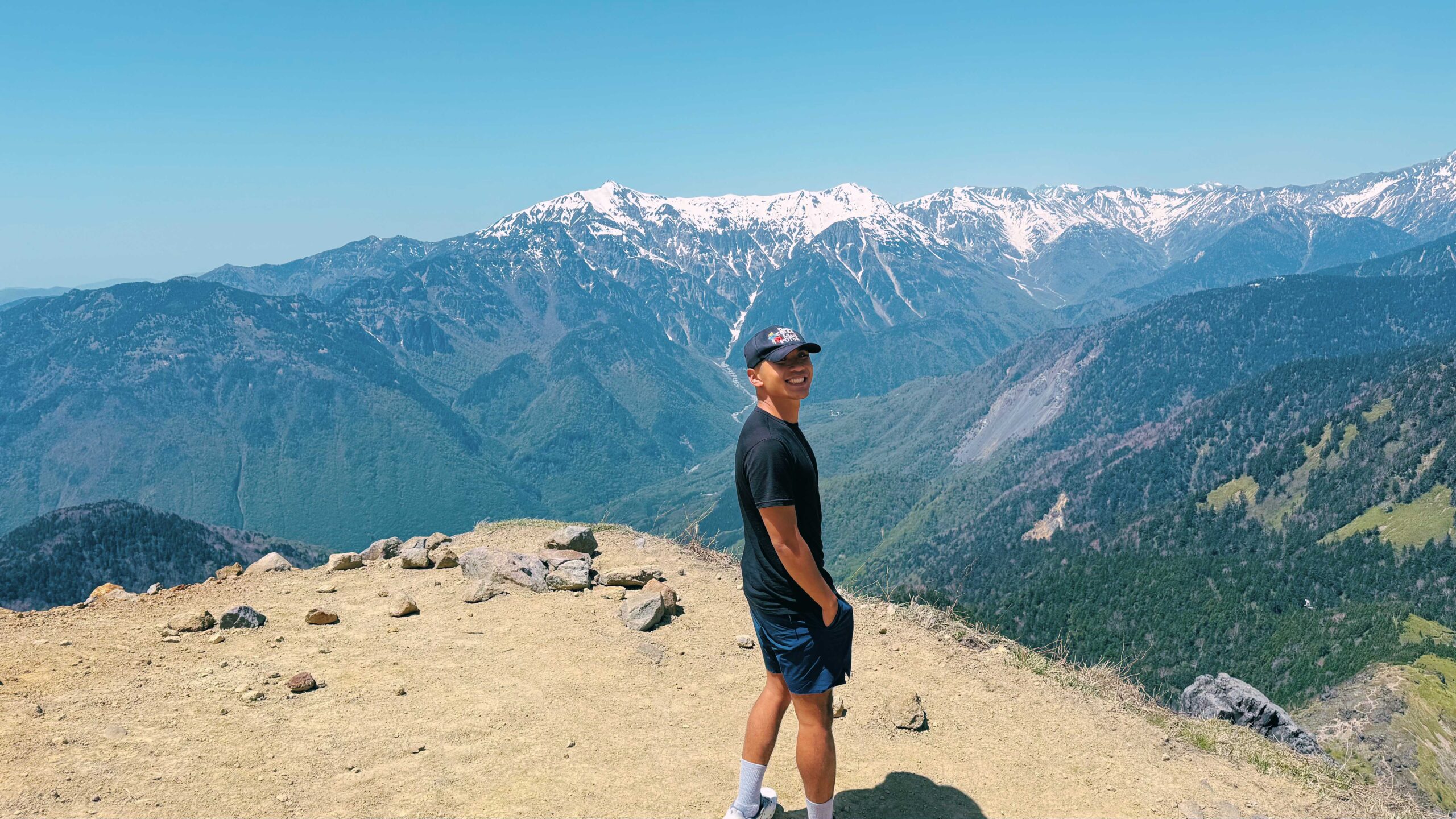
Japan was the first country I ever visited and the one that made me fall in love with traveling. Before this trip, I’d been four times, always on the same well-trodden path: Tokyo, Osaka, Kyoto. This time, I wanted to go somewhere that would make the country feel new again.
At a Glance: 2 Weeks Beyond Japan’s “Golden Route”
This 2-week Japan itinerary covers Fukuoka, Yufuin, Beppu, Kanazawa, Shirakawa-go, Takayama, Hirayu Onsen, and Kamikochi using only trains, buses, and one short flight. No rental car is needed. The full trip costs around $3,300 for solo mid-range travel in shoulder season, including round trip tickets from the US.If you’ve already done the classic Japan route and want to see a different side of the country, this guide breaks down exactly how to do it.
Table of Contents
Who Is This 2 Week Japan Itinerary For?
This route is ideal for those who…
- Have already visited Tokyo, Kyoto, and Osaka and want to see a different side of Japan
- Are comfortable navigating Japan by train and bus
- Want a mix of food culture, onsen towns, UNESCO heritage sites, and alpine scenery
- Don’t mind a moderate pace (1-3 days per stop) with occasional transit days
- Are willing to splurge occasionally on regional specialties like Hida beef and ryokan stays
This route is not ideal for those who…
- First-time travelers to Japan who want that tried-and-true Tokyo, Kyoto, and Osaka circuit
- Prefer longer stays in one base city
- Are nervous about navigating smaller towns with limited English signage
Overview of the 2 Week Route
This 2 week Japan itinerary begins in Fukuoka, located on the shore of Kyushu Island. The route runs northeast, ending in Tokyo.
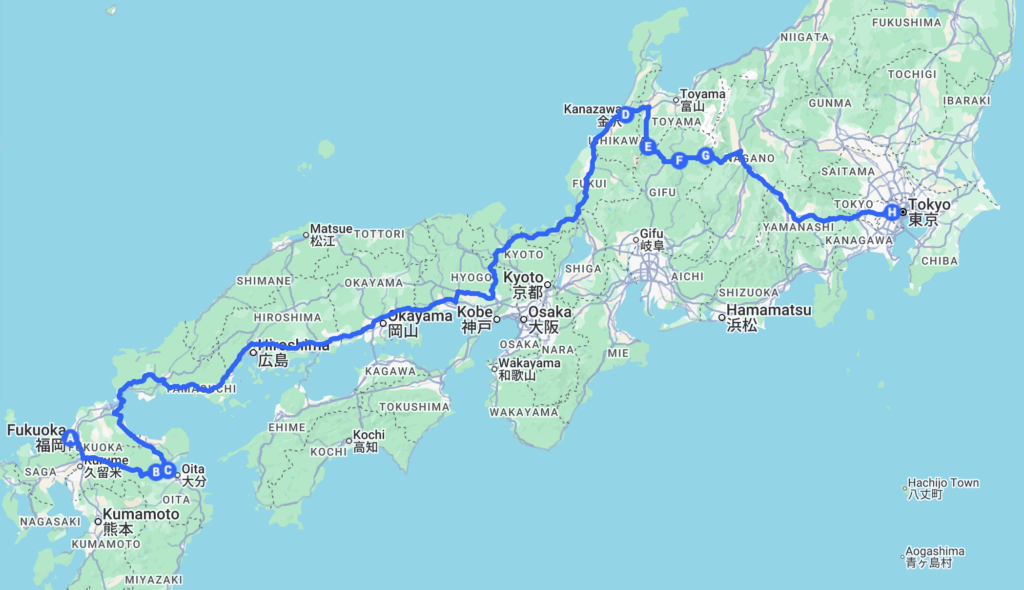
In Kyushu, you’ll stop at Fukuoka, Yufuin, and Beppu (points A, B, C on the map). You’ll then fly to Kanazawa (D) and make your way to Shirakawa-go, Takayama, and Hirayu Onsen (E, F, G) before ending in Tokyo (H).
| Days | Region | Stops | Highlights |
|---|---|---|---|
| 1–3 | Kyushu | Fukuoka | Hakata ramen, yatai open air stalls, Itoshima day trip, coastal scenery |
| 4–5 | Kyushu | Yufuin, Beppu | Scenic train rides, ryokan onsens, Hells of Beppu |
| 6–10 | Central Japan | Kanazawa, Shirakawa-go, Takayama | Omicho Market, Kenrokuen Garden, Higashi Chaya district, UNESCO thatched village, wagyu beef |
| 11-12 | Japanese Alps | Hirayu Onsen, Kamikochi | Panoramic alpine views, Kappabashi Bridge, hot springs |
| 13–14 | Honshu | Tokyo | Big city energy |
Days 1–3: Fukuoka
Fukuoka is a strong starting point for a Japan trip, especially if you’re arriving jet-lagged. The city is compact and easy to navigate, easing you into the two weeks.
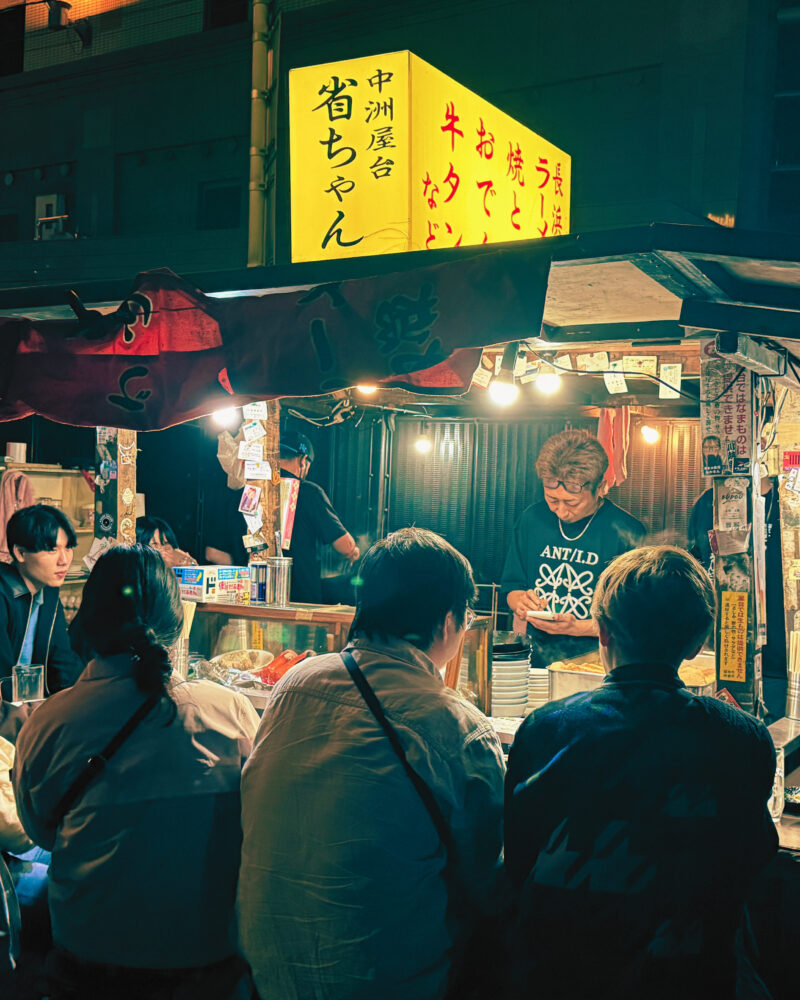
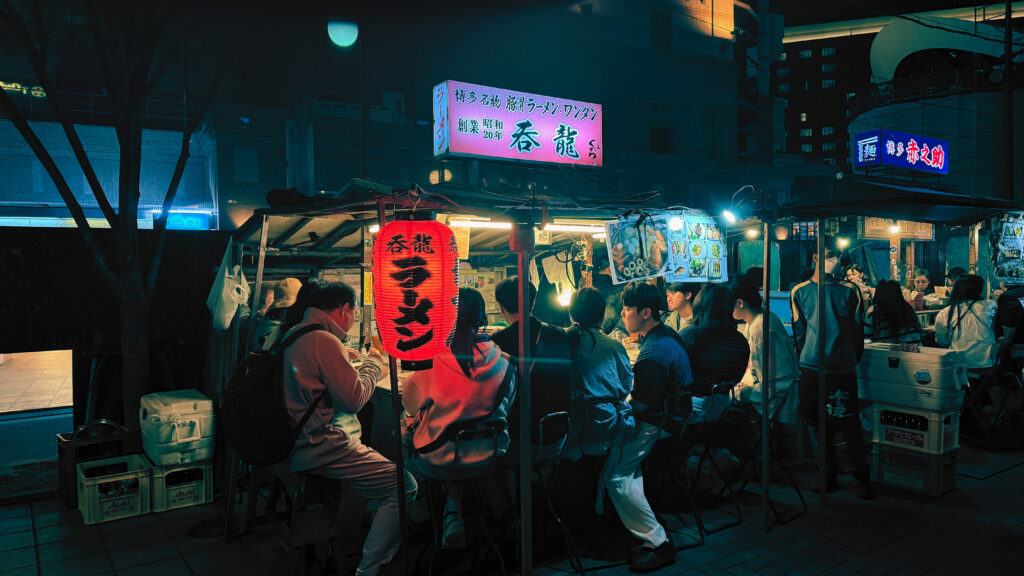
Fukuoka also has one of the country’s most distinctive food scenes. The city is best known for Hakata ramen (pork bone broth, ultra-thin noodles), mentaiko (spiced cod roe), and yatai: open-air riverside stalls that run along the Nakasu waterfront at night. Expect yakitori, oden, cold beer, and shoulder-to-shoulder seating. Even if the food isn’t life-changing, the atmosphere alone makes it worth a visit.
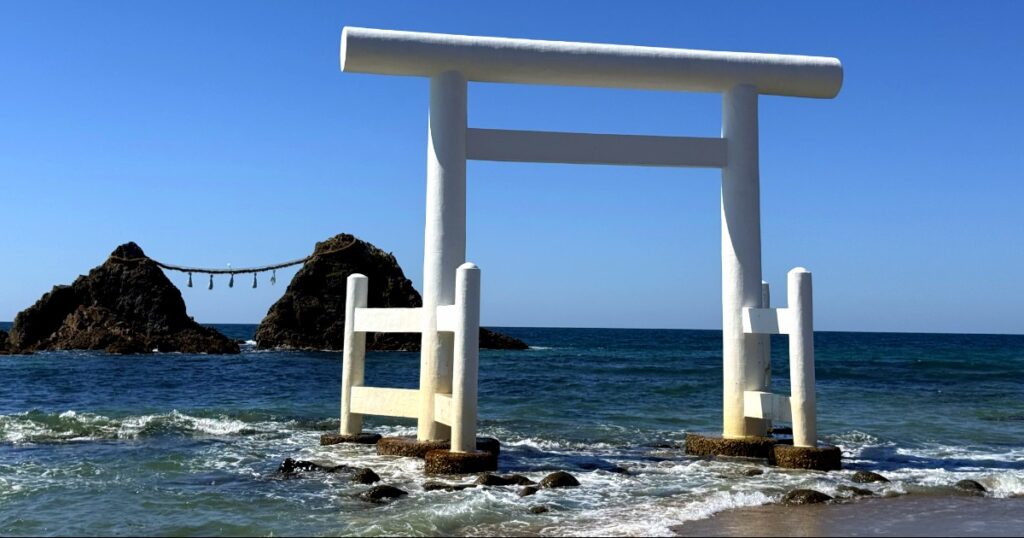
Fukuoka balances modern with traditional. The Canal City shopping mall and Kushida Shrine sit within minutes of each other: one a sprawling retail complex, the other a 1,800-year-old shrine. For a break from the city, the Itoshima coast is an easy day trip, featuring a shoreline shrine with torii gates in the water. The vibe is relaxed and offers a nice contrast to Fukuoka’s bustling atmosphere. Ohori Park is another good option if you want somewhere to slow down without leaving Fukuoka.
Check out my Fukuoka guide for a day-by-day itinerary, what to eat, day trip options, and everything else you need to plan your time there.
Days 4–5: Yufuin + Beppu
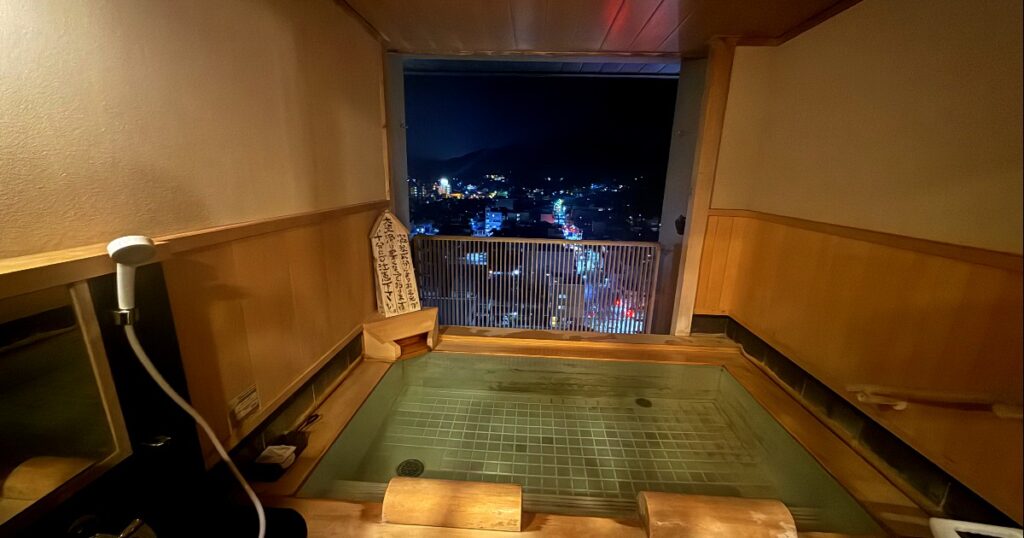
These two onsen towns sit about 45 minutes apart by train and work well back-to-back. Yufuin is best reached via the Yufuin no Mori, a scenic limited express from Hakata Station that winds through lush green valleys and is one of the most scenic train rides I’ve ever experienced in Japan. The town itself is small. Yunohira Road, the main street, has plenty of artisan shops, snacks, and custard pudding stalls to check out. Kinrin Lake is the other easy stop: go early before tour buses arrive, and the misty morning atmosphere is beautiful.
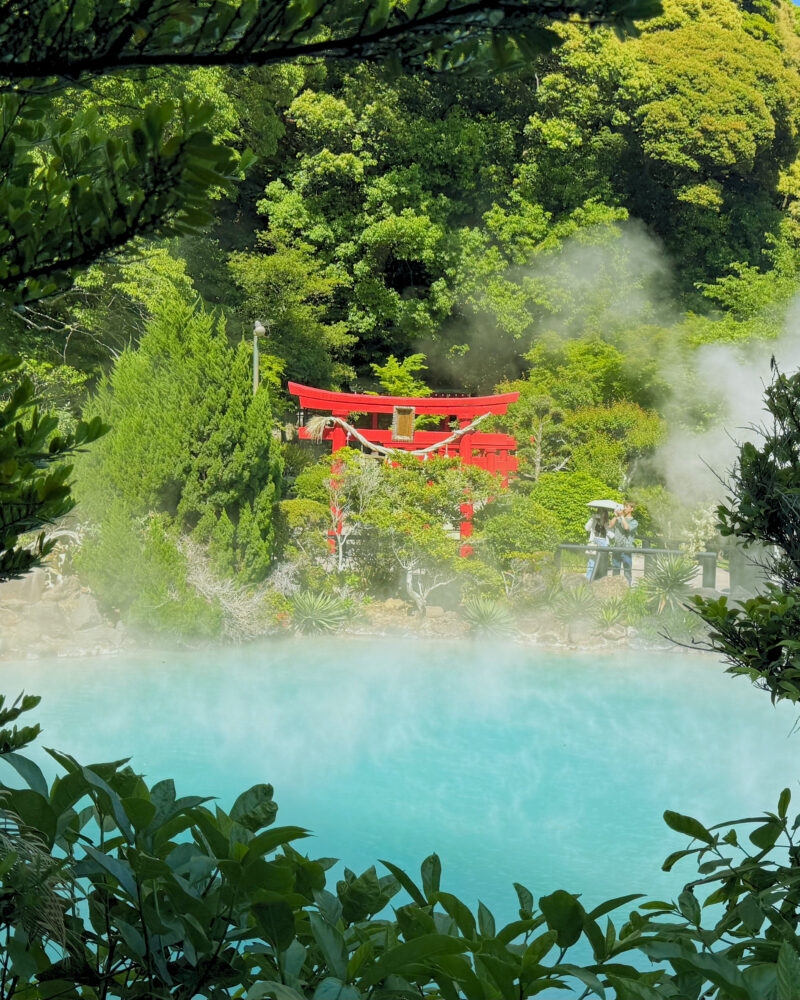
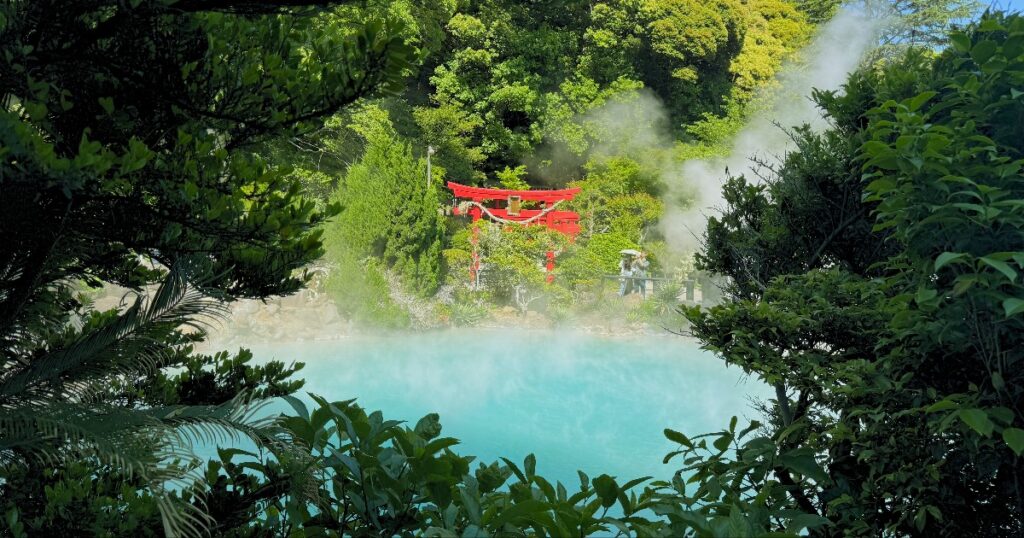
Beppu is Yufuin’s louder, stranger sibling. It’s famous for its “hells” (Jigoku), geothermally active pools in vivid colors. There are eight hells in total, spread across two main areas, toured on foot and by bus. Umi Jigoku is the standout; the water is a striking cobalt blue that looks almost artificial. I expected it to be underwhelming in person, but it captured my attention. In Beppu, you can enjoy steam-cooked food using actual volcanic vents, which is a cooking method unique to the region. The food itself is more of a novelty than anything, but it’s still interesting to see how the food is prepared.
I cover both towns in detail in my Yufuin and Beppu guide: the ryokan experience, the Jigoku Meguri, hell-steamed food, and a day-by-day itinerary for doing both in two nights.
Days 6–10: Kanazawa, Shirakawa-go, and Takayama
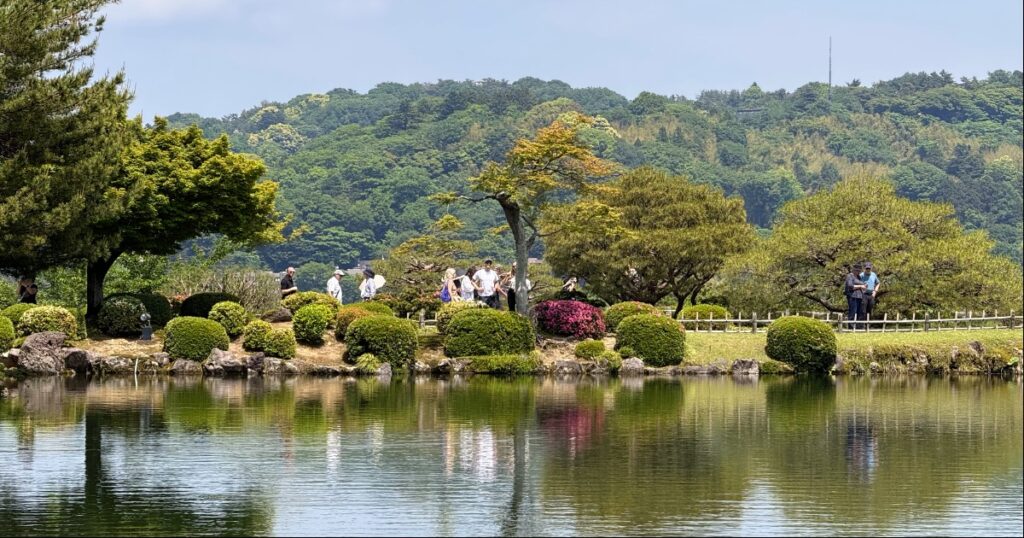
Kanazawa is one of Japan’s most underrated cities. If you want Kyoto vibes without the crowds, go here. It’s known for its preserved samurai and geisha districts as well as Kenrokuen Garden, considered one of the top three landscape gardens in Japan. For food, Omicho Market is definitely worth a stop. Eat at one of the small counters inside for crab, sea urchin, or fresh fish at affordable prices. Go for the kaisendon (sashimi bowl). You also have to try Noto beef, the local wagyu of Kanazawa.
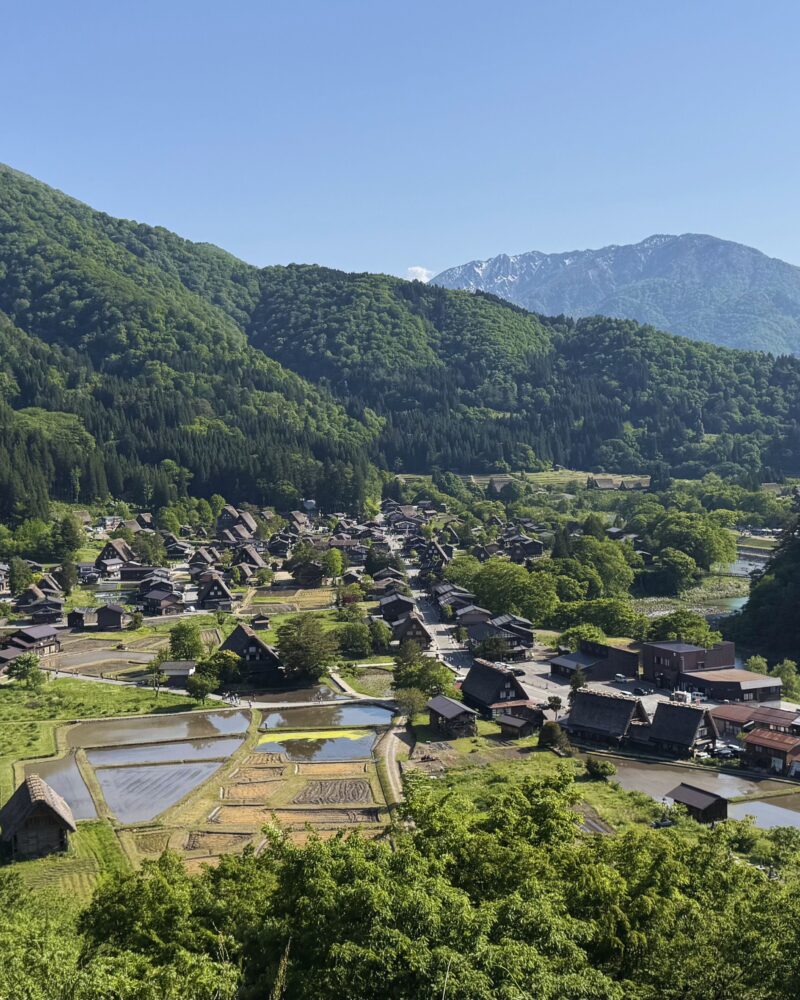
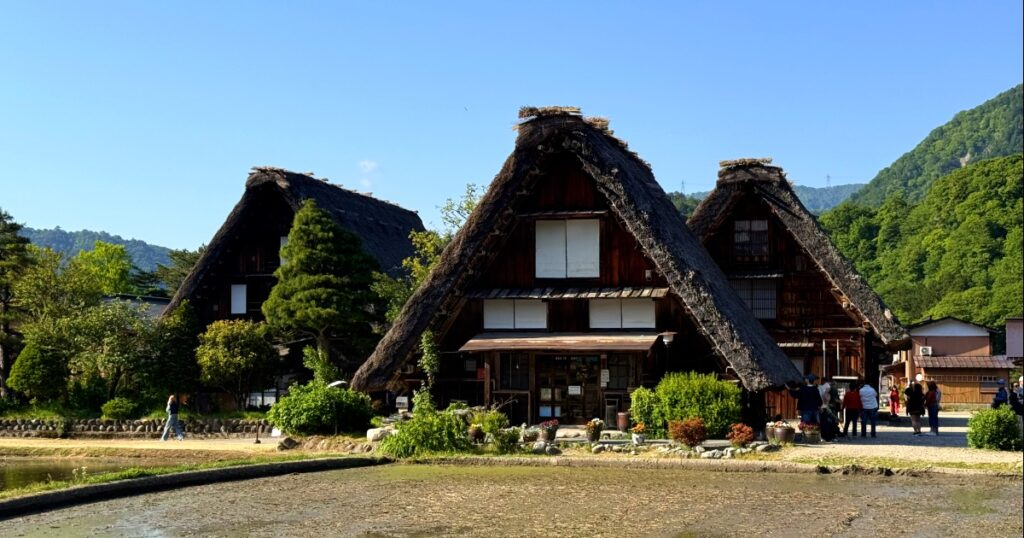
From Kanazawa, you’ll make your way to Takayama with a pit stop in Shirakawa-go. This UNESCO World Heritage village is famous for its gassho-zukuri farmhouses: enormous thatched-roof buildings designed to withstand heavy snowfall. Gassho-zukuri translates to “constructed like hands in prayer” because the shape resembles praying hands. Don’t miss the Shiroyama viewpoint: a small hill above the village with a full panoramic view of the rooftops against the surrounding mountains. The village feels distinct from anything else in Japan, and two to three hours is enough to cover it well.
You’ll then spend some time in Takayama exploring Miyagawa Morning Market and wander around Sanmachi Suji, a beautifully preserved merchant district lined with wooden buildings dating back to the Edo period. The local specialty is Hida beef, a regional wagyu that’s served up in a variety of ways.
For a day-by-day breakdown of Kanazawa, Shirakawa-go, and Takayama (including where to eat Noto beef and kaisendon, how to ride the Nohi Bus between all three, and where to stay) check out my central Japan itinerary guide.
Day 11–12: Hirayu Onsen and Kamikochi (Japanese Alps)
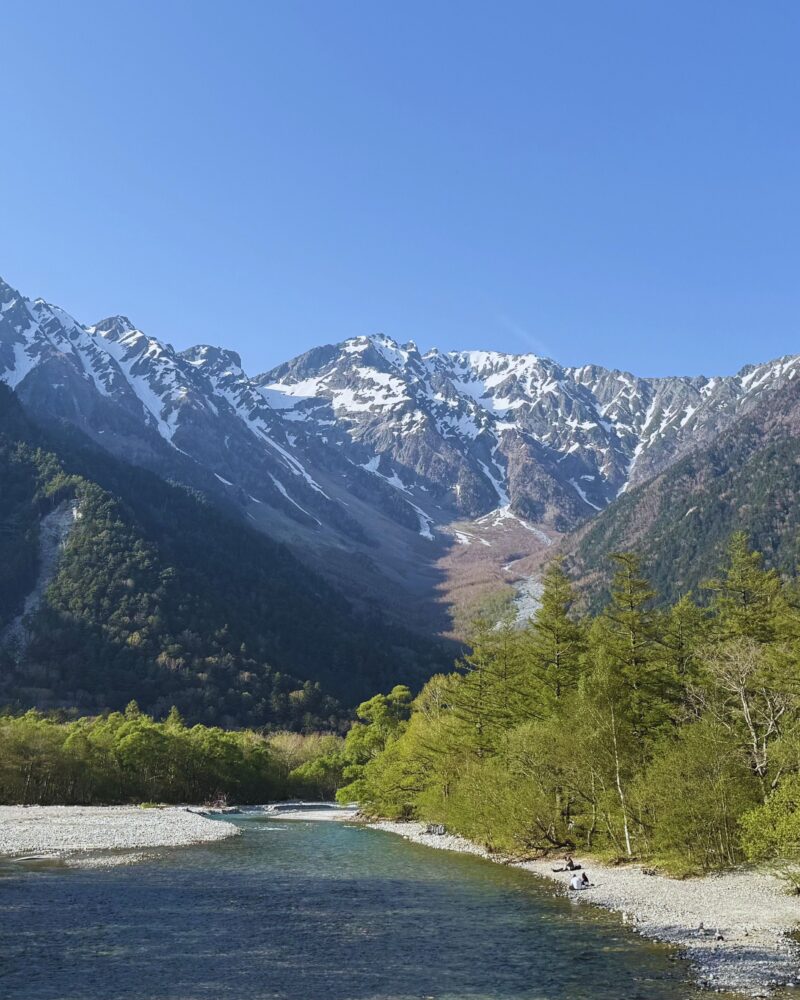
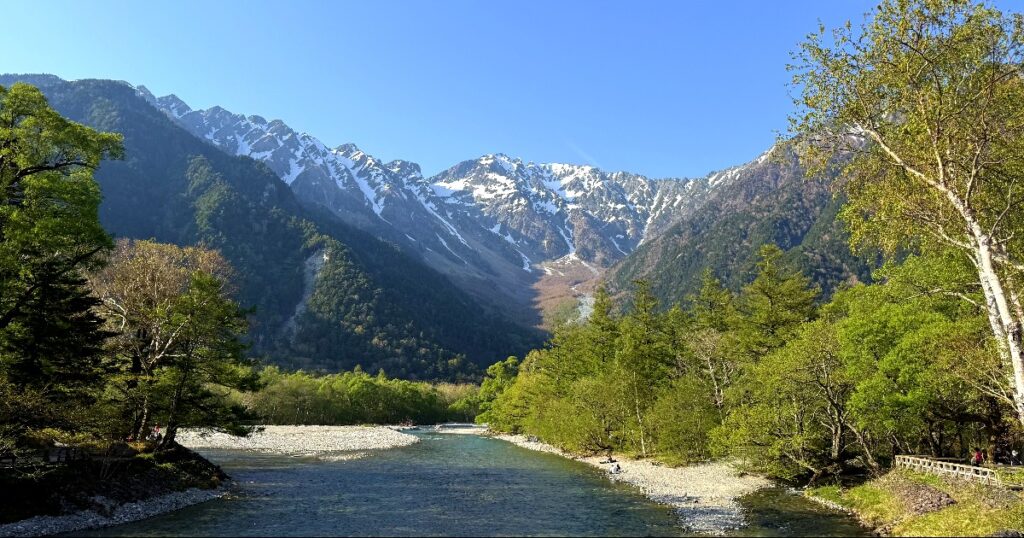
From Takayama, Hirayu Onsen is a natural overnight stop to rest your legs before tomorrow’s big hike in Kamikochi, a protected alpine valley accessible only by bus. If you’re only walking the valley and not hiking, the flat path from Kappabashi to Myojin Pond is beautiful.
For a real challenge, do the day hike up Mount Yakedake. The trail starts gradual, then hits a tall metal ladder section before a long push across snow fields and loose rock to the top. The summit offers a full panoramic view of the surrounding Alps.
Check out my Hirayu Onsen and Kamikochi travel guide for the complete logistics on how to visit the Northern Alps.
Day 13-14: Tokyo
No Japan trip is complete without spending at least a couple of days in Tokyo. If you’re following this itinerary, I assume it’s not your first time here, so I’ll leave you to your own devices. For this trip, I ate and shopped to my heart’s content. I also visited my host family from when I studied abroad in Tokyo 10 years ago.
How Much Does This 2 Week Japan Itinerary Cost?
I spent a total of $3,343. I traveled this route solo in May 2026, which is shoulder season after the cherry blossom and Golden Week crowds but before the summer rush. These prices reflect mid-range travel: private rooms and eating out every meal. The cost breakdown is as follows.
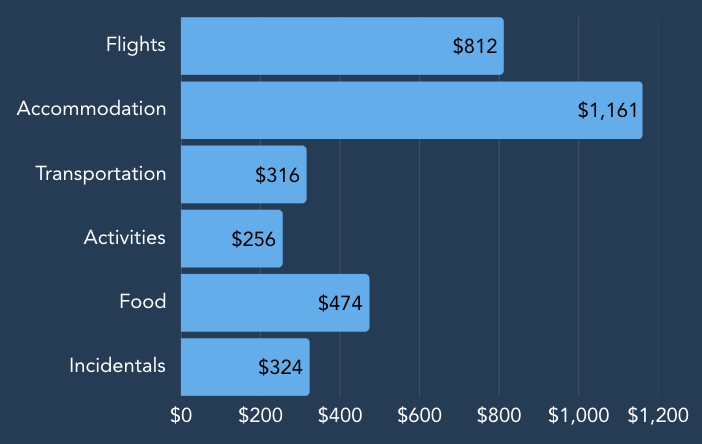
Flights: My round-trip flight from Honolulu (HNL) on Hawaiian Airlines cost $812. From the continental US, expect to pay roughly $800–$1,400 round-trip in economy, depending on departure city and season. West Coast cities (LA, Seattle, San Francisco) are cheapest, while East Coast departures typically run several hundred more.
Accommodation: I stayed in hotels. See the Where to Stay for the exact places as well as a detailed cost breakdown.
Transportation: This entire route was done using public transportation. Trains and buses were the main modes of transport. I also took a flight from Fukuoka to Komatsu, the closest airport to Kanazawa.
Activities: This category includes entry fees, a tea ceremony in Kanazawa, sake tasting in Takayama, and a spa day. This Japan itinerary is light on paid activities; most of what makes the route worth doing is free.
Food: My meals usually ran between $10–20, with lunch closer to $10 and dinner closer to $20. I also splurged on the occasional meal, such as a Hida beef aburasoba dinner costing $50.
Incidentals: Souvenirs and one-off purchases.
Staying Connected
Japan’s mobile coverage is excellent, but your home carrier’s international rates can be costly. To avoid roaming charges during my two-week trip, I used Airalo. Get an eSIM before you fly, activate it when you land, and you’re connected from the moment you walk out of the airport.Where to Stay in Kyushu, Hokuriku, and Gifu
I stayed 14 nights in Japan, totaling $1161. Accommodation was easily the biggest expense category. To reduce costs, consider staying in budget accommodation, traveling with others, or using hotel points. For this trip, I used points for one night in Fukuoka and one night in Kanazawa. I also used the Amex Platinum hotel credit, reducing the cost of my Kanazawa stay by $300.
| Nights | Location | Where I Stayed | Total Cost |
|---|---|---|---|
| 1–3 | Fukuoka | Four Points Flex Hakata | $138 |
| 4 | Yufuin | Lamp no Yado | $140 |
| 5 | Beppu | Super Hotel Beppu Ekimae | $61 |
| 6–8 | Kanazawa | Hyatt Centric Kanazawa | $201 |
| 9–10 | Takayama | Takayama Ouan | $275 |
| 11–12 | Hirayu Onsen | Hirayukan | $205 |
| 13–14 | Tokyo | Via Inn Higashi Ginza | $141 |
Overall, I thought the pacing was good. The only thing I would change is to spend two rather than three nights in Kanazawa because you can hit all the main attractions in one full day. I would allocate this extra day to Beppu (if you want more time exploring the hells) or to Tokyo (if you want more time in the city).
How to Get Around Kyushu, Hokuriku, and Gifu
This 2-week itinerary relies entirely on public transport (trains, buses, and a short plane ride). No rental car is required.
Detailed routes
| Route | Mode of Transport | Travel Time | How to Book |
|---|---|---|---|
| Fukuoka → Yufuin | 🚆 Train | 2 hours | Klook |
| Yufuin → Beppu | 🚌 Bus | 1 hour | Pay on bus |
| Beppu → Fukuoka | 🚆 Train | 2 hour 15 minutes | Klook |
| Fukuoka → Komatsu | ✈️ Flight | 1 hour 30 minutes | Google Flights |
| Komatsu → Kanazawa | 🚌 Airport Bus | 1 hour | Ticket kiosk |
| Kanazawa → Shirakawa-go | 🚌 Bus | 1 hour 15 minutes | Japan Bus Online |
| Shirakawa-go → Takayama | 🚌 Bus | 1 hour | Japan Bus Online |
| Takayama → Hirayu Onsen | 🚌 Bus | 1 hour | At bus station |
| Hirayu Onsen → Kamikochi | 🚌 Bus | 30 minutes | At bus station |
| Hirayu Onsen → Tokyo | 🚌 Bus | 6 hours | Highway Bus |
Why Should You Follow This Japan Itinerary?
This route shows a side of Japan most visitors miss
Kyushu, the Hokuriku coast, and the Japanese Alps don’t appear on most first-timer itineraries. The crowds are also a fraction of what you’ll find in Tokyo and Kyoto, and this route offers variety.
- Fukuoka is urban: towering skylines, busy streets, bustling riverside food stalls
- Yufuin and Beppu are volcanic: misty lakes, geothermal pools, steam rising off the ground
- Kanazawa is historic: intact samurai districts and geisha quarters preserved for centuries
- Shirakawa-go is rural mountain: thatched rooftops and rice fields
- Kamikochi is pure alpine: glacial rivers, jagged peaks, lakes and ponds reflecting the mountains
This route balances sightseeing, nature, and rest
Most itineraries pack in as much as possible and leave you more exhausted at the end than when you started. This route builds in rest deliberately. Fukuoka, Kanazawa, and Takayama are the active sightseeing legs: new city, food, things to see and do. Following Fukuoka, the onsen towns of Yufuin and Beppu give you time to relax and recover. The same pattern repeats after Kanazawa and Takayama, with Hirayu Onsen allowing for a quiet night in the mountains before Kamikochi. Finally, the day in the Japanese Alps is the big payoff that the trip builds toward.
This route is efficient by design
The route moves logically in one direction, starting from Kyushu in the south and ending in Tokyo in the north, giving you easy access to outbound flights. The itinerary is also designed to make the most out of travel days. For example, most Shirakawa-go itineraries suggest visiting this town as a day trip from Kanazawa or Takayama. Here, it sits as a convenient stop on your transit day between these two cities.
Interested in the full 2-week route? Check out my travel guide for each destination in this Japan itinerary.
What Is the Best Time of Year for This Japan Itinerary?
Shoulder season: May/September–October (recommended)
- May (what I did): warm, green, fewer crowds than cherry blossom season or Golden Week
- September–October: autumn foliage begins in the Alps and Shirakawa-go; comfortable temperatures throughout
- Both seasons offer better accommodation availability and lower prices than peak periods
Peak season: Late March–April
- Iconic cherry blossom scenery that Japan is known for
- Crowds and prices spike significantly; book lodging and transport in advance
Winter: December–February
- Shirakawa-go is spectacular under snow; one of the most photographed scenes in Japan
- Kamikochi closes from mid-November to late April; replace it with another stop
- Onsen season at its best; ryokan stays in Yufuin feel especially nice in the cold
Frequently Asked Questions
Do I need to speak Japanese to do this route?
No, but knowing a few basics helps, especially in Yufuin, Beppu, and Hirayu Onsen, where English is less common than in Tokyo. Restaurant staff and hotel workers in smaller towns may not speak much English, but menus often have pictures or plastic food displays, and pointing gets the job done. Google Translate’s camera feature is a lifesaver for menus and signs.
Is a JR Pass worth it for this Japan itinerary?
No, the JR Pass is not worth it. The Nohi Bus (Kanazawa–Shirakawa-go–Takayama) and Kamikochi buses are not covered. For routes covered by the pass, paying for each leg is cheaper.
Is Japan expensive?
Japan has gotten more expensive in recent years, but it still offers great value, especially given the yen’s weakness against the US dollar in 2026. Mid-range travel on this route runs approximately $150–200 per person per day, with the Yufuin ryokan and Tokyo accommodation being the biggest cost drivers.
Is Japan doable for solo travelers?
Yes, I did this Japan itinerary solo. Public transit is reliable, and solo dining is completely normal (many counter-style restaurants are designed for it).
Is this itinerary suitable for first-time visitors to Japan?
It’s designed for people who’ve already done Tokyo, Kyoto, and Osaka. If this is your first Japan trip, start with the classic route.
Can I do this itinerary without renting a car?
Yes. Every destination on this itinerary is accessible by train or bus, and I completed the entire route using public transportation.
When is the best time of year for this itinerary?
Spring and autumn are ideal. Cherry blossom season brings crowds but beautiful scenery, while October and November offer comfortable temperatures and fall colors. Winter is also a great time if you want to experience snowy Shirakawa-go.
How physically demanding is this itinerary?
Most of it is light: walking between neighborhoods, standing in market queues, the occasional hill. The exception is the Mount Yakedake hike in Kamikochi, which is strenuous: expect a full day, significant elevation gain, a ladder section, and snow crossings even in late spring. If you’re skipping the hike and just walking the valley floor, it’s easy.