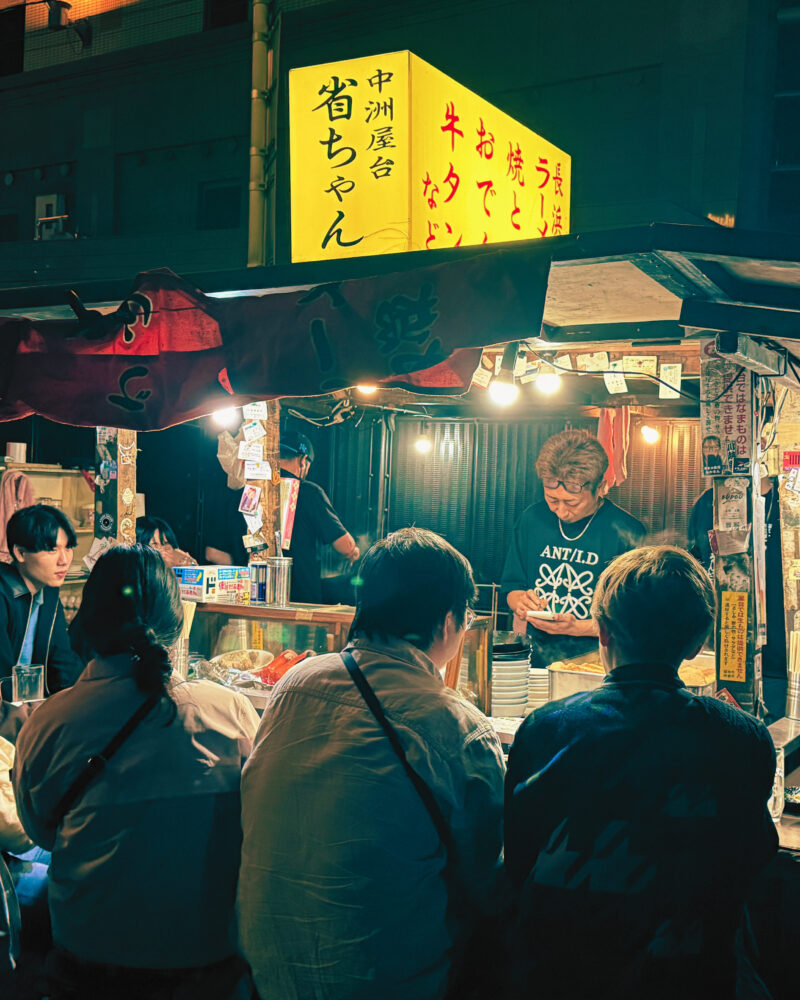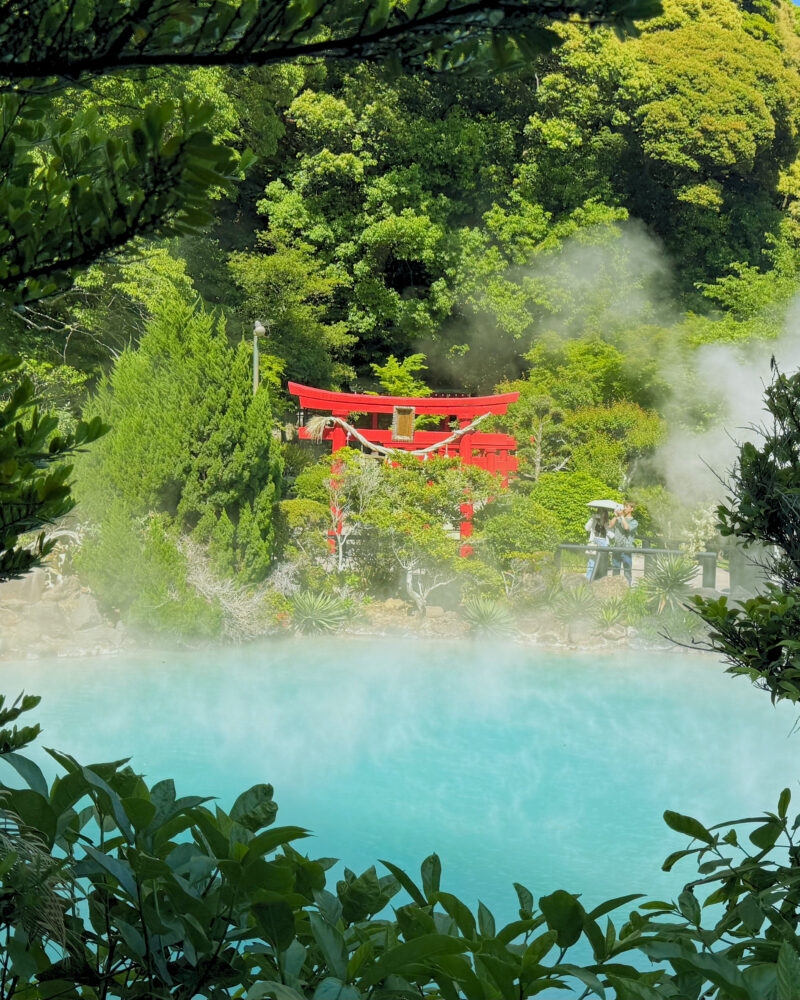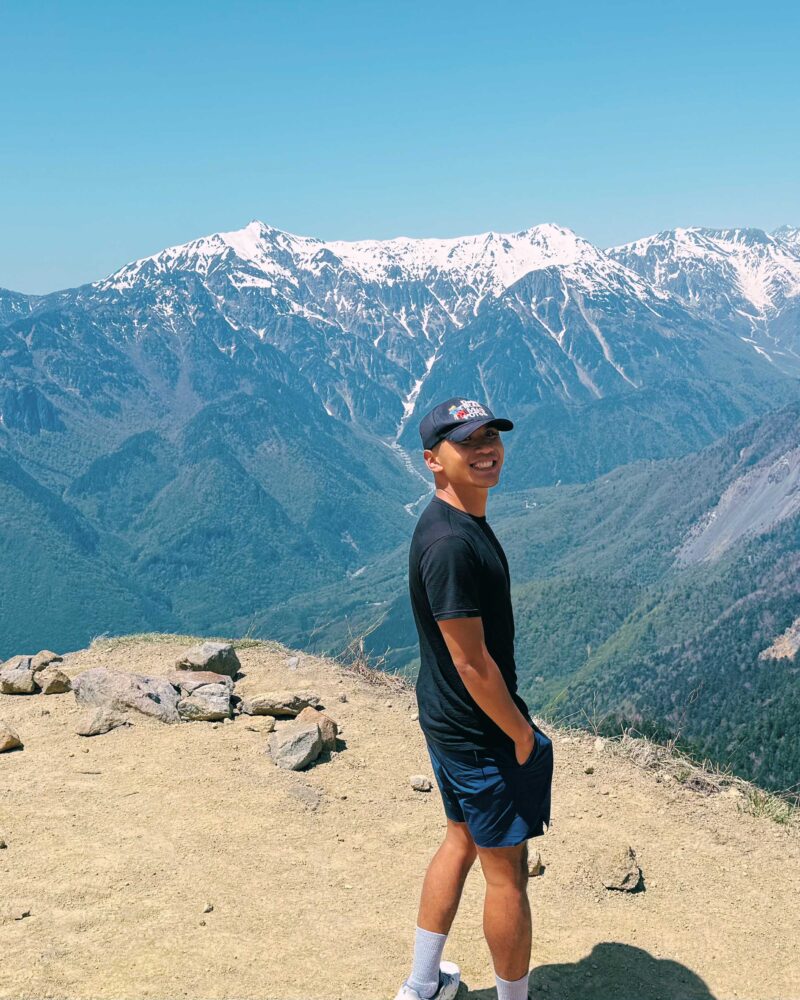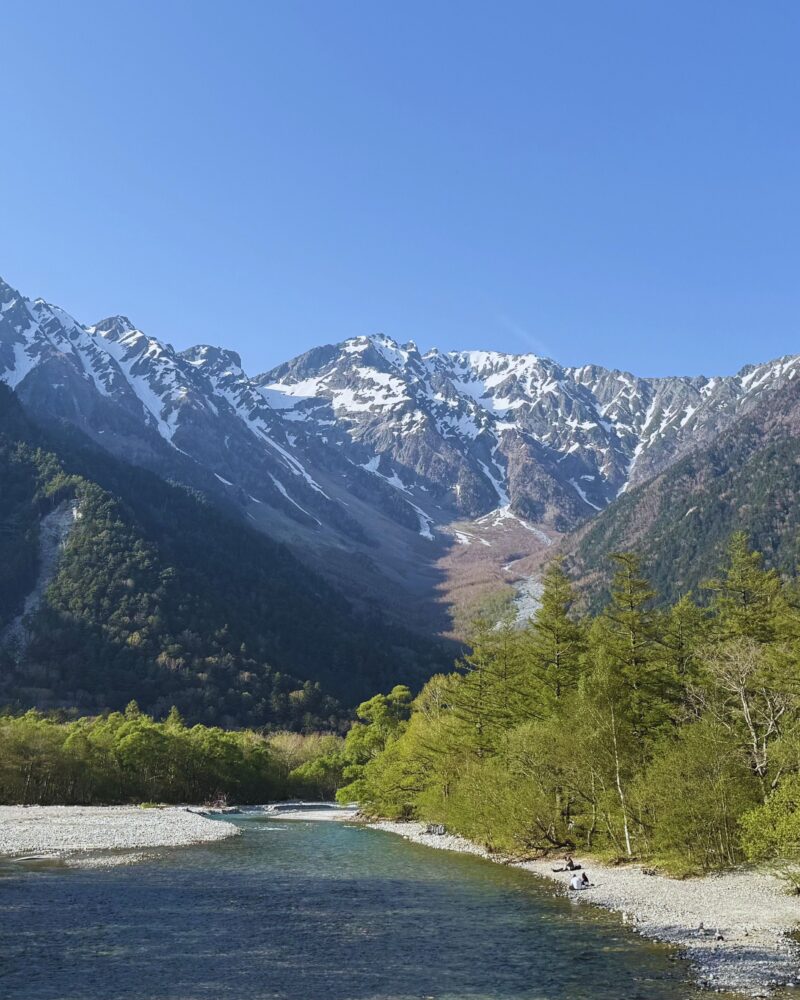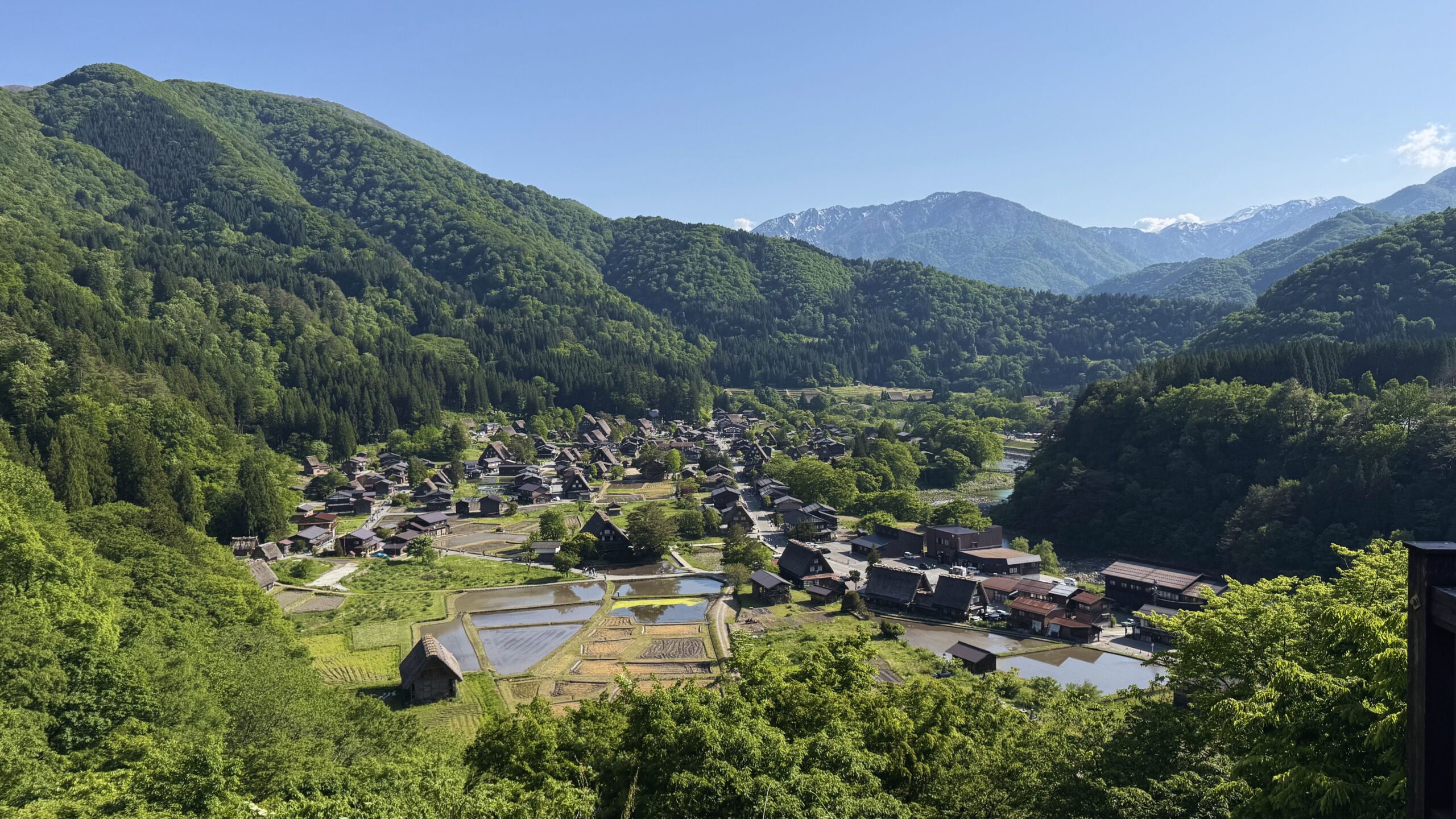
After Yufuin and Beppu, my 2-week Japan itinerary moved inland to a part of the country that many international visitors skip entirely: Kanazawa, Shirakawa-go, and Takayama.
What are Kanazawa, Shirakawa-go and Takayama known for?
- Kanazawa is a historic city famous for its preserved geisha and samurai districts, one of Japan’s most celebrated gardens, and some of the best seafood the country has to offer. Think Little Kyoto without the crowds.
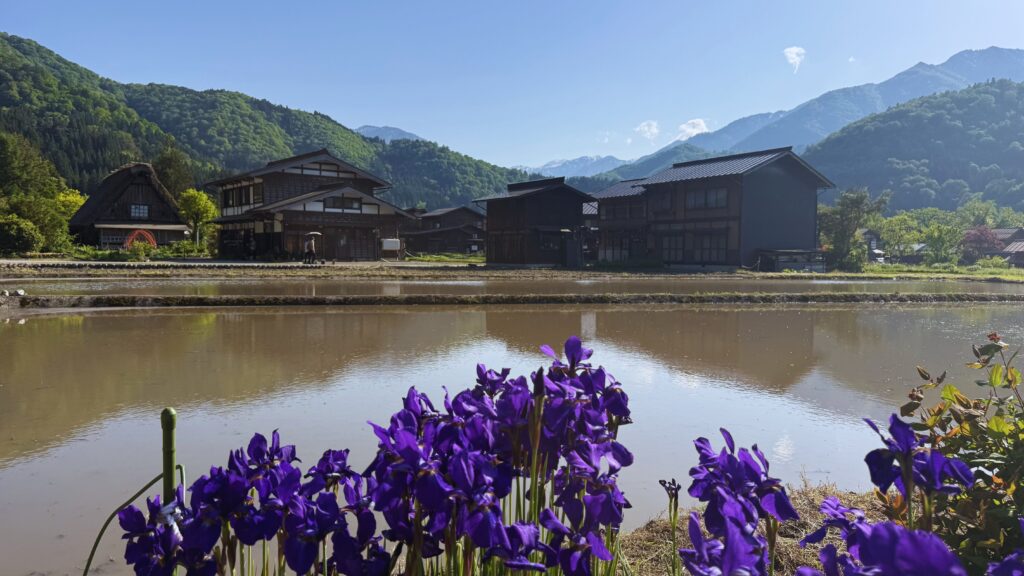
- Shirakawa-go is a UNESCO-listed village known for its steeply thatched farmhouses designed to resemble hands in prayer and withstand heavy snowfall.
- Takayama, tucked into the Japanese Alps, is a compact Edo-era merchant town with morning markets, sake breweries, and beautifully preserved wooden streets.
Together, these three destinations offer a different perspective on Japan: smaller cities and villages where traditional architecture, local culture, and mountain landscapes take center stage.
Table of Contents
Central Japan Itinerary At a Glance
This four-day stretch connects three destinations along a single highway bus route through the mountains of central Japan, making it an efficient way to travel between Kanazawa and Takayama.
In most itineraries online, Shirakawa-go is treated as a day trip from either Kanazawa or Takayama, but that approach adds unnecessary backtracking. Here, it’s built in as a natural half-day stop between the two cities, moving you forward without having to retrace your steps.
| Day | Focus | Highlights |
|---|---|---|
| 1 | Arrive in Kanazawa | Higashi Chaya District |
| 2 | Explore Kanazawa | Kenroku-en Garden, Omicho Market, tea ceremony |
| 3 | Kanazawa → Shirakawa-go → Takayama | Gassho-zukuri farmhouses |
| 4 | Explore Takayama | Miyagawa Morning Market, Sanmachi Suji Old Town |
During my 2-week Japan trip, I originally stayed an extra night in Kanazawa. Looking back, I don’t think it’s necessary; Kanazawa is compact enough that you can cover the main highlights in about a day and a half. This itinerary reflects how I’d structure it now with just two nights in the city, which feels like the ideal amount of time.
Staying Connected
Japan’s mobile coverage is excellent, but your home carrier’s international rates can be costly. To avoid roaming charges during my two-week trip, I used Airalo. Get an eSIM before you fly, activate it when you land, and you’re connected from the moment you walk out of the airport.
Day-by-Day Central Japan Itinerary
Day 1: Arriving in Kanazawa
Getting there from:
- Fukuoka: Take a one-hour flight from Fukuoka Airport (FUK) to Komatsu Airport (KMQ). From there, take an airport bus to Kanazawa Station.
- Tokyo: Take the direct Hokuriku Shinkansen from Tokyo Station. You’ll reach Kanazawa Station in about 2.5 hours.
Points and miles: I flew from Fukuoka to Komatsu for 7,000 United Miles as this flight is operated by ANA, and both airlines are part of Star Alliance. This redemption also works if you’re departing elsewhere in Japan, such as from Haneda.
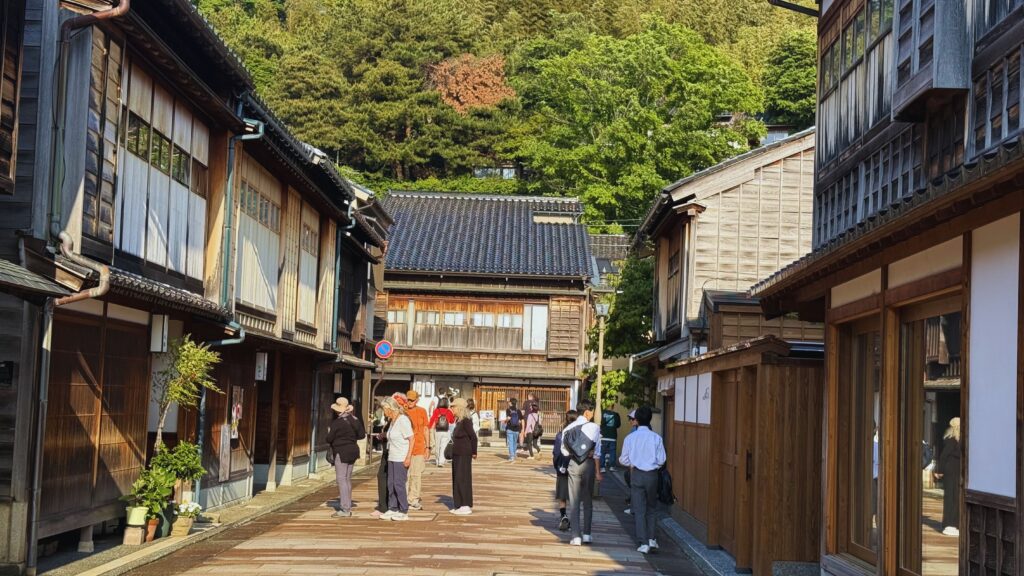
Afternoon: Start your visit in Higashi Chaya District, Kanazawa’s beautifully preserved geisha quarter. The narrow streets are lined with wooden tea houses dating back to the early 1800s, many of which have been transformed into cafés, sake bars, boutiques, and gold leaf workshops while still retaining their historic charm. Rather than rushing through, slow down and soak in the atmosphere. Grab a matcha or coffee, browse the artisan shops, and wander the side streets.
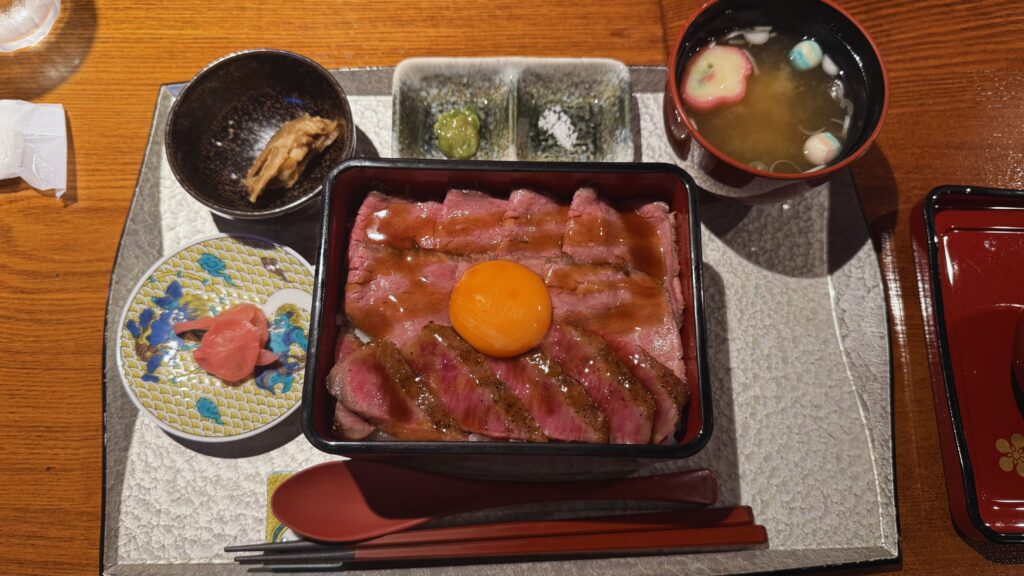
Evening: Kanazawa is a great place to try premium wagyu. The local specialty is Noto beef, raised on the nearby Noto Peninsula and prized for its fine marbling and rich flavor. Compared to Kobe beef, I found it slightly less buttery. I had mine served over rice, and it was hands down one of my favorite meals of the trip.
If you’re interested in traditional arts, Kanazawa also offers occasional evening geisha performances. Unlike the more exclusive experiences in Kyoto, some performances here are open to visitors and provide an accessible introduction to geisha music, dance, and hospitality traditions. Learn more at this website.
Day 2: Exploring Kanazawa
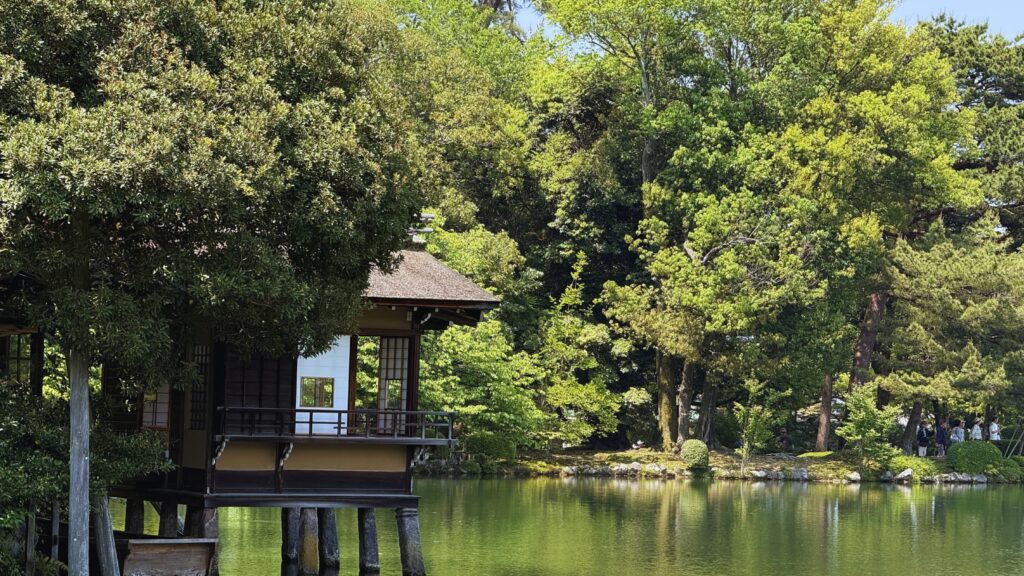
Morning: Head to Kenroku-en Garden at 9 a.m., before the tour groups arrive. Widely regarded as one of Japan’s three great landscape gardens, Kenroku-en was designed to balance the six ideal qualities of a perfect garden: spaciousness vs. seclusion, artifice vs. antiquity, and water features vs. panoramic views. As you wander through, you’ll notice broad open spaces giving way to quiet wooded paths, carefully designed landscapes that feel completely natural, and ponds and streams positioned to create picturesque views at every turn.
Kenroku-en is a place best enjoyed slowly. Don’t rush from viewpoint to viewpoint. I sat at a tea house inside the garden, ordered a drink and some Japanese sweets, and spent half an hour simply appreciating the scenery.
Noon: Walk over to Omicho Market for lunch and order kaisendon, a bowl of rice topped with some of the freshest seafood you’ll find in Japan. With over 170 vendors, the market has been Kanazawa’s culinary heart for centuries and is an excellent place to sample local catches from the Sea of Japan. I saw a huge line at this restaurant (井ノ弥) and waited for 30 minutes. Thankfully, the food didn’t disappoint!
Afternoon: Kanazawa has a deep-rooted tea ceremony tradition and is one of the best places outside Kyoto to experience one yourself. If it interests you, consider booking a ceremony in or around Higashi Chaya, but read reviews carefully because the quality can vary quite a bit.
To be honest, the experience I booked was underwhelming. The tea master went straight into preparing the koicha (thick matcha) without really explaining each step. The setting also wasn’t as tranquil as I had hoped: despite being advertised as a quiet, mindful experience, there were customers chatting just outside the room for part of the ceremony.
That said, I’m still glad I tried it. It was an opportunity to experience an important part of Japanese culture firsthand and chat with some fellow travelers afterward. If you do decide to book one, I’d prioritize finding a ceremony that emphasizes education and takes place in a genuinely peaceful setting.
Evening: Finish the day with a stroll through Nagamachi, Kanazawa’s former samurai district. The preserved earthen walls, narrow lanes, and wooden gates offer a glimpse into the city’s Edo-period past. If you’re fascinated by samurai culture, it’s worth visiting. If not, 30–45 minutes is plenty, and it’s the easiest stop on this itinerary to skip.
Browse Kanazawa Tours
Day 3: Kanazawa to Shirakawa-go to Takayama
The highway bus from Kanazawa to Takayama passes directly through Shirakawa-go, making it easy to visit without backtracking.
Morning: Take the highway bus from Kanazawa Station to Shirakawa-go. The journey takes about an hour and a half through gorgeous mountain scenery.
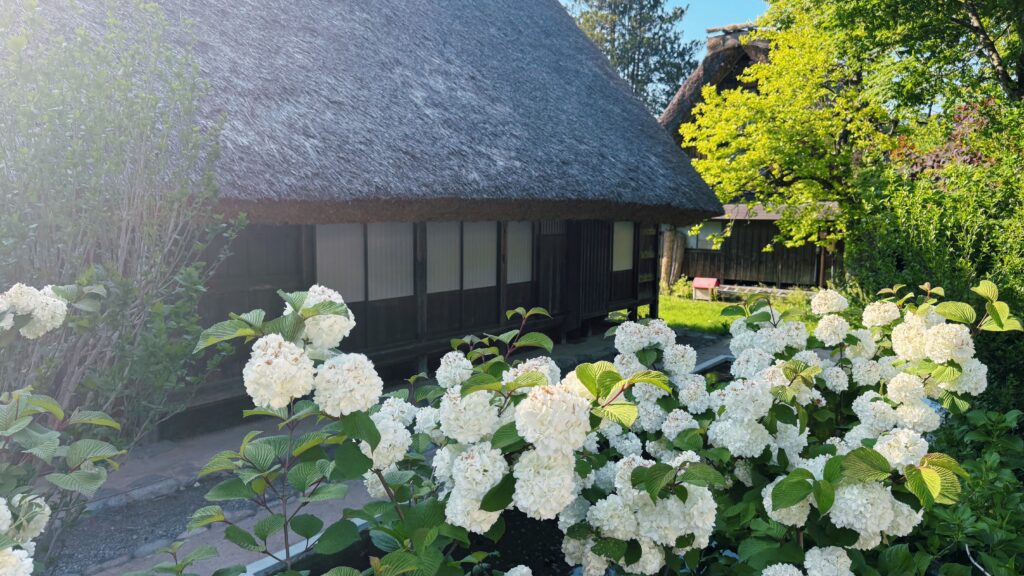
Afternoon: Spend two to three hours exploring Shirakawa-go. This UNESCO World Heritage Site is famous for its gassho-zukuri farmhouses, whose steep thatched roofs look like hands pressed together in prayer and are designed to withstand heavy snowfall. Unlike many preserved historic districts, this is still a living village where residents continue to call these centuries-old homes their own. Wander the narrow streets, step inside an open farmhouse, and don’t miss the short climb to Shiroyama Viewpoint for the best panoramic view over the village.
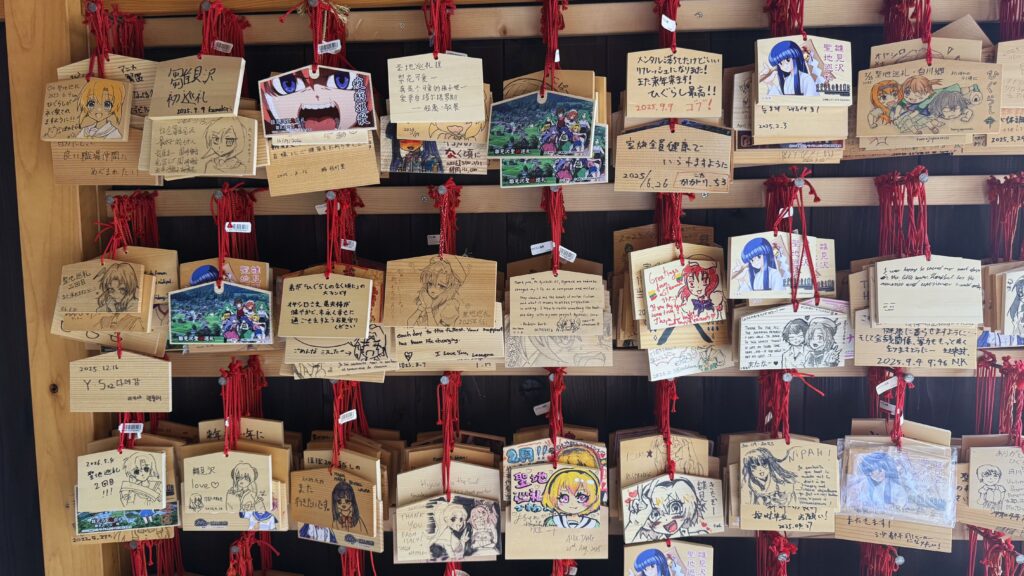
Fun fact: If you’ve ever seen the anime Higurashi, the town where the anime takes place is inspired by Shirakawa-go. I was surprised to see ema (wooden plaques) of the characters at the top of Shiroyama Viewpoint. Such an unexpected find.
Evening: Continue on the Nohi Bus to Takayama, another journey of about an hour. For dinner, I recommend going to Ramen M and trying aburasoba topped with Hida beef: a brothless noodle dish tossed in sauce and finished with slices of the region’s exceptionally marbled wagyu. It was rich and indulgent.
Day 4: Exploring Takayama
Morning: Start at the Miyagawa Morning Market, which runs alongside the river until around noon. Local vendors sell everything from homemade pickles and miso to sansho pepper, crafts, and seasonal produce. Even if you’re not shopping, it’s a pleasant place to wander and chat with the stall owners.
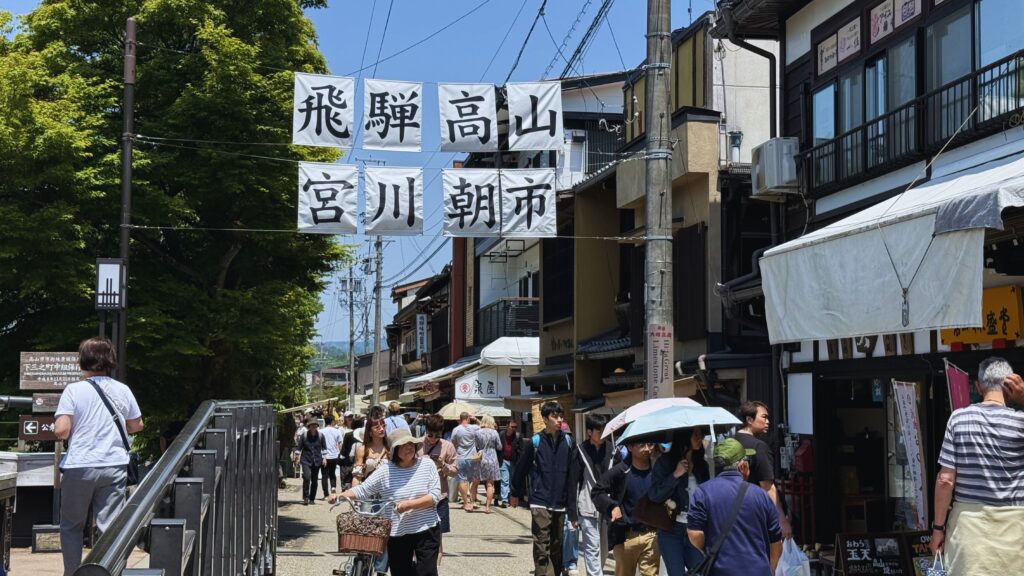
Afternoon: Spend the afternoon exploring Sanmachi Suji, Takayama’s beautifully preserved merchant district lined with dark wooden buildings dating back to the Edo period. Rather than sitting down for one large meal, I recommend turning lunch into a food crawl. Sample Hida beef in different forms (more on that in the What to Eat section), browse the local snack shops, and stop wherever something catches your eye.
After lunch, make your way to one of the sake shops for a tasting. I went to Hirase Sake Brewery and was able to try unlimited samples for 30 minutes. I knew nothing about sake going in, but the kind lady who worked there explained the different styles and how the brewing process works. One interesting thing I learned was that the sake lees (the paste-like byproduct of brewing) is now used as a plant-based Parmesan substitute!
Evening: End the day with a soak in the outdoor hot springs (at your hotel or public bath). After several days of walking and sightseeing, it’s the perfect way to recharge. If you’re following my two-week Japan itinerary, you’ll head to Hirayu Onsen tomorrow, where you’ll spend the day preparing for your hike in the Japanese Alps.
Where to Stay in Kanazawa and Takayama
Where to Stay in Kanazawa
For most travelers, I recommend staying near Kanazawa Station, especially for such a short stay. The station is well connected to the Shinkansen, buses, and the airport shuttle, making it the most convenient base. You’ll also find plenty of modern hotels at reasonable prices.
If you prefer a more atmospheric stay, consider the Higashi Chaya District. Waking up in the city’s historic geisha quarter and wandering its quiet streets before the crowds arrive is a special experience, though accommodations here tend to be smaller and more expensive.
My stay: Hyatt Centric Kanazawa. It’s located right next to Kanazawa Station, and the rooms are also noticeably larger than the average Japanese hotel room, a luxury that you come to appreciate when traveling through Japan.
Browse Kanazawa Stays
Where to Stay in Takayama
Takayama is a small city, so most properties are within easy walking distance of the old town and morning market. For a short stay, I recommend being near Takayama Station. The station is just a short stroll from the Miyagawa Morning Market and Sanmachi Suji, so you’ll be able to explore almost everything in town on foot. It’s also the most convenient location if you’re continuing to Hirayu Onsen or Kamikochi by bus the next morning.
If your budget allows, consider booking a ryokan with an onsen. After spending the day walking through the old town and sampling Hida beef, soaking in a hot spring is the perfect way to unwind.
My stay: Takayama Ouan Hotel. A Japanese-style hotel just minutes away from Takayama Station with an onsen on-site.
Browse Takayama Stays
How to Get Around Kanazawa and Takayama
The good news is that both Kanazawa and Takayama are compact, pedestrian-friendly cities where you can see most of the highlights without renting a car.
How to Get Around Kanazawa
Most of Kanazawa’s major attractions, including Higashi Chaya District, Kenroku-en Garden, Omicho Market, and Nagamachi Samurai District are within 20–30 minutes of one another.
The city is also connected by an extensive bus network. The easiest option is to use your IC card (Suica, ICOCA, etc.) or tap a contactless credit card on participating buses.
How to Get Around Takayama
Takayama is even easier to navigate. The train station, Miyagawa Morning Market, and Sanmachi Suji are all within a 10–15 minute walk of one another, making the historic center almost entirely walkable.
How to Get From Kanazawa to Shirakawa-go to Takayama
The easiest way to travel between Kanazawa and Takayama is by highway bus via Shirakawa-go. It’s a seamless route that lets you visit the UNESCO-listed village without backtracking. For the latest schedules, refer to the Nohi Bus website.
Kanazawa to Shirakawa-go: You have two options. (1) Go to this counter next to the Lawson at Kanazawa Station and buy your ticket there. (2) Reserve your tickets online at Japan Bus Online.
Shirakawa-go to Takayama: Again, there are two options. (1) Buy the ticket at the Shirakawa-go bus station once you arrive. (2) Reserve your tickets online at Japan Bus Online.
What to Eat in Kanazawa and Takayama
Kaisendon: If you only eat one meal in Kanazawa, make it a kaisendon at Omicho Market. The bowl is piled high with incredibly fresh seafood (think tuna, sweet shrimp, scallops, salmon roe, and uni) served over rice. Such a good meal for a tiny fraction of what it would cost back in the States.
Noto beef: Kanazawa’s regional wagyu comes from cattle raised on the nearby Noto Peninsula. It’s beautifully marbled and rich without feeling overly fatty. I had it donburi-style and still think about the meal months later.
Gold leaf soft serve: Kanazawa produces nearly all of Japan’s gold leaf, and you’ll see many desserts with this topping. This is mainly for the ‘gram; don’t expect the gold leaf to add any flavor.
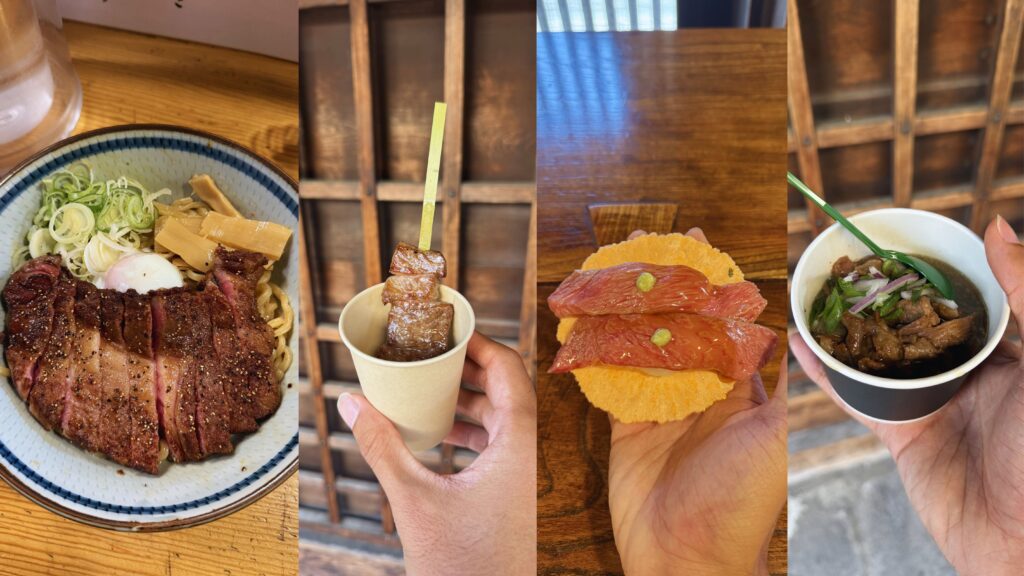
Hida beef: Takayama’s signature specialty is Hida beef, another premium wagyu known for its tenderness and intense marbling. I took it as a personal challenge to try as many versions as possible. Here are my rankings to help you decide which ones are worth it.
- Steak aburasoba (9/10): My favorite way to eat it. This brothless noodle dish is topped with slices of Hida beef that render their fat into the noodles, creating a rich, savory bowl packed with umami. Try it at Ramen M.
- Special A5 loin skewer (8/10): The beef melted in my mouth and had just the right amount of salt. I immediately wanted to get another one and had to hold myself back. Try it at Rokujyuban.
- Premium beef sushi (7.5/10): The buttery beef paired well with the lightly vinegared rice, and the crispy rice cracker added a nice textural contrast. Delicious, though not quite as memorable as the aburasoba or skewer. I tried it at Sakaguchiya.
- Hida beef stew (7/10): It was yummy, but the long cooking process muted the rich flavor of the Hida beef. The stew was flavorful, but I think it would have been just as good with regular beef. Try it at Rokujyuban.
- Hoba miso style (5/10): A regional dish where the beef is grilled with miso on a magnolia leaf. I made the mistake of ordering a lean cut, so the meat tasted more like ordinary beef. If you try this, make sure to opt for a fattier, more premium cut for that classic wagyu flavor.
Sake: Takayama’s clean mountain water makes it one of Japan’s premier sake-producing regions. Several breweries along Sanmachi Suji offer tastings, making it easy to sample different styles while learning about the brewing process.
What’s Next on This Japan Itinerary?
From Takayama, we head into the Japanese Alps via Hirayu Onsen, a mountain town that serves as the gateway to Kamikochi. This is where the trip shifts from city and culture to nature and hiking, including a full-day trek up Mount Yakedake with breathtaking views unlike anything else on the route.
Interested in the full 2-week route? Check out the other posts in my Japan travel guide.
- 2-Week Japan Itinerary: Beyond Tokyo and Kyoto
- 3 Days in Fukuoka: An Introduction to Kyushu
- Yufuin and Beppu: 2 Days in Oita’s Onsen Towns
- 2 Day Japanese Alps Itinerary: Visiting Kamikochi
Frequently Asked Questions
Is Kanazawa worth visiting?
Yes, Kanazawa offers many of the things people love about Kyoto (historic districts, traditional teahouses, and beautiful gardens) but with fewer crowds and a more relaxed pace.
How many days should I spend in Kanazawa?
I recommend one and a half days. This gives you enough time to explore Higashi Chaya, Kenroku-en, Omicho Market, and Nagamachi without rushing, while also leaving room for a tea ceremony or café stop.
Is Takayama worth visiting?
Yes, especially if you’re already planning to visit Shirakawa-go or the Japanese Alps. Takayama’s beautifully preserved old town, incredible Hida beef, and slower pace make it a worthwhile stop on any central Japan itinerary.
How many days should I spend in Takayama?
One full day is enough to see the highlights. You can visit the morning market, wander Sanmachi Suji, sample Hida beef, and enjoy an onsen in the evening without feeling rushed.
Do I need to book the Kanazawa–Shirakawa-go–Takayama bus in advance?
Yes. Seats frequently sell out on weekends, holidays, and during peak travel seasons. I recommend reserving both legs of the journey before your trip through Japan Bus Online or at the bus ticket counter in Kanazawa Station.
Is Kanazawa walkable?
Yes, I walked the whole time in Kanazawa. Everything is within a 20-minute walk of each other, but if you don’t feel like walking, there’s also a local bus network. Simply use your IC card or contactless payment to ride.
Is Takayama walkable?
Very much so. The train station, Miyagawa Morning Market, and Sanmachi Suji are all within a 10–15 minute walk of one another.
Is the Kanazawa tea ceremony worth it?
It depends on the experience you book. Kanazawa has a strong tea ceremony tradition, but quality varies significantly between operators. I found my own ceremony underwhelming due to the lack of explanation and atmosphere, so I’d recommend choosing one that emphasizes education and takes place in a genuinely tranquil setting.
How many days do you need for Kanazawa, Shirakawa-go, and Takayama?
Four days works well: One day arriving in Kanazawa, one full day exploring Kanazawa, one travel day with a stop in Shirakawa-go, and one full day exploring Takayama.
Is Shirakawa-go worth visiting?
Yes, it’s different enough from the historic districts you’ll find elsewhere on the itinerary. Two to three hours is enough to see the whole village, and this central Japan itinerary passes through it on the way from Kanazawa to Takayama, meaning that it doesn’t cost you an extra day.
Can I visit Shirakawa-go as a day trip from Kanazawa or Takayama?
Yes, but I think it’s even better as a stop on the way from Kanazawa to Takayama. The highway bus route naturally passes through the village, so you can explore for a few hours before continuing on instead of backtracking.