After three days in Fukuoka, the next two stops on my 2-week Japan itinerary were Yufuin and Beppu: two neighboring hot spring towns that couldn’t feel more different from each other.
Yufuin is quiet, polished, and built around the ryokan experience. Beppu is louder and more dramatic, bubbling with volcanic activity. One invites you to slow down, while the other reminds you that you’re standing on top of more geothermal activity than anywhere else in Japan.
Visiting both back-to-back ended up being one of my favorite stretches of the trip. This two-day itinerary covers the highlights of each town, from soaking in a private rotenburo and eating a traditional kaiseki dinner to wandering Beppu’s surreal hell pools and trying food cooked over geothermal steam.
Table of Contents
Day-by-Day Yufuin and Beppu Itinerary
Day 1: Yufuin
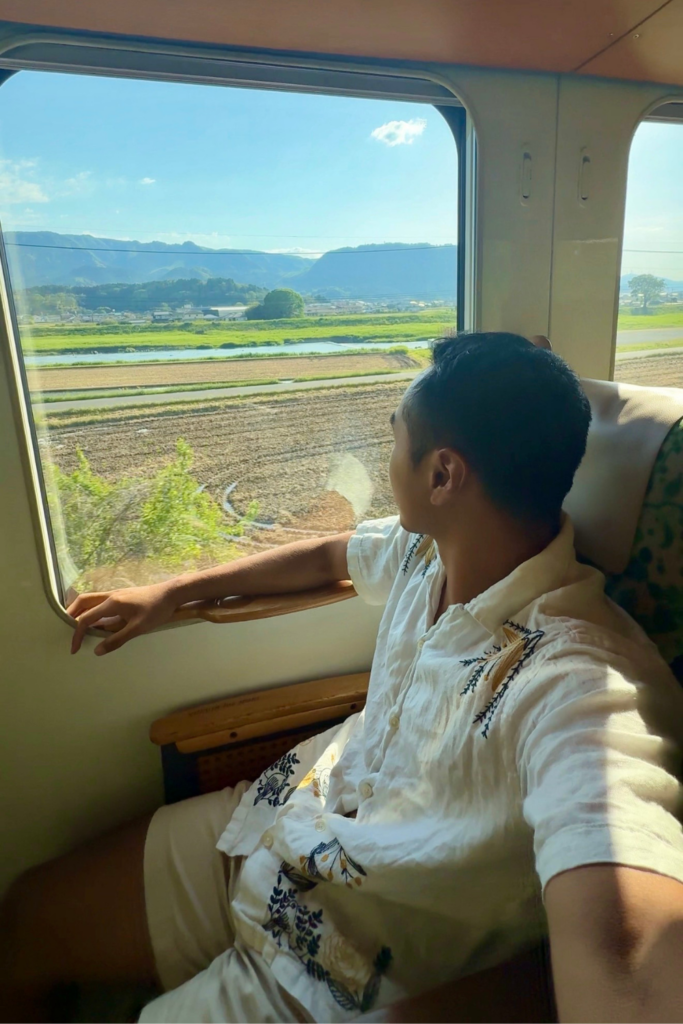
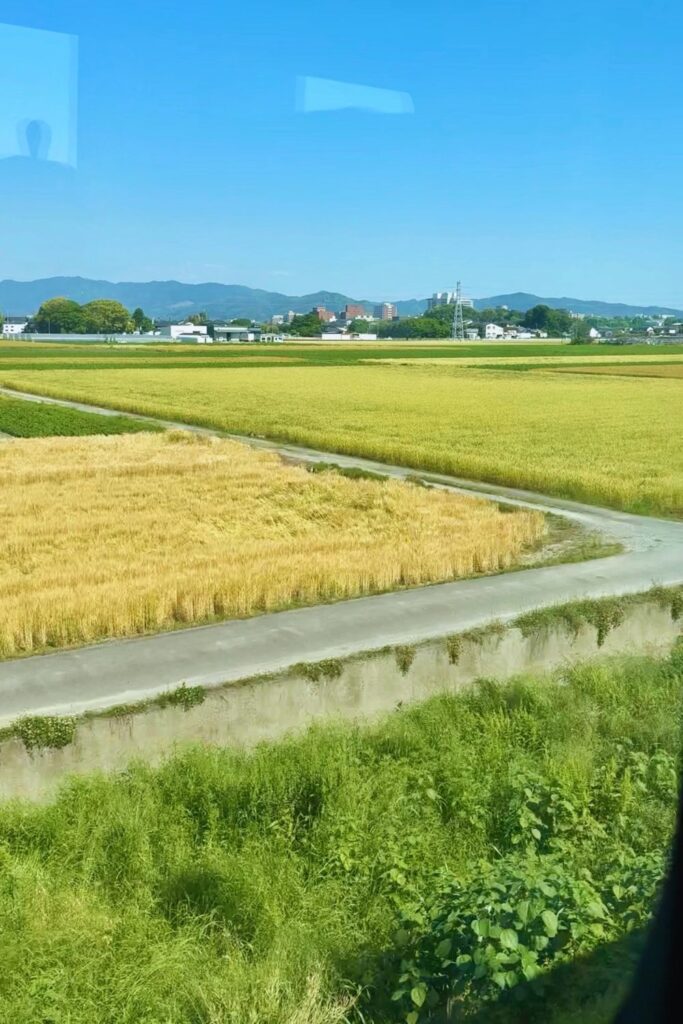
Morning: Travel from Fukuoka to Yufuin aboard the Yufuin no Mori, one of Japan’s most scenic sightseeing trains. As the train leaves the city behind, the landscape gradually shifts to rolling hills, forests, rice fields, and small rural villages before climbing into the mountains of Oita Prefecture.
It’s a relaxing journey that feels like part of the experience rather than just transportation. Seats regularly sell out during weekends and peak tourist seasons, so reserve yours well in advance.
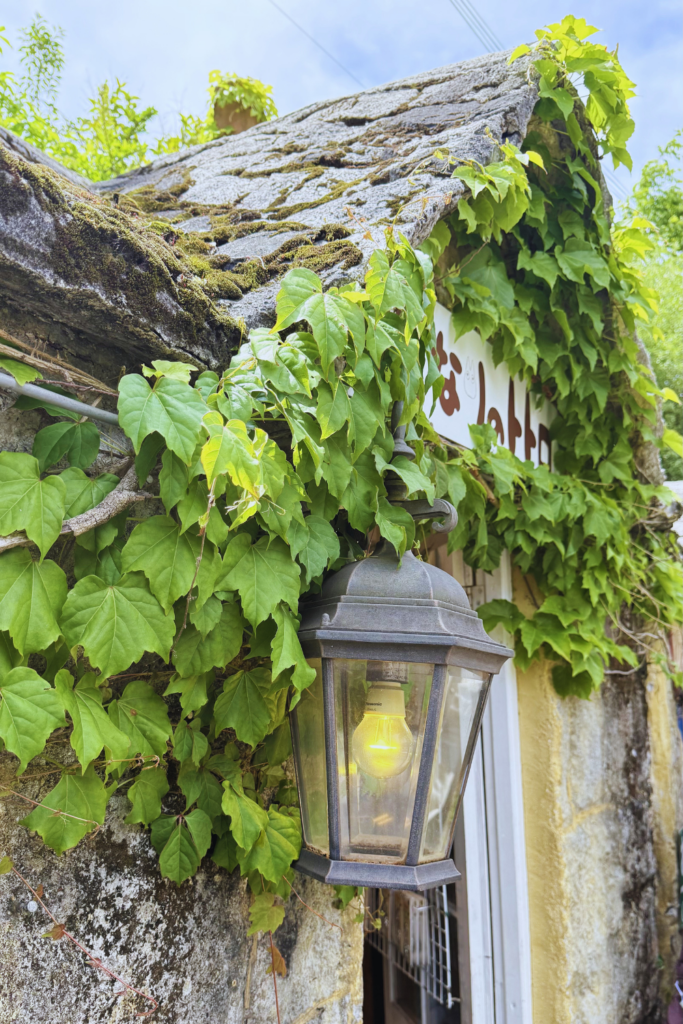
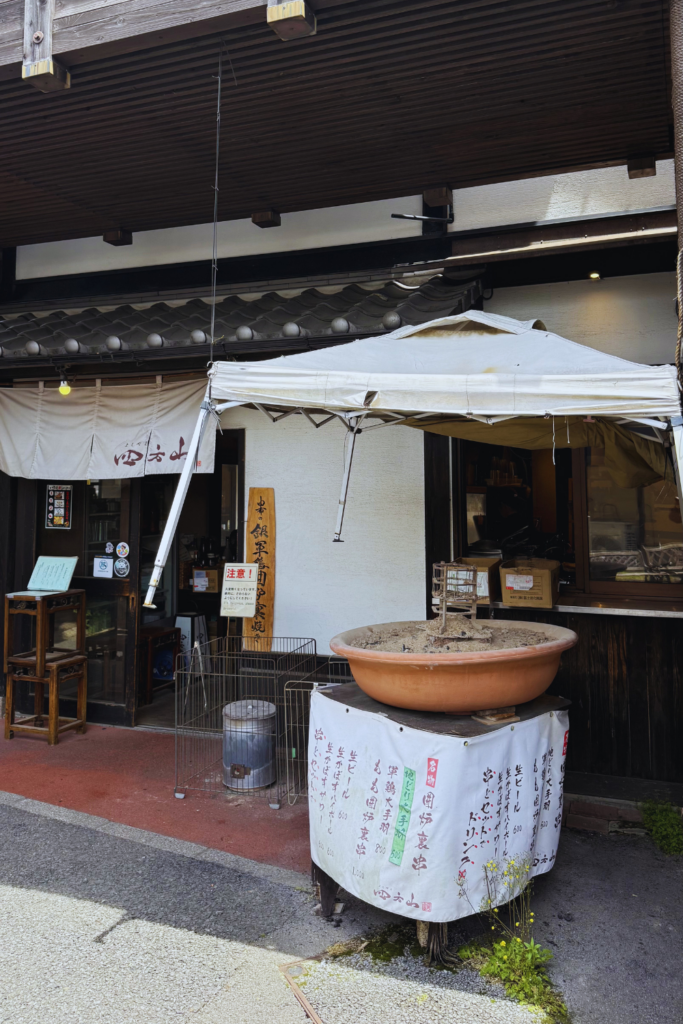
Afternoon: After arriving, check into your ryokan and spend the afternoon wandering Yunotsubo Kaido, Yufuin’s charming main street that stretches from the station toward Kinrin Lake.
The road is lined with artisan boutiques, souvenir shops, dessert stands, and cozy cafés, making it less about reaching a destination and more about browsing as you go. I treated it like an extended snack crawl rather than a proper lunch, trying strawberry daifuku, a meat bun, vanilla soft serve, and a surprisingly good black sesame latte.
Along the way, keep an eye out for the Yufuin Floral Village, a small cluster of storybook-style buildings with a distinct Studio Ghibli vibe. It’s worth a wander and a few photos, but you won’t need more than 15 to 20 minutes.
Evening: The highlight of staying in Yufuin isn’t a landmark; it’s the ryokan itself. Most include a traditional kaiseki dinner served course by course, either privately in your room or in a dedicated dining area.
Expect an elegant meal built around local, seasonal ingredients such as handmade tofu, mountain vegetables, wagyu beef, fresh sashimi, and delicately prepared side dishes that change throughout the year.
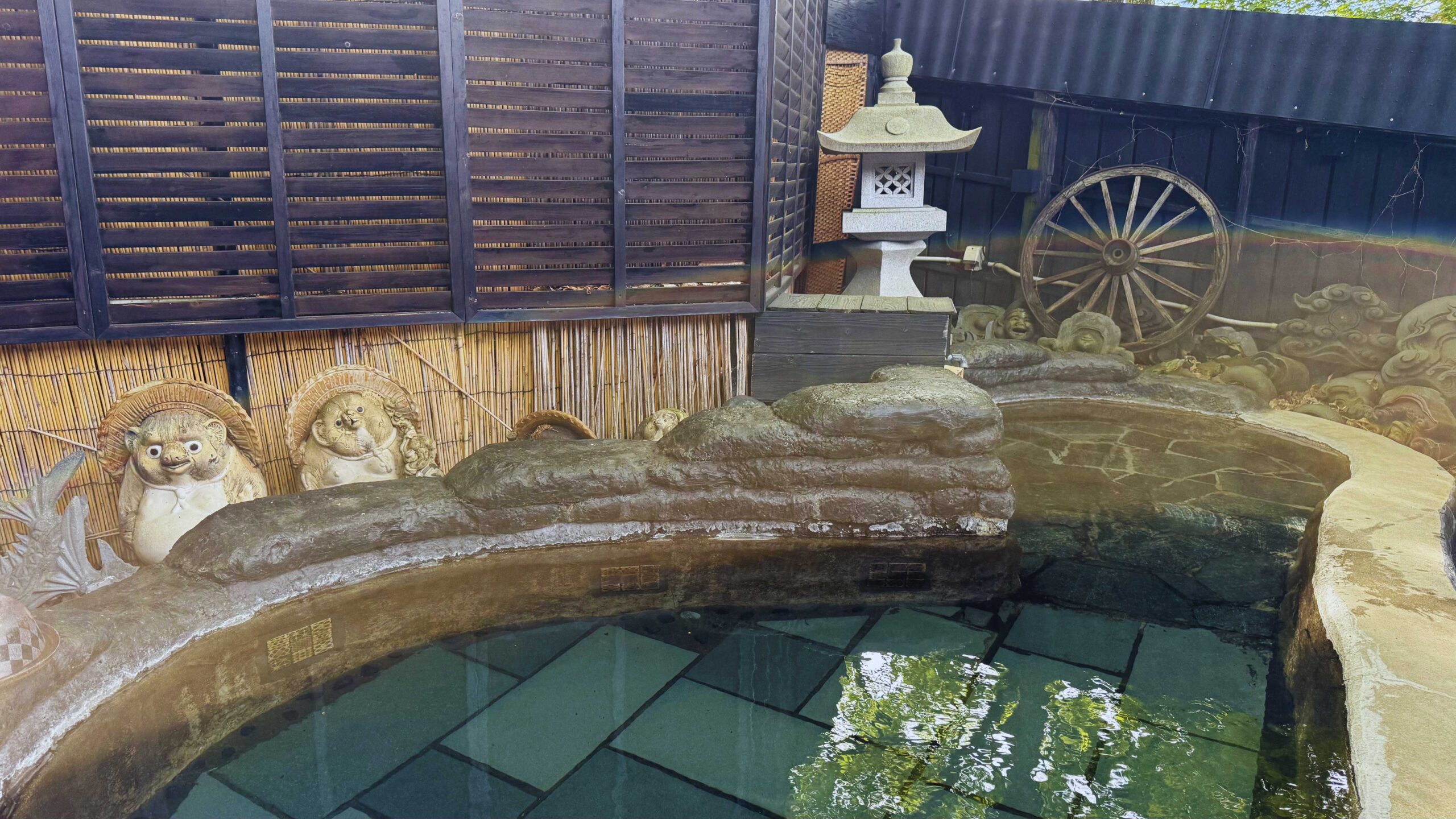
After dinner, change into your yukata and end the evening with a soak in your ryokan’s rotenburo (open-air bath). Sitting in steaming mineral water under the night sky surrounded by the quiet mountains was exactly the reset I didn’t know I needed after several busy travel days.
Day 2: Beppu
Morning: Wake up early and head to Kinrin Lake before 8:00 a.m. The lake sits at the end of Yunotsubo Kaido and is fed in part by natural hot springs, causing a layer of mist to drift across the surface on cool mornings.
At this hour it’s peaceful, atmospheric, and almost silent except for the occasional bird or camera shutter. Within an hour, tour buses begin arriving from Fukuoka and the paths become noticeably more crowded.
After your walk, return to the ryokan for breakfast, check out, and catch the bus to Beppu.
Late morning: The direct bus from Yufuin to Beppu takes about an hour and drops you into an entirely different world. While Yufuin is refined and tranquil, Beppu feels raw and volcanic, with steam rising from sidewalks, rooftops, and random vents throughout the city.
From the station, head straight to Kannawa, home to the Jigoku Meguri (Hell Tour). The seven geothermal pools are split into two clusters, and the Kannawa area contains five of them within easy walking distance, making it the logical place to begin.
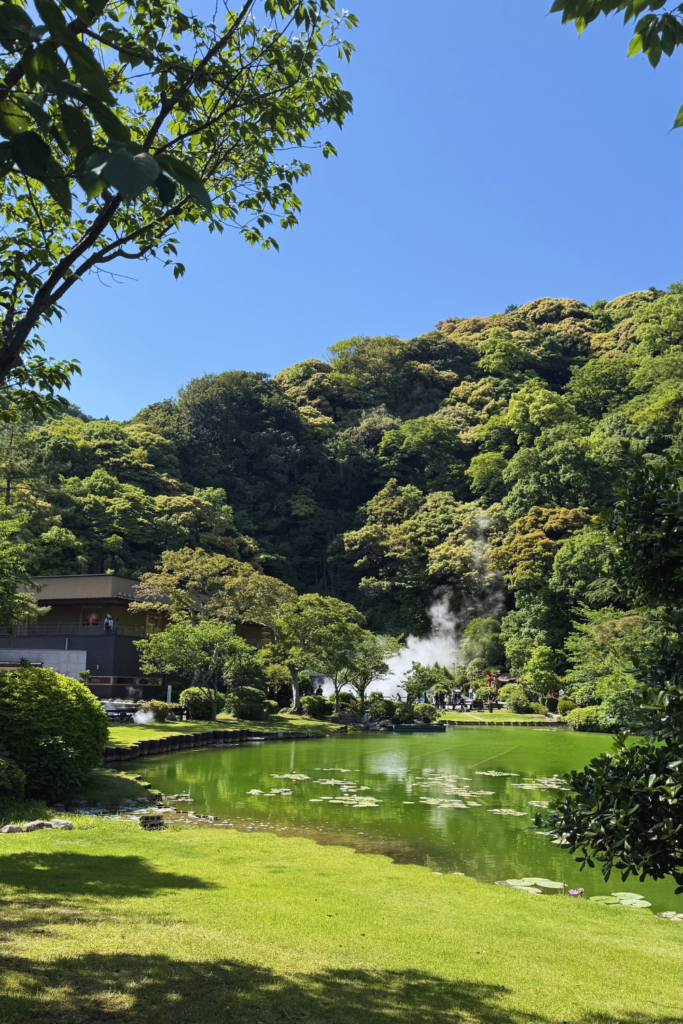
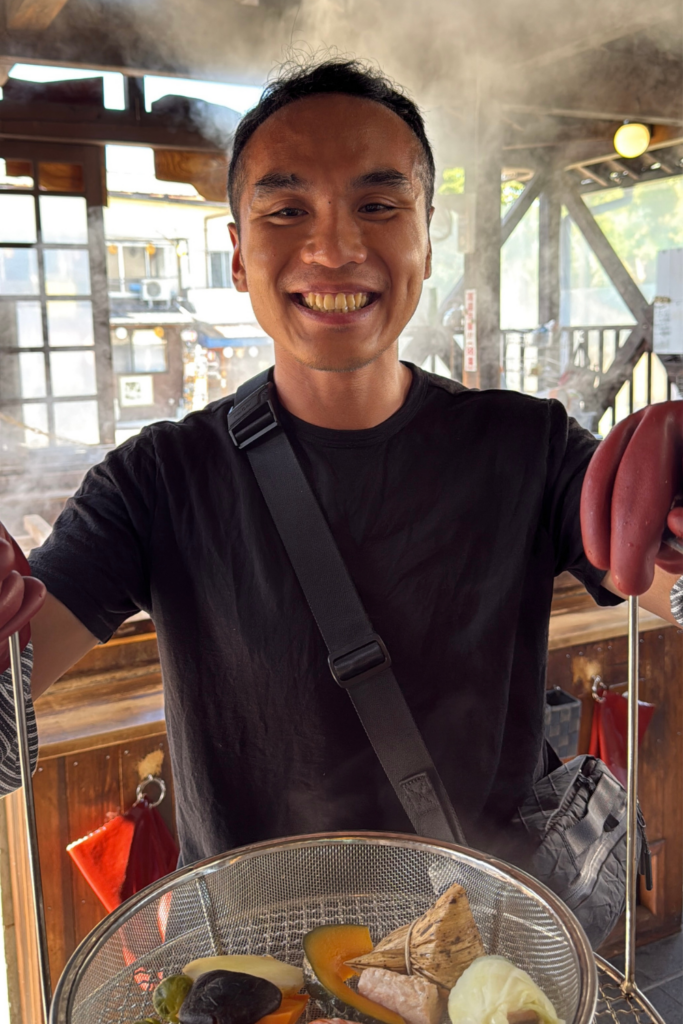
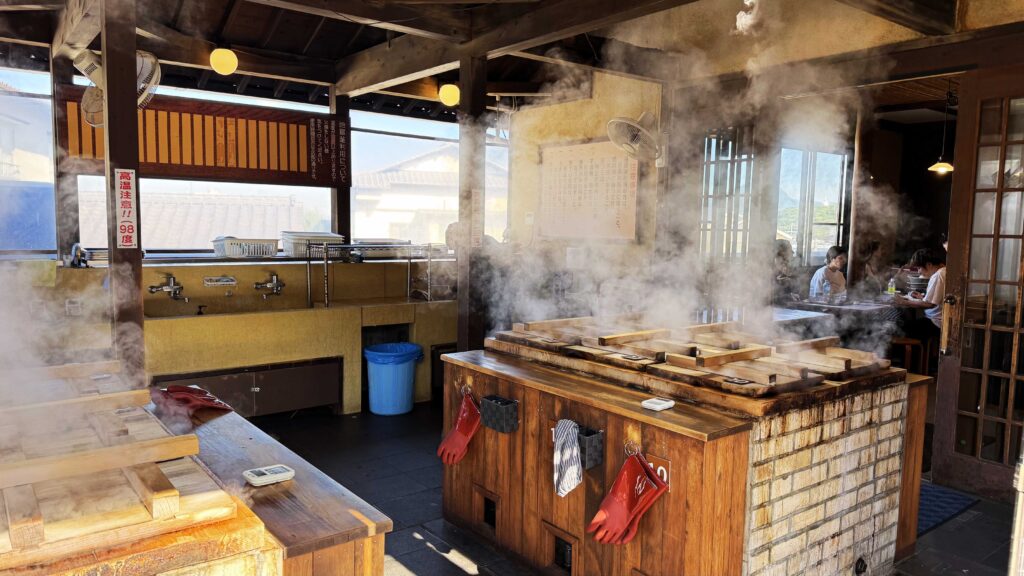
Lunch: After exploring the first cluster, stop at Jigoku Mushi Kobo for jigoku-mushi, Beppu’s signature style of cooking that uses naturally occurring geothermal steam to prepare vegetables, seafood, meat, and dumplings.
I’ll be honest: the food itself wasn’t extraordinary. The steam doesn’t transform the flavor in any noticeable way (the ponzu sauce does most of the heavy lifting). Go for the novelty, not the taste. My favorite was a rice and meat dish wrapped in a leaf; it had a good natural flavor that didn’t need any sauce.
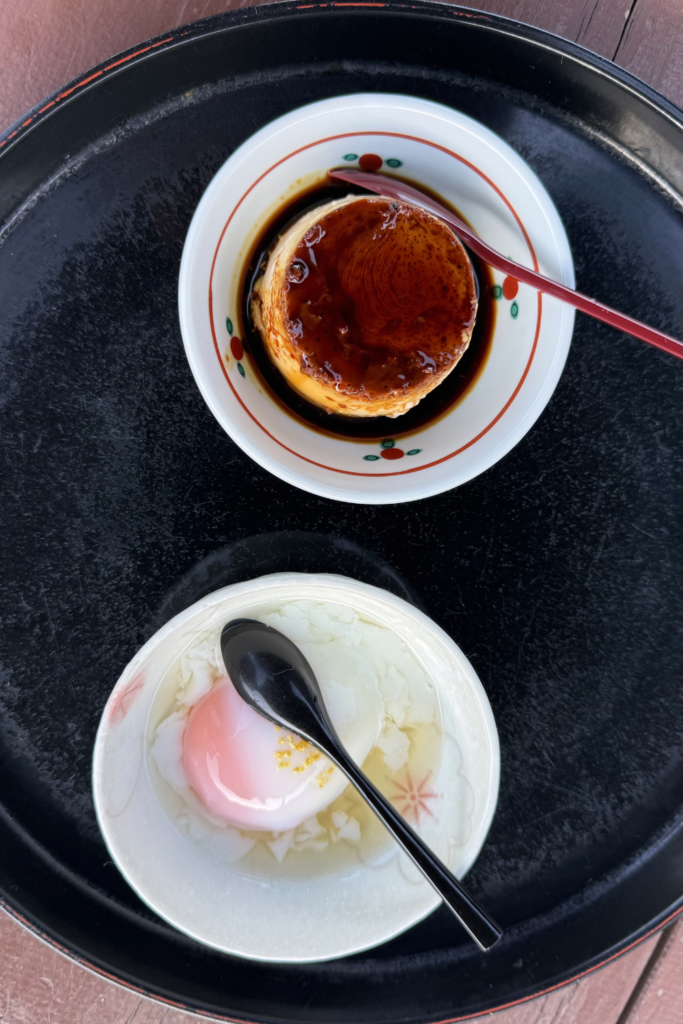
Afternoon: Take the local bus to the smaller Shibaseki cluster to see the remaining two hells. After your Hell Tour, make one final stop at Okomotoya Baiten for Beppu’s famous hell pudding. The silky custard topped with a slightly bitter caramel sauce was one of the best desserts I had during my entire Japan trip and exceeded my expectations.
Evening: Finish the day with dinner before doing what everyone comes to Beppu to do: soaking in an onsen. The city has more hot spring sources than anywhere else in Japan, and after a full day on your feet, that’s exactly what you need. If your accommodation has its own bath, use it. Otherwise, visit one of Beppu’s inexpensive public bathhouses.
If you’re following my 2-week Japan route, the next stop is Kanazawa. The following morning, take the limited express train from Beppu to Fukuoka and then catch a short domestic flight. Check out my 4-Day Central Japan Itinerary, where I cover Kanazawa, Shirakawa-go, and Takayama.
Where to Stay in Yufuin and Beppu
Yufuin Accommodation
Stay at a ryokan. A night in a traditional Japanese inn is the entire reason to visit Yufuin, and booking a standard business hotel misses the point.
A ryokan experience typically includes tatami floors, yukata robes, access to private or communal onsen, a multi-course kaiseki dinner, and a traditional Japanese breakfast the next morning. Even a mid-range property (like the one I booked) offers everything you need to experience this slower pace of travel.
My stay: Yufuin Lamp no Yado. A mid-range ryokan with a warm atmosphere and multiple private onsens. I paid $140, which included a kaiseki dinner and breakfast.
Browse Yufuin Stays
Beppu Accommodation
For most travelers, I recommend staying near Beppu Station. It’s the most convenient location for arriving from Yufuin, exploring the city by bus, and catching an early train the following morning. You’ll find plenty of clean business hotels and affordable ryokans within walking distance.
If your priority is being close to the Jigoku Meguri, consider staying in Kannawa instead. You’ll be steps from the geothermal district and surrounded by steam-filled streets, though you’ll need to take a bus or taxi back to Beppu Station when it’s time to leave.
My stay: Super Hotel Beppu Ekimae. Clean, efficient, and just a short walk from the station. It wasn’t luxurious, but at $61 per night, it was exactly what I needed for a one-night stop.
Browse Beppu Stays
How to Get Around Yufuin and Beppu
Getting around both towns is easy with public transportation. No rental car is needed for this Yufuin and Beppu itinerary.
| Route | Transport | Time |
|---|---|---|
| Hakata Station → Yufuin Station | 🚃 Yufuin no Mori | 2h 15m |
| Within Yufuin | 🚶 Walk | 15–20 min |
| Yufuin Station → Beppu Station | 🚌 Bus | 1h |
| Beppu Station → Kannawa (Hells Tour) | 🚌 Local bus | 20 min |
| Beppu Station → Hakata Station | 🚃 Limited Express | 2h 15m |
Booking the Yufuin no Mori
Make sure to book tickets in advance because this train frequently sells out on weekends and during peak seasons. You can book online or at Midori no Madoguchi (green JR counter) at Hakata Station.
Pro-Tip: If booking online, plan to arrive at Hakata Station early to get your physical ticket. I recommend getting there at least 40 minutes before departure to give yourself plenty of time to find the counter and collect the ticket.
When I went, the line at the counter was 20 minutes long, and I ended up boarding with barely five minutes to spare. If you don’t want to cut it close like me, show up early; Japanese trains wait for no one.
Getting around Yufuin
Yufuin is entirely walkable. The train station, Yunotsubo Kaido (the main street), and Kinrin Lake all sit in a straight line, and you can comfortably walk from one end to the other in under 20 minutes. Most of your time here will be spent on foot, wandering between cafés, shops, and viewpoints at an unhurried pace.
Getting around Beppu
Beppu is easy to navigate using local buses. These buses run regularly between Beppu Station and the two Jigoku Meguri clusters (Kannawa and Shibaseki). Your IC card works on all routes, and many buses support contactless credit card payments as of 2026.
If you’re short on time or want to move more efficiently between the hell clusters, taxis are a good option and widely available. Distances are short, so fares stay reasonable, and they can save you a fair amount of waiting time between buses.
The map below shows the main points of interest on this Beppu itinerary.
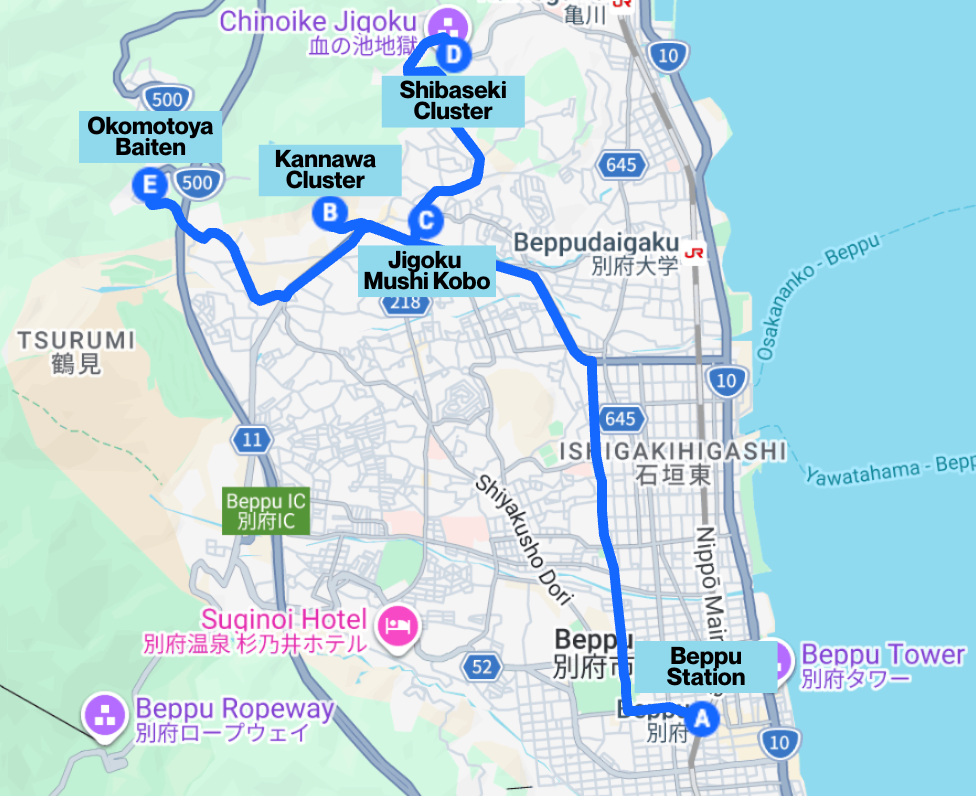
(A) Beppu Station: The city’s main transportation hub and where you’ll arrive from Yufuin and depart for your next destination. It’s also the best area to stay if you’re only spending one night in Beppu.
(B) Kannawa Cluster: The main area for the Jigoku Meguri (Hell Tour), home to five of Beppu’s seven hells. The attractions are all within walking distance, making this the best place to start your visit.
(C) Jigoku Mushi Kobo: A popular restaurant where you can experience Beppu’s famous jigoku-mushi (hell-steamed food), cooked using natural geothermal steam straight from the ground.
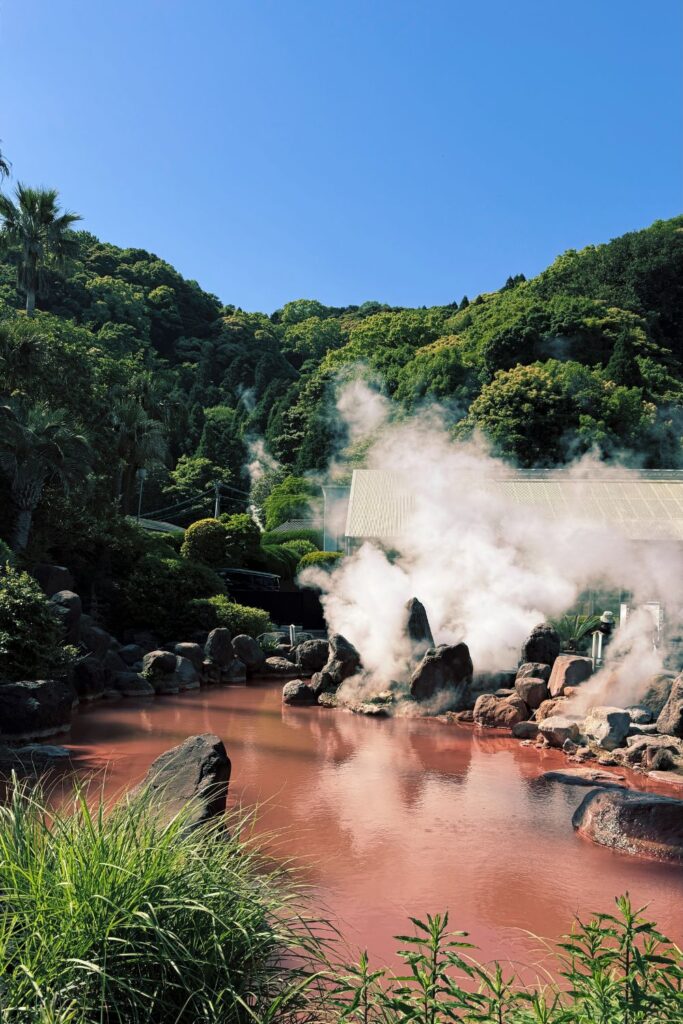
(D) Shibaseki Cluster: A smaller cluster containing Chi no Ike Jigoku (Blood Pond Hell) and Tatsumaki Jigoku. It’s a short bus ride from Kannawa and worth visiting for the striking red waters of Blood Pond Hell.
(E) Okamotoya Baiten: A local favorite known for its hell-steamed pudding, a silky custard topped with bittersweet caramel.
What to Eat in Yufuin and Beppu
Yufuin and Beppu aren’t really foodie destinations, so don’t expect to eat anything out of this world. That said, there are still a handful of local specialties to try out.
Hell-steamed food (jigoku-mushi). Beppu’s signature dining experience, where ingredients are cooked using natural geothermal steam. Go for the novelty, not the flavor. The hell pudding though is actually delicious.
Ryokan kaiseki dinner. If you’re staying at a ryokan in Yufuin, this will likely be the highlight of your meals. Expect a beautifully presented multi-course dinner featuring seasonal ingredients like fresh tofu, mountain vegetables, local fish, and wagyu.
Ryokan breakfast. Traditional Japanese breakfasts typically include grilled fish, rice, miso soup, pickles, and dashimaki tamago. It’s simple, balanced, and a great way to start the day before heading to Beppu.
The Jigoku Meguri: Which Hells Are Actually Worth It?
The Jigoku Meguri (Hell Tour) is Beppu’s main attraction and consists of seven geothermal pools scattered across the city. Despite the name, these aren’t onsen you can bathe in (they’re way too hot). Instead, each “hell” showcases a different geothermal phenomenon, from bright blue water to bubbling mud and blood-red ponds.
The seven hells are split into two clusters: five in Kannawa that are within walking distance of each other and two more in nearby Shibaseki, connected by a short bus ride. If you have the time, you can visit all of them with the combined pass. But if you’re trying to prioritize, visit only these two.
Umi Jigoku (Sea Hell)
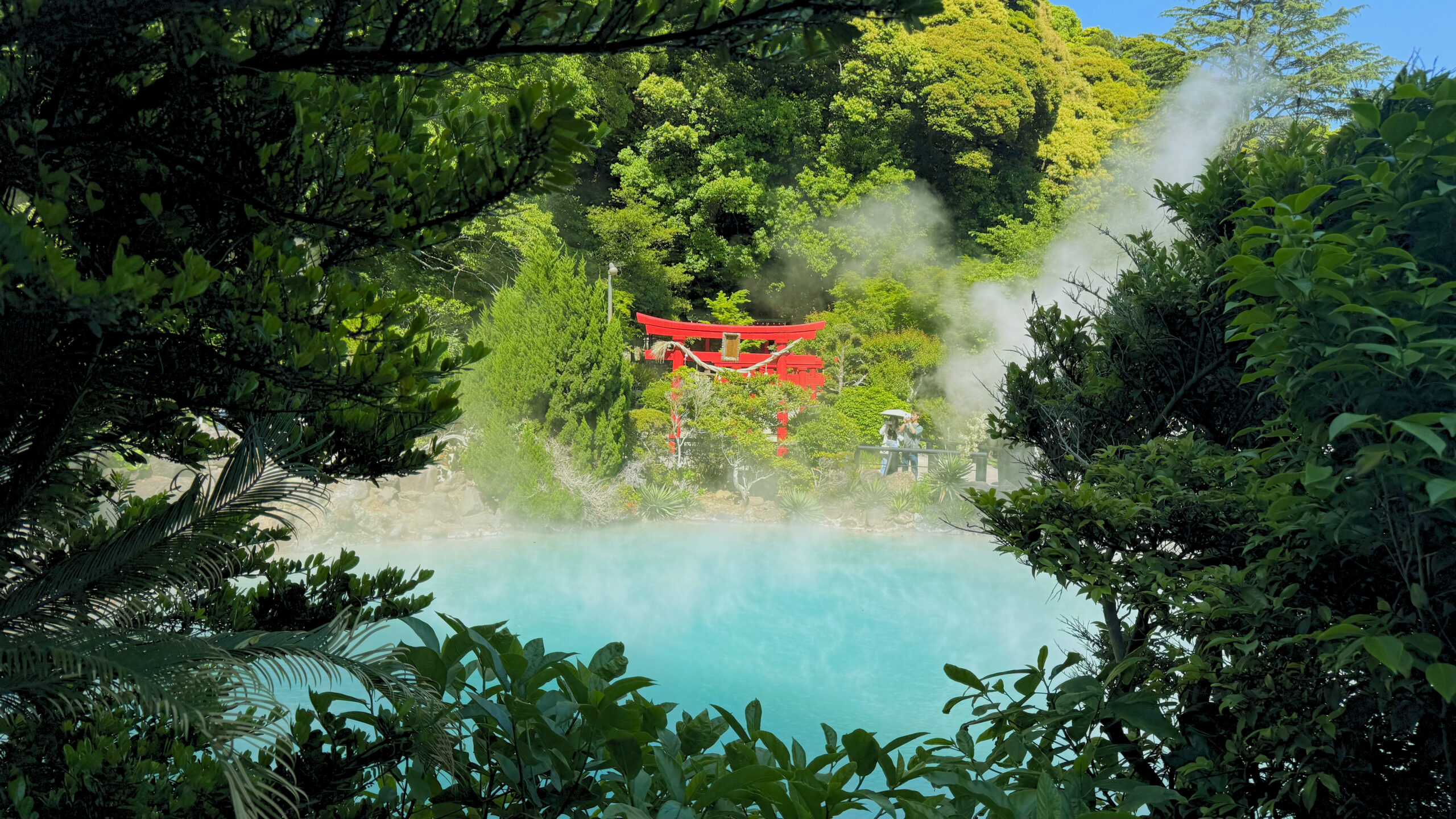
Umi Jigoku was easily my favorite. The pool is an unreal shade of cobalt blue, with thick steam rising off the surface and tropical plants surrounding the water thanks to the constant geothermal heat. I actually expected it to be underwhelming after seeing so many photos online, but it looked even more impressive in person. It’s the postcard image of Beppu for a reason.
Chi no Ike Jigoku (Blood Pond Hell)
Located in the smaller Shibaseki cluster, Chi no Ike Jigoku is worth the extra bus ride. The water is a deep rusty red, colored naturally by iron-rich minerals in the earth, creating a scene that feels almost otherworldly. It’s completely different from Umi Jigoku in both color and atmosphere, which makes seeing both worthwhile rather than repetitive.
The Remaining Hells
The other five range from mildly interesting to fairly forgettable. Oniyama Jigoku (Crocodile Hell) is home to dozens of crocodiles that thrive in the geothermal warmth, making it one of the more memorable stops. The rest (a geyser, bubbling mud pools, and additional steaming springs) are enjoyable enough if you’re already there but probably wouldn’t justify a dedicated visit on their own.
Should you buy the combined pass?
As of 2026, the combined pass giving you access to all seven hells costs ¥2200. Each hell costs about ¥500, so if you’re planning to visit five hells or more, it’s worth buying the pass. But if you’re only here to see the highlights, just buy individual tickets and save the money.
Is Yufuin or Beppu Worth Visiting?
Yes! Yufuin and Beppu are both hot spring towns, but they feel nothing alike. That’s why doing them back-to-back works so well.
Yufuin is where you slow down. After a few days experiencing Fukuoka’s bustling energy, checking into a ryokan here is a much-needed reset. There’s nothing on the agenda beyond dinner, walking through town, and a couple of long soaks in the onsen. The town is small enough that you don’t have to plan anything.
Beppu is where the pace starts to pick up. The hells are surreal: boiling pools of cobalt blue, blood red, and grey mud reminding you that you’re in the most geothermally active place in Japan.
What’s Next on This Japan Itinerary?
From Beppu, my 2-week itinerary moves to Kanazawa, a preserved historic city on the Sea of Japan coast. Often called “Little Kyoto,” it is known for its geisha districts, samurai neighborhoods, and traditional crafts.
Interested in the full 2-week route? Check out the other posts in my Japan travel guide.
- 2-Week Japan Itinerary: Beyond Tokyo and Kyoto
- 3 Days in Fukuoka: An Introduction to Kyushu
- 4 Days in Kanazawa, Shirakawa-go, and Takayama
- 2 Day Japanese Alps Itinerary: Visiting Kamikochi
Staying Connected
Japan’s mobile coverage is excellent, but your home carrier’s international rates can be costly. To avoid roaming charges during my two-week trip, I used Airalo. Get an eSIM before you fly, activate it when you land, and you’re connected from the moment you walk out of the airport.
Frequently Asked Questions
Can I take a day trip to Yufuin and Beppu from Fukuoka?
Technically yes, but I wouldn’t recommend it. Yufuin is over two hours from Hakata by limited express each way, which means a day trip eats four hours of transit for maybe three or four hours on the ground.
The whole point of Yufuin is to slow down, soak in the onsen, and stay overnight at a ryokan. Beppu is also about two hours from Fukuoka, and while the Jigoku Meguri is doable in an afternoon, you’d be rushing back immediately after. Staying overnight allows you to explore more of Beppu’s Hells at a slower pace.
Which should I pick if I can only visit one?
Depends on your travel style. Yufuin is for people who want to slow down: one night at a ryokan, a long soak, and a quiet walk along the main street. Beppu is for people who want to see unique sights. The volcanic hell pools are surreal and unlike anything I’ve seen before.
Do I need to book the Yufuin no Mori in advance?
Yes. Tickets frequently sell out, especially on weekends and during major holidays like Golden Week. Book as early as possible online or at the green JR counter at Hakata Station.
What is onsen etiquette in Japan?
Wash thoroughly at the shower stations before entering the bath, don’t wear swimwear in the onsen, keep your towel out of the water, and don’t dunk your head.
Can I use the onsen if I have tattoos?
It depends on the facility. Many traditional onsen in Japan prohibit tattoos, a policy rooted in historical associations between tattoos and organized crime.
In practice, enforcement varies. If you have tattoos, the safest approach is to book a ryokan with a private onsen. Many ryokans in Yufuin offer this, and it’s worth looking for when you book.
If you’re using a shared communal bath, check the ryokan’s policy in advance. Most will state it clearly on their website or booking page.
Can you swim in the hells of Beppu?
No. The volcanic pools are dangerously hot, and some exceed 100°C. They are for viewing only. The onsen you soak in throughout Beppu are separate, temperature-regulated facilities fed by the same volcanic water source.
Is the Yufuin Floral Village worth visiting?
Depends. The Yufuin Floral Village is charming, with its storybook-inspired buildings and whimsical, Studio Ghibli-esque atmosphere. But it’s also one of the most crowded spots in town and can feel like a themed shopping area.
If you’re already walking along Yunotsubo Kaido, it’s worth a quick stroll through and a few photos. But I wouldn’t go out of my way to visit or expect to spend more than 15–20 minutes there.