Spring 2026 was my fifth trip to Japan, and my first time in Fukuoka. I had always done some combination of Tokyo-Kyoto-Osaka, so I wanted to go somewhere different this time. Fukuoka turned out to be the perfect first stop on my 2-week Japan trip.
Like Tokyo, it’s a big bustling metropolis, but without the overwhelming crowds. The city is compact, walkable, full of good food, and easy to settle into when you’re still jet-lagged and not ready to do much.
Table of Contents
Why Fukuoka?
Fukuoka is worth adding to a Japan itinerary because it combines big-city infrastructure with a slower pace, a world-class food scene, and direct access to the rest of Kyushu. It’s cheaper, less crowded, and more manageable than Tokyo without sacrificing any of the things that make Japan great to visit.
It’s manageable. Fukuoka is the largest city on the island of Kyushu, but it’s compact enough that you can explore without an in-depth game plan. You land, take a five-minute subway ride to your hotel, and figure the rest out from there.
It balances city energy with a slower pace. Fukuoka has skylines and dense urban neighborhoods, but it also has more laid-back places like Ohori Park and Hakata Old Town within easy reach. You also experience the blend of the old and the new. For example, Kushida Shrine and Canal City Mall are five minutes apart on foot. Kissaten (traditional Japanese coffee shops) operate a few blocks from modern specialty cafes.
It’s a gateway to Kyushu. If your itinerary goes deeper into the island, Fukuoka is the natural hub. Itoshima and Yanagawa are easy day trips, about an hour away. The onsen towns of Yufuin and Beppu make for perfect overnight stays. Fukuoka puts you in the right position for wherever you’re headed next.
Fukuoka Itinerary At a Glance
Fukuoka is one of Japan’s most compact major cities, so you can cover a lot of ground in one day. Most of the things to do in Fukuoka are concentrated in or around the Hakata and Tenjin neighborhoods. You can get almost anywhere just by walking or taking a short subway ride, eliminating the need to rent a car or figure out a complicated transit system.
| Day | Focus | Highlights |
|---|---|---|
| 1 | Arrive and settle in | Nakasu yatai stalls |
| 2 | Explore Hakata and Tenjin | Kushida Shrine, Ohori Park, Canal City |
| 3 | Itoshima day trip | Coastal scenery, rice fields, torii gates |
Day-by-Day Fukuoka Itinerary
Day 1: Arriving in Fukuoka
Fukuoka (FUK) is a well-connected airport. I flew from Hawaii with a connection in Tokyo, but there are also direct flights from nearby Asian countries like Korea, China, and Thailand.
Getting into the city is super easy. Fukuoka Airport is directly on the subway line, and Hakata Station, the main transit hub serving Fukuoka, is five minutes away. Day 1 is a recovery day, especially if you’ve just crossed the Pacific like I did.
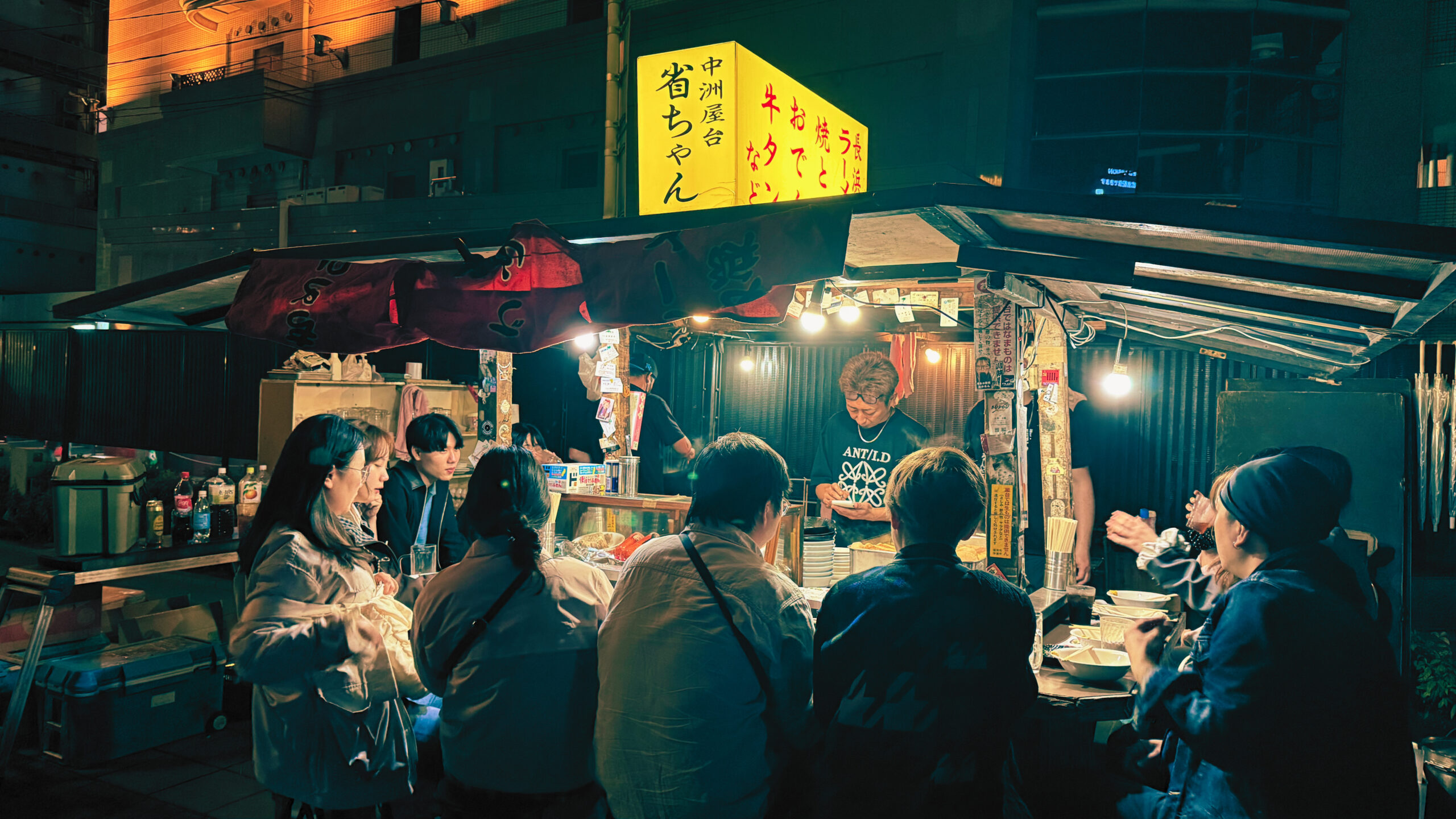
The highlight for today is the yatai stalls. The Nakasu waterfront is lined with these small open-air food stalls, and the vibe (yakitori smoke in the air, strangers sharing a meal shoulder to shoulder) is unlike anything else in Japan. Just know that it’s one of those places where it’s more about the experience than the food. You won’t have anything mind-blowing here. There aren’t too many stalls, and they all mostly sell the same thing. I just went to one without a huge line. Don’t worry if you don’t speak Japanese because there are laminated photo menus in different languages. Most places only take cash, so make sure to bring some with you.
Day 2: Exploring Fukuoka
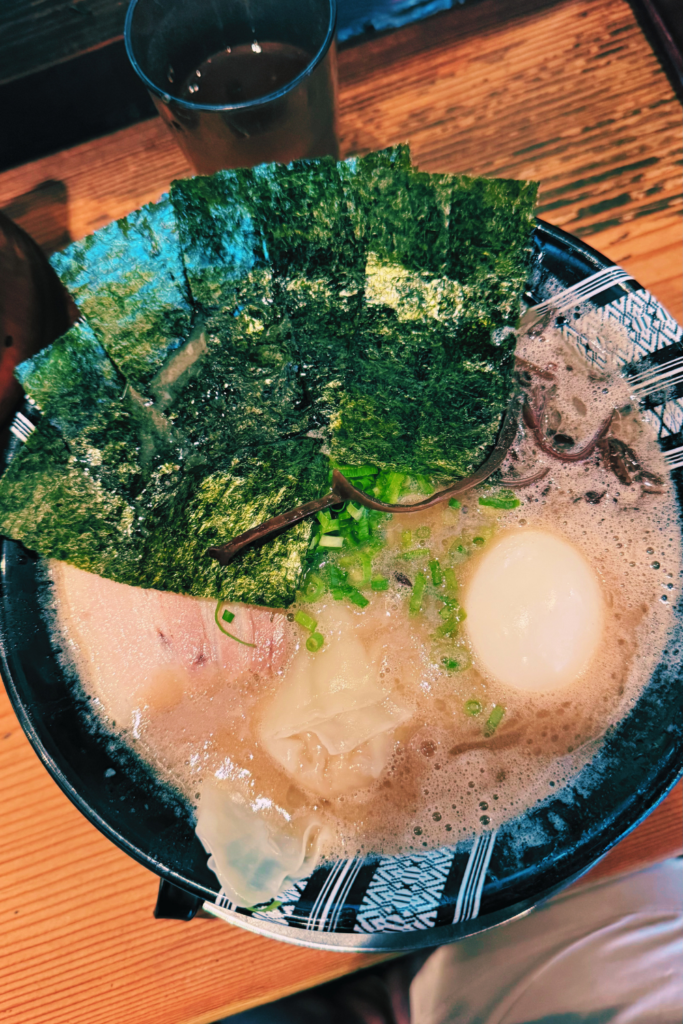
Fukuoka is the birthplace of tonkotsu ramen, and there’s no better meal to start the day. The broth here is cloudier than what you’ll find elsewhere in Japan, the result of pork bones simmered for hours on end until the collagen breaks down completely. This gives the soup an intensely rich, pork-forward flavor. Lines at the popular spots move fast; you’re in and out in 20 minutes with a bowl that sets the bar for the rest of the trip. I recommend Hakata Issou Honten.
After enjoying your delicious bowl of ramen, head to Kushida Shrine. Founded in 757 AD, it’s best known as the starting point of the Hakata Gion Yamakasa, the city’s famous summer festival where teams race enormous decorated floats through the streets.
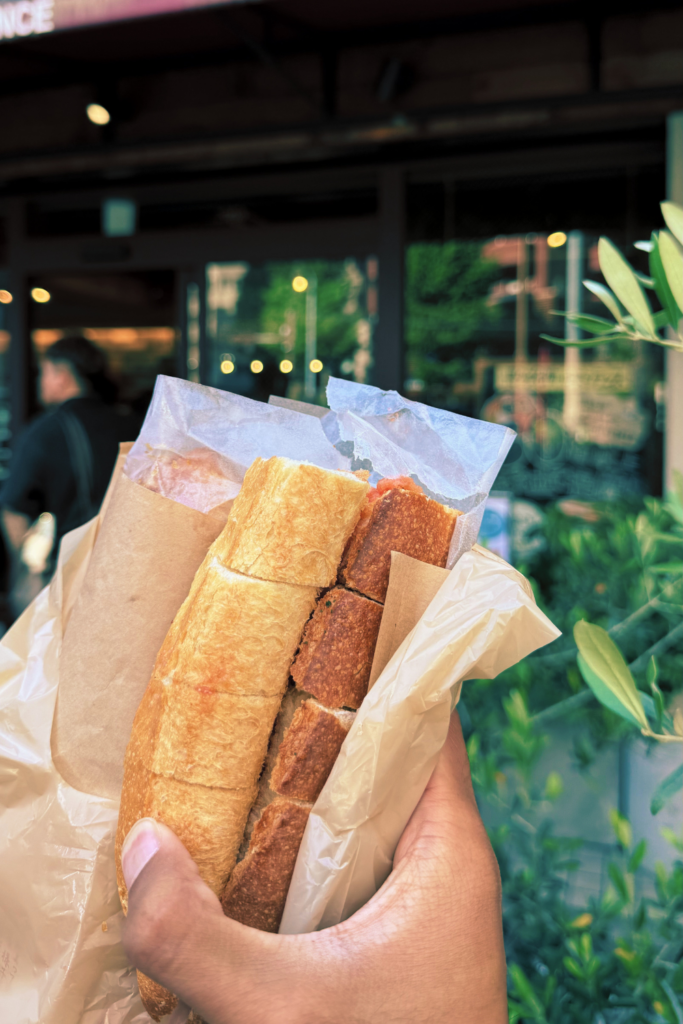
For an afternoon snack, try mentaiko (spicy cod roe) bread. As I was walking around, I stumbled upon this bakery with a huge line and knew I had to see what the hype was all about. The bread was crispy, and the mentaiko gave a briny, savory heat that lingers.
Canal City Hakata is a short walk away. It’s a large shopping complex built around an outdoor canal and a good place to cool down, especially if the afternoon heat is brutal. The fact that a centuries-old shrine and a modern retail complex sit five minutes apart on foot tells you a lot about what kind of city Fukuoka is.
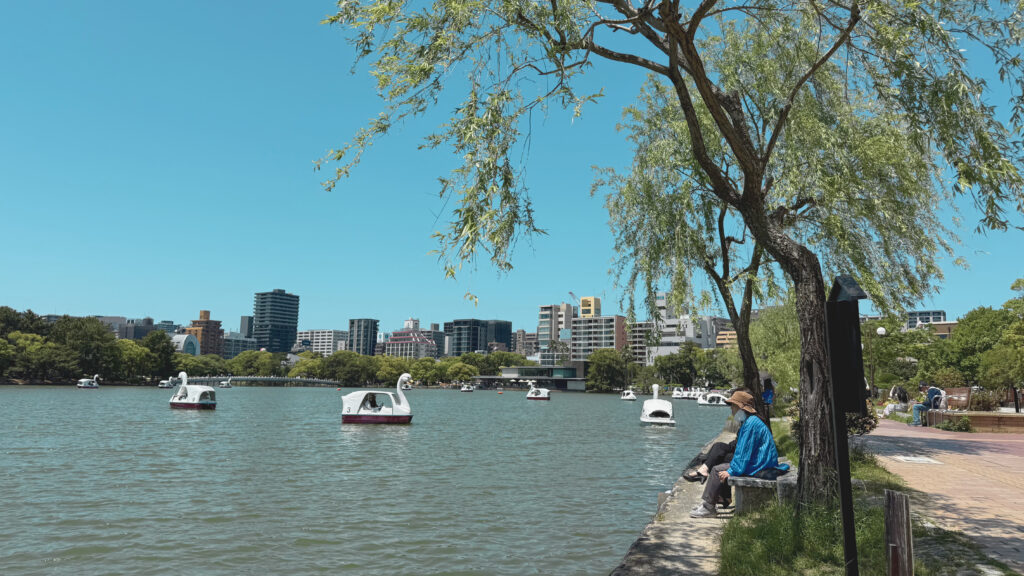
From Canal City, make your way to the Tenjin neighborhood, Fukuoka’s main commercial district. It’s good for an afternoon wander: covered shopping arcades and street-level cafes. Then head to Ohori Park. Built around a large central lake, it’s the city’s best spot to decompress. You’ll encounter joggers, families, the occasional food market on weekends.
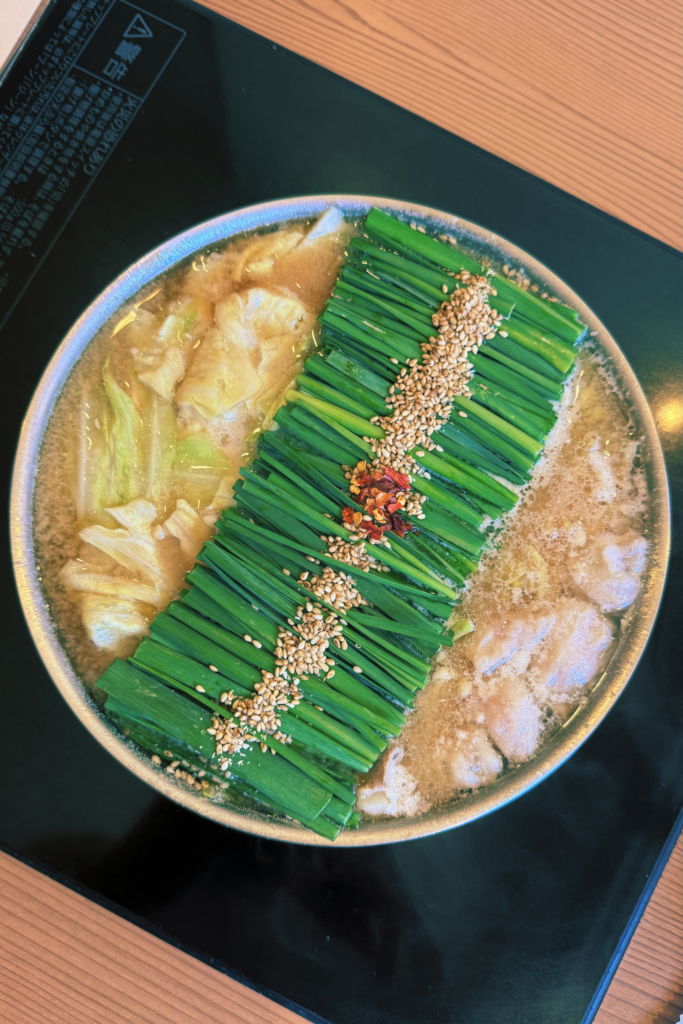
For dinner, try Fukuoka’s famous motsunabe, an offal hot pot cooked in miso or soy broth. If you’re thinking, “Uhh…organs and entrails for dinner? Yeah, I’ll pass.” Don’t! This dish introduces you to offal in a friendly way since the deep miso or soy broth masks most of the funk. Motsunabe is deeply savory, the offal gets tender as it cooks, and at the end of the meal, you order noodles to drop into the remaining broth. I enjoyed mine at Motsunabe Maedaya (there are several around the city).
Day 3: Itoshima Day Trip
Itoshima is a city about 50 minutes west of Hakata known for its beaches, the Futamigaura torii gate, and a relaxed coastal vibe that’s perfect for anyone looking to escape the buzz of the city. To get there, you have three options.
By bus: Take the West Coast Liner (ウエストコーストライナー) from Hakata and get off at Futamigaura (二見ヶ浦・月と太陽糸島茶房前). Use Google Maps to confirm exactly where to board and where to get off. The route has several stops along the coast, which makes it easy to plan your own itinerary as you go.
By train: Take the Chikuhi Line from Hakata Station and get off at Chikuzen-Maebaru Station. One thing to note: as of May 2026, this station does not have a contactless payment turnstile. If you tap into Hakata Station with contactless, you’ll need to settle the fare in cash when exiting. Easier to just use your IC card for this journey. From the station, take a local bus or taxi to the coast (put in Sakurai Futamigaura as your destination).
By tour bus: This is a good option if you want a structured, low-effort day. Tour buses cover areas that are harder to reach by public transit, including Itoshima Forest Cafe, Shiraito Waterfall, and Totoro Forest. If you’re only visiting once and want to see more than just the coast, this is the most efficient way to do it. You can book your tour through Klook, such as this one.
My recommendation: Take the bus if you want to explore the coast at your own pace; the bus is more convenient than the train since it drops you directly at the shore, and the multiple stops let you move along the coastline on your own schedule. Go with a tour bus if you want a stress-free day that takes you beyond the coast into the greener, more inland parts of Itoshima.
What to Do in Itoshima
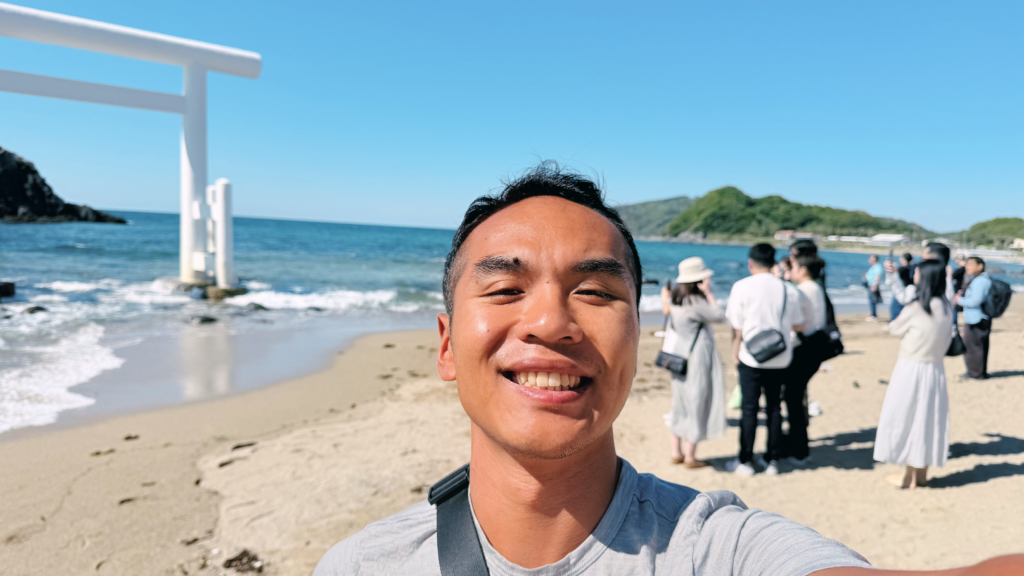
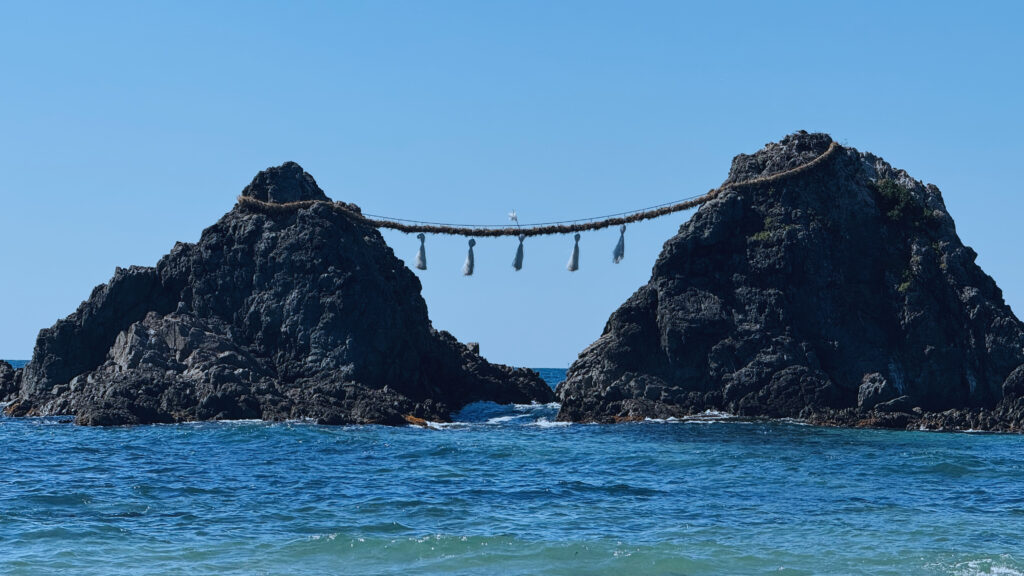
Futamigaura. The main draw in Itoshima is Futamigaura, a stretch of coastline with two offshore rock formations known as the married couple rocks, connected by a rope and framed by a torii gate standing in the water between them. It’s a well-known photo spot and draws a crowd, but the surrounding scenery (rice paddies and quiet coastal roads) is what makes the trip worthwhile. Give yourself time to just sit and take in the atmosphere, rather than snapping a photo and moving on.
The coastal cafe strip. A cluster of independent cafes, concept stores, and artisan workshops has developed along the Itoshima coast over the past decade. It’s a good place to wander around and get some coffee or lunch.
Oysters (November to March only). If you’re visiting in winter, you can’t miss Itoshima’s kaki goya. These open-air oyster huts are set up along the coast, where you sit outside and grill fresh oysters over charcoal yourself.
Day Trips from Fukuoka
If you’re not interested in visiting Itoshima, Fukuoka has many other options for day trips.
Shorter Day Trips
These destinations take roughly 30-60 minutes to get to.
Dazaifu. A short 30-minute train ride from Hakata, Dazaifu is home to Dazaifu Tenmangu, a major Shinto shrine surrounded by plum trees. It’s a more traditional temple experience than Kushida Shrine and gets a lot of visitors, especially on weekends. Pick up umegae mochi here too (mochi filled with red bean paste).
Yanagawa. About 45 minutes south of Hakata by train, Yanagawa is a historic castle town built around an extensive network of canals. The main draw is a punting tour on flat-bottomed boats called donko-bune, where a boatman poles you through narrow waterways lined with old merchant houses and willow trees. It’s slow and unhurried in a way that’s hard to find in a city. Unagi (freshwater eel) is the local specialty, so plan to have lunch here before heading back.
Kumamoto. About 50 minutes by Shinkansen, Kumamoto makes for an excellent day trip from Fukuoka. The main attraction is Kumamoto Castle, one of Japan’s three great castles alongside Himeji and Matsumoto. After exploring the castle grounds, spend time wandering the city’s covered shopping streets, relaxing in nearby gardens, and sampling local specialties like Kumamoto ramen.
Longer Day Trips
These destinations take around 1.5 to 2 hours to get to. Only do it if you’re short on time and really want to go. But otherwise, I recommend staying overnight.
Nagasaki. Nagasaki was one of two cities struck by an atomic bomb in 1945, and the Peace Park and Atomic Bomb Museum are sobering and well-presented. The city also has a distinct character shaped by centuries of international trade. You’ll see Portuguese, Dutch, and Chinese influences in the architecture and food. About 1.5 hours each way by limited express, but worth it if history is your thing.
Yufuin: Yufuin has a tranquil and idyllic vibe. The town is small and walkable, built around a single main street leading to Lake Kinrin. A day trip gives you enough time to stroll the street, browse the craft shops, and soak in an onsen before catching the train back. Yufuin is about two hours from Hakata on the Yufuin no Mori limited express.
Beppu: Beppu is the larger, louder counterpart to Yufuin. It’s Japan’s most prolific hot spring city, with more onsen per square kilometer than anywhere else in the country. The main attraction is the Jigoku Meguri, or “Hell Tour”: a circuit of eight dramatically different hot spring pools. Beppu is about two hours from Hakata by limited express.
If you’re following my 2-week Japan itinerary, you’re in luck because Beppu and Yufuin are the next two stops. They’re best done as overnight stops, letting you slow down and enjoy the ryokan/onsen culture.
Staying Connected
Japan’s mobile coverage is excellent, but your home carrier’s international rates can be costly. To avoid roaming charges during my two-week trip, I used Airalo. Get an eSIM before you fly, activate it when you land, and you’re connected from the moment you walk out of the airport.
Where to Stay in Fukuoka
The two neighborhoods worth choosing between are Hakata and Tenjin.
Hakata is the practical choice, as its train station serves as the transportation hub of Kyushu. This makes it incredibly convenient if you’re planning day trips to places like Nagasaki or Kumamoto, or if you’re arriving and departing by high-speed train or flying in and out of Fukuoka Airport. The area is filled with larger business hotels and modern complexes.
Tenjin puts you in the middle of the action. It’s Fukuoka’s main commercial and nightlife district. Think busy shopping streets, covered arcades, underground malls, and a dense concentration of izakayas, cafes, and late-night food spots. It has a younger, more local feel compared to Hakata, and it’s easy to spend entire evenings just walking around and exploring different pockets of the neighborhood.
With three days in Fukuoka, I recommend Hakata for convenience and proximity to the train station. But if you’re staying longer and want to lean into the city’s food and nightlife scene, consider Tenjin.
Budget hotels and guesthouses run ¥5,000-8,000 per night. Mid-range business hotels are ¥8,000-15,000. I stayed at the Four Points Flex Hakata, paying ¥11,000/night. It’s clean, well-located, and walkable from Hakata Station. Would book again.
Browse stays in Fukuoka (Hakata)
How to Get Around Fukuoka
Fukuoka is incredibly easy to navigate. The city is compact, flat, and well-connected.
Walking: One of the best things about Fukuoka is how walkable it is. The distance between Tenjin and Hakata is around 2–3 kilometers, or a 20–30 minute walk. The route between the two neighborhoods is flat and easy to navigate. Many visitors (me included) end up walking it at least once, especially since there are many shopping streets, riverside paths, and food spots along the way.
Subway: The two most useful stations for visitors are Hakata and Tenjin. Hakata is the main arrival point for the Shinkansen and airport access, while Tenjin sits in the middle of the city’s shopping and nightlife district. A quick subway ride connects the two in just a few minutes, making it easy to base yourself in one and explore the other.
Bus: Beyond the subway, Fukuoka’s bus network fills in the gaps, reaching neighborhoods and attractions that aren’t directly on train lines. Buses are frequent and reliable. Simply tap on and tap off with your IC card. Most buses also have contactless payment now, meaning that you can pay with your credit card.
Taxi: Taxis and ride-hailing apps (e.g. Uber and Didi) are also widely available, but they’re usually only worth it late at night or when you’re carrying luggage. Most of the time though, walking or public transport is the way to go.
Biking: Fukuoka is one of Japan’s more bike-friendly cities, and bike rentals are easy to find. It’s a great way to explore beyond the main tourist areas at your own pace, especially along the waterfront or quieter residential neighborhoods.
What to Eat in Fukuoka
Hakata ramen. Tonkotsu ramen originated here, and the Fukuoka version tends to be richer and more intensely flavored than what you’ll find elsewhere in Japan. The broth is cloudy, pork-based, and deeply savory. Noodles are thin and straight.
Motsunabe. A hot pot made with beef or pork offal, simmered with cabbage, garlic, and chives in a rich broth. It’s deeply comforting and especially popular in the colder months. One of the best meals I had this entire Japan trip.
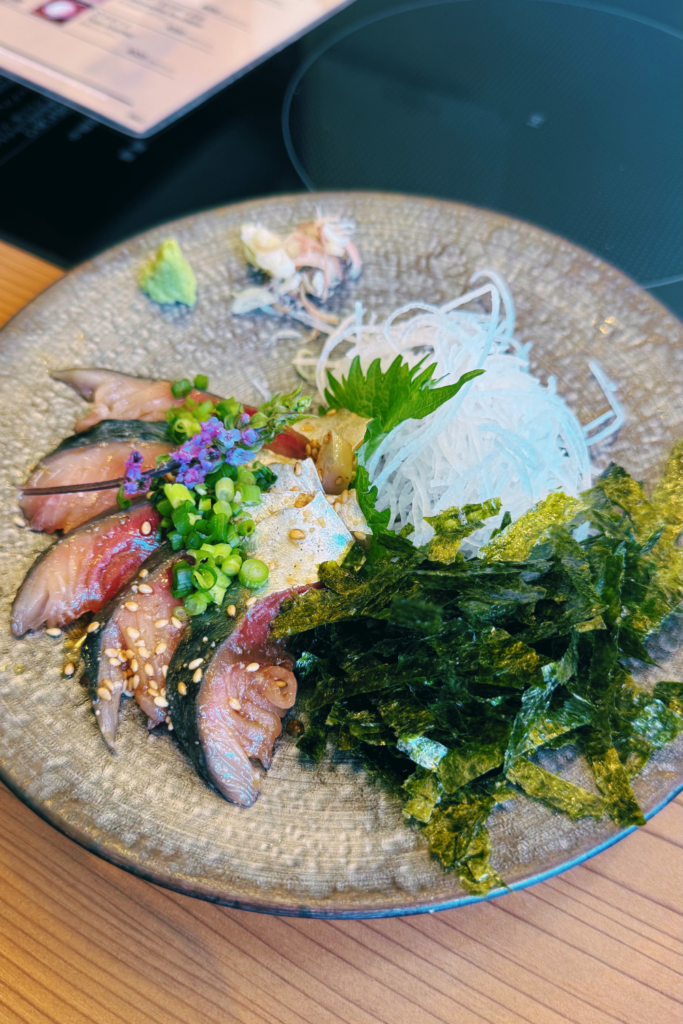
Gomasaba. This dish consists of raw mackerel (saba) sliced into bite-sized pieces and dressed with a savory sauce made from soy sauce, sesame seeds, sesame oil, mirin, and other seasonings. It’s typically topped with green onions, seaweed, or shiso leaves.
Mentaiko. Spicy marinated cod roe is one of Fukuoka’s signature ingredients. It shows up everywhere: on rice, in pasta, in onigiri, or served as a simple side dish. It’s salty, slightly spicy, and pairs perfectly with bread.
Yatai. Not a type of food, but these open-air food stalls come alive at night and serve everything from ramen and yakitori to oden and gyoza. Sitting at a yatai is as much about the atmosphere as the food; you’re shoulder-to-shoulder with locals, eating late into the night in a very casual, social setting.
What’s Next on This Japan Itinerary?
If you’re following my 2-week Japan itinerary, you’ll be exploring the onsen towns of Yufuin and Beppu next.
Yufuin is where the pace slows down. The whole point is to do less: check into a ryokan, soak in the hot spring, and relax. After three days in a city, that’s exactly what you need.
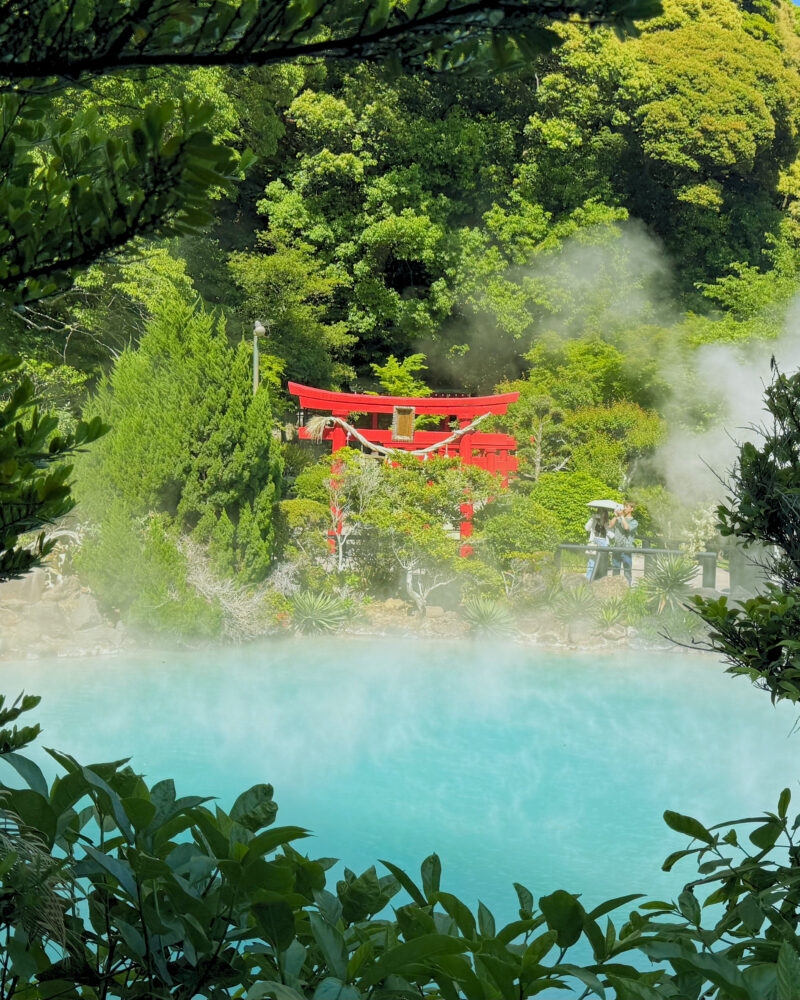
Beppu then picks up the pace. It’s Japan’s highest-volume hot spring city, and you can see steam rising from sidewalks, drainage grates, and random vents across the whole city. The main draw is the Jigoku Meguri, seven boiling pools each a different color, all fed by the same volcanic heat underground.
Interested in the full 2-week route? Check out the other posts in my Japan travel guide.
- 2-Week Japan Itinerary: Beyond Tokyo and Kyoto
- Yufuin and Beppu: 2 Days in Oita’s Onsen Towns
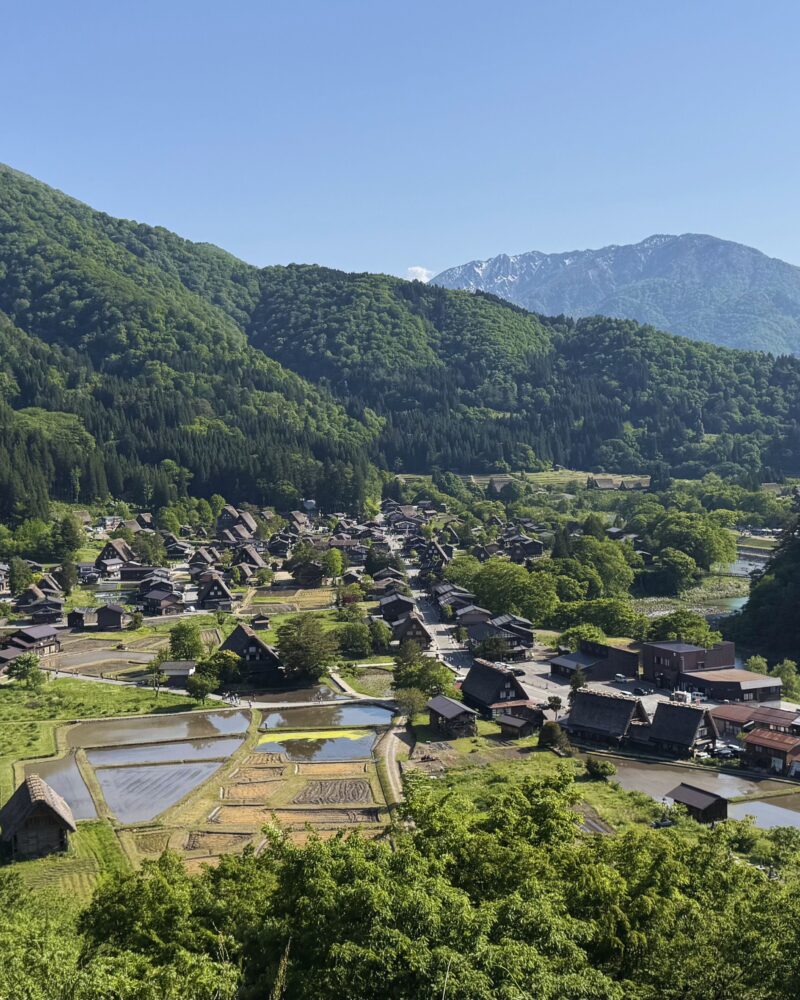
- 4 Days in Kanazawa, Shirakawa-go, and Takayama
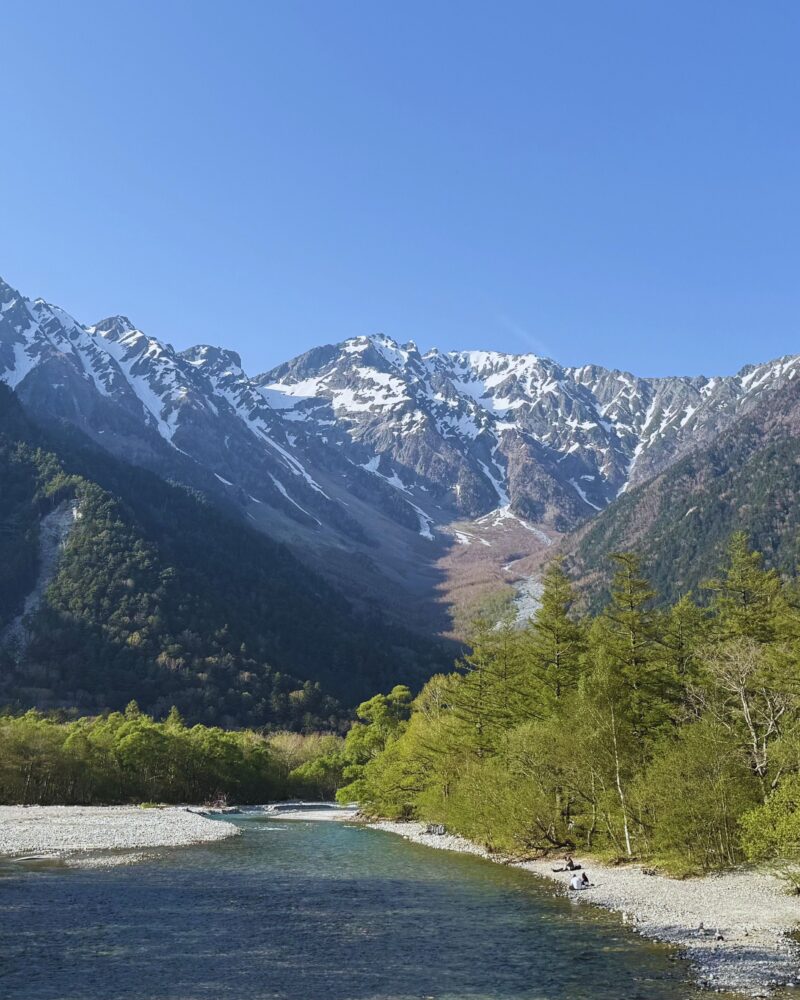
- 2 Day Japanese Alps Itinerary: Visiting Kamikochi
Frequently Asked Questions
Is Fukuoka worth visiting?
Yes, Fukuoka is worth visiting for its food scene alone. It’s home to Hakata ramen, mentaiko, and the Nakasu yatai stalls. It’s cheaper than Tokyo and Osaka, compact enough to navigate without much planning, and well-positioned as a gateway to Kyushu.
How many days should I spend in Fukuoka?
Three days is the sweet spot. It’s enough time to eat well, explore the Hakata and Tenjin neighborhoods at a reasonable pace, and take a day trip of your choice. But you can easily extend your time here by using Fukuoka as a base and exploring nearby cities.
Is Fukuoka expensive?
By Japanese standards, no. It’s noticeably cheaper than Tokyo and Osaka. A bowl of ramen runs ¥900–1,200, a full dinner at a motsunabe restaurant is around ¥2,000–3,000 per person, and accommodation in Hakata at a solid business hotel is around ¥8000–12000 per night.
What is Fukuoka known for?
Primarily its food scene. Hakata ramen, mentaiko (spicy cod roe), motsunabe, and the Nakasu yatai stalls are what most people come for, and they all deliver. Beyond food, Fukuoka is known for being one of Japan’s most livable cities: compact, well-connected, and without the crowds of the more famous destinations. It’s also the gateway to Kyushu, which makes it a natural base for exploring the southern island.
How do I pay for public transportation in Fukuoka?
Japan’s rechargeable IC transit cards (ICOCA, Suica, and PASMO) work seamlessly in Fukuoka. Even if you purchased one elsewhere in Japan, these cards will work on Fukuoka’s subways, buses, and trains. Simply tap your card when entering and exiting stations, and the fare is automatically deducted. Contactless payment is also becoming widespread. However, coverage isn’t yet as universal as IC cards, so it’s worth having an IC as a backup.
Is Fukuoka walkable?
Yes, many of the main neighborhoods, including Hakata, Tenjin, and Nakasu, are relatively close together. While the subway is convenient, you’ll likely spend a significant amount of time exploring on foot.
Is Fukuoka a good base for exploring Kyushu?
Yes. Fukuoka is the transportation hub of Kyushu and is a great base for exploring the island. Popular day trips include Itoshima, Yanagawa, Nagasaki, Kumamoto, Yufuin, and Beppu.
Do I need a car in Fukuoka?
No. Public transportation is excellent, so you don’t need to drive. I did this whole itinerary without a car.