At A Glance
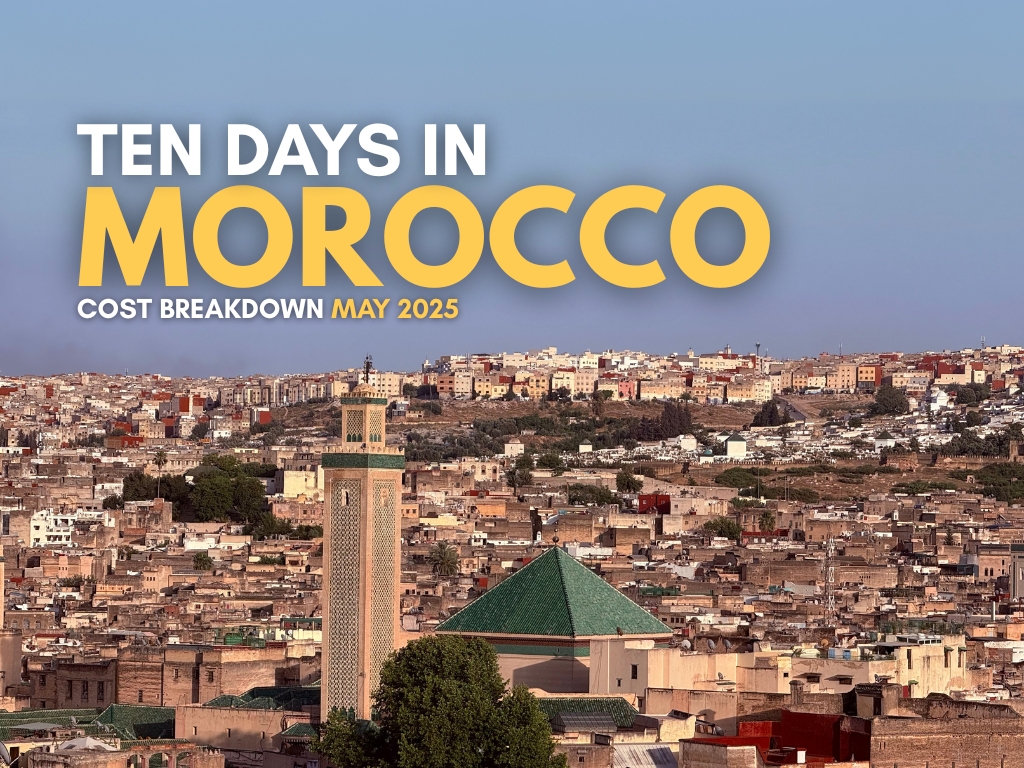
Ten days in May 2025 (cost breakdown)
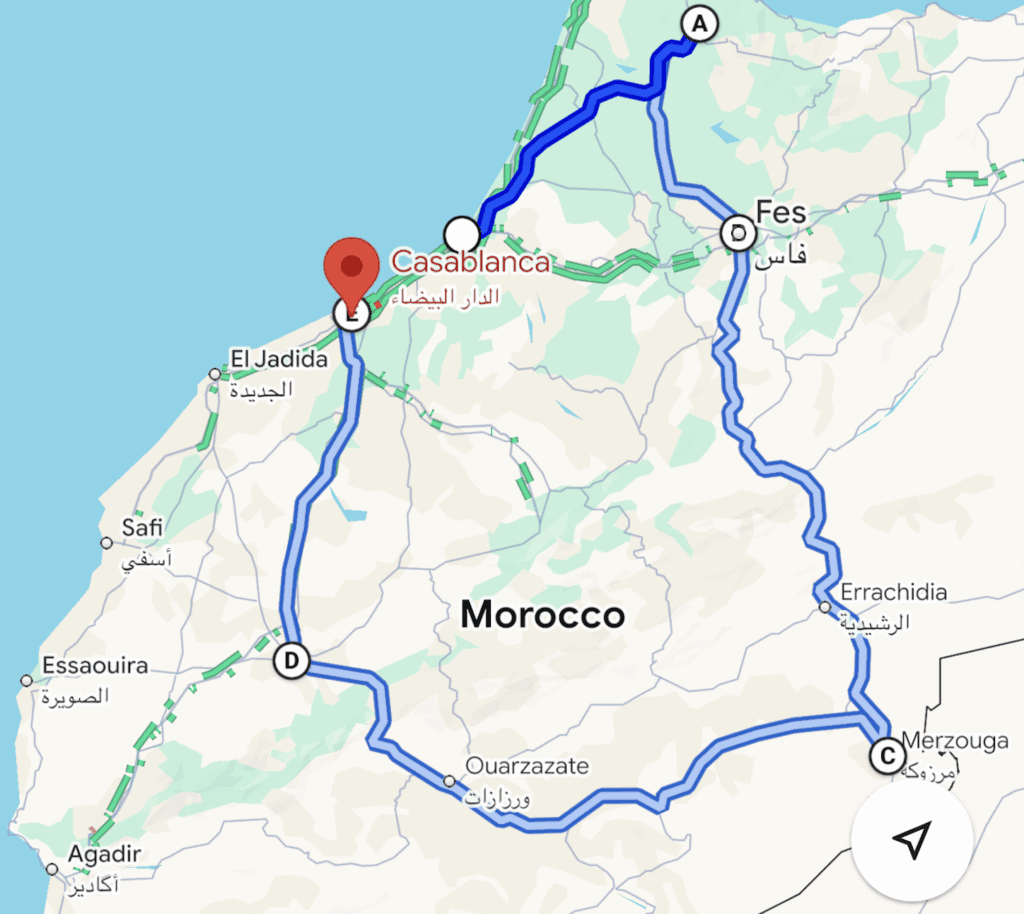
| Day | Location | Attractions and Activities |
|---|---|---|
| 0 | Rabat | Fly from Tunis to Rabat |
| 1 | Rabat Chefchaouen | Rabat Corniche Bus to Chefchaouen |
| 2 | Chefchaouen Fez | Look at blue buildings Bus to Fez, see Bab Bou Jeloud |
| 3 | Fez | Medina Tour: Tala’a Kebira, Bou Inania Madrasa, Nejjarine Museum, al-Qarawiyyin, Chouara Tannery |
| 4 | Fez | Explore outside of the medina: Jnan Sbil, Royal Palace, Jewish Quarter |
| 5 | Desert Tour | Ifrane, Ziz Valley, Merzouga Desert |
| 6 | Desert Tour | Rissani, Todra Gorge, Dades Valley |
| 7 | Desert Tour Marrakesh | Oaurzazate, Ait Ben Haddou, High Atlas Mountains Arrive in Marrakesh late afternoon |
| 8 | Marrakesh | Medina Tour: Koutoubia Mosque, Ben Youssef Madrasa, Jamaa Elfna Square; Hammam |
| 9 | Marrakesh | Majorelle Garden, Hammam, Street Food Tour |
| 10 | Travel | Train to Casablanca, fly to Washington D.C. |
Itinerary
Days 1-2: Rabat and Chefchaouen
I didn’t do much in Rabat since my flight landed late at night, and I was heading to Chefchaouen the next day. Before boarding the bus, I had my first tagine (of many) at a seaside café and discovered how much Moroccans love their mint tea. The bus ride was surprisingly one of the most relaxing aspects of my trip. There’s something calming and meditative about simply sitting there, seeing the flower fields and green hills pass by. After a five-hour journey, I finally arrived at the famous blue city.
I’ll be honest. I was skeptical about visiting Chefchaouen. Was it really worth it to go out of my way just to see some blue buildings? I was low-key worried that I’d be disappointed. But one of my friends raved about this city, telling me that it was one of the highlights of her Morocco trip, so I decided to trust her recommendation.
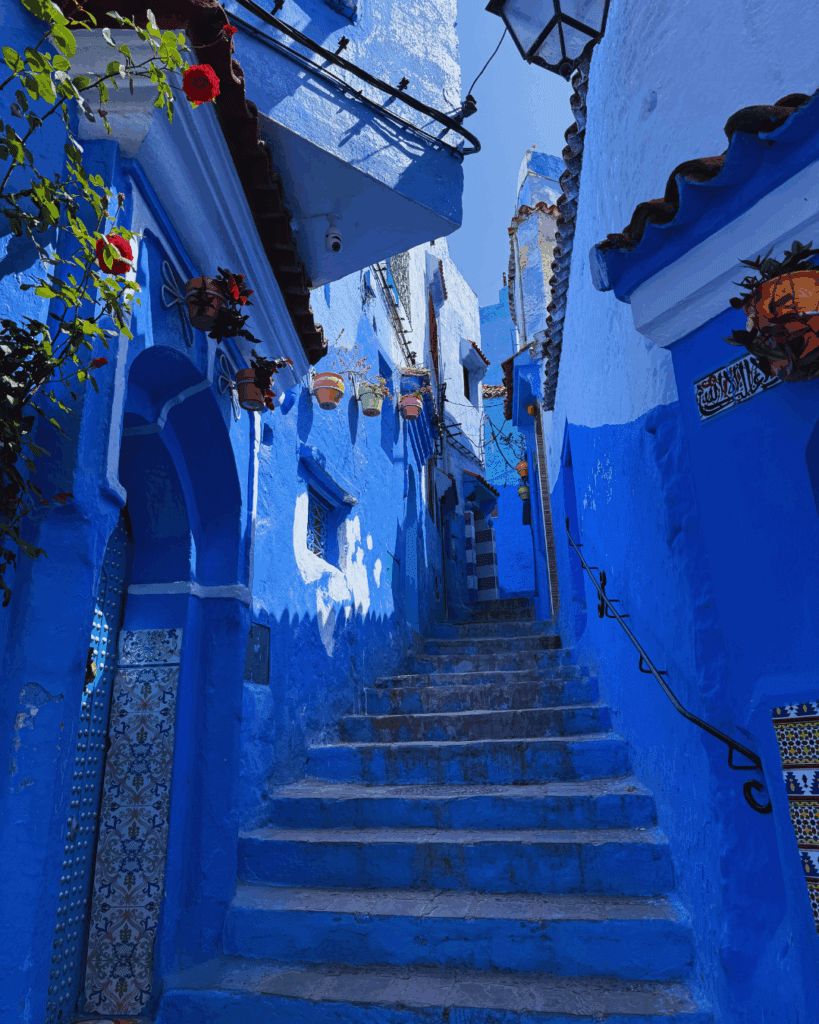
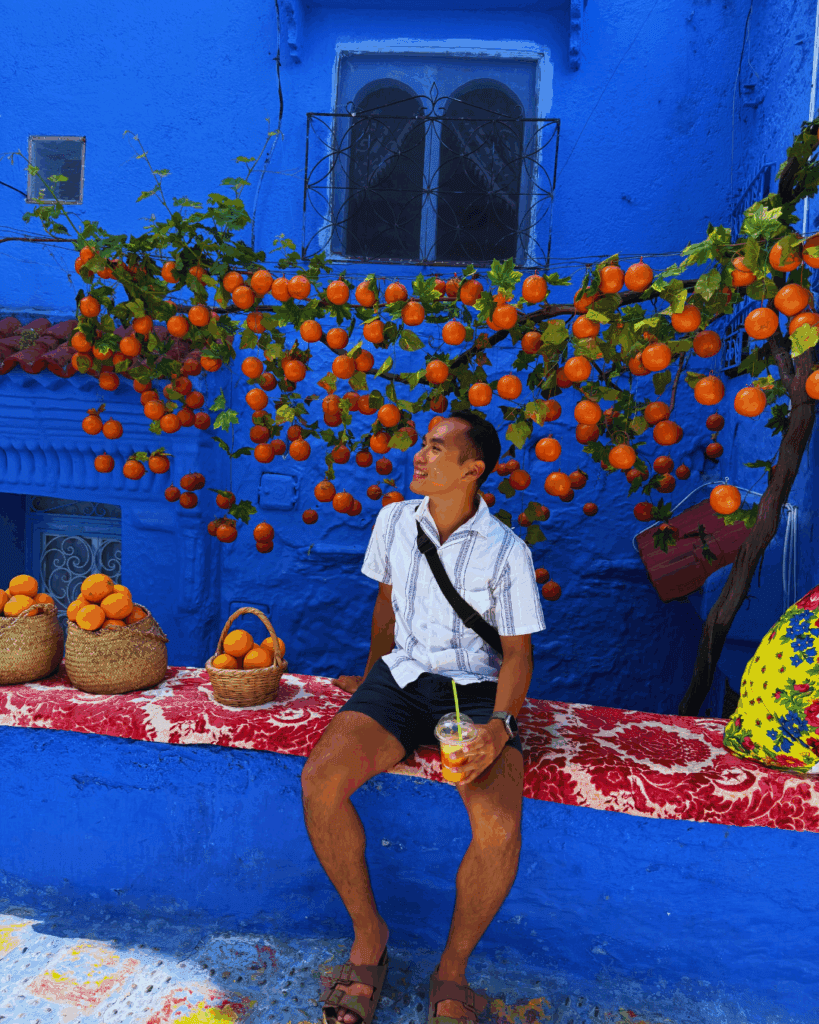
And it turned out to be the right choice! Chefchaouen was indeed picturesque like everyone said it was. I loved walking the alleyways of the medina, seeing everything painted in blue. I thought it would be packed, but there weren’t that many people in the morning. In addition to the sights, I enjoyed the laid-back atmosphere of Chefchaouen. I experienced zero hassling there, unlike in Fez and Marrakesh. I felt like I could really let my guard down and soak in the vibes. Definitely worth making the trip here if you have time in your itinerary.
Days 3-4: Fez
My first day in Fez gave me a deep appreciation for Moroccan hospitality. My taxi driver exuded warmth, and we had a great conversation about music, food, and language. As I was trying to find my accommodation, a guy immediately stepped in to show me where it was, even contacting the riad owner, Abdul, to inform him of my arrival. Abdul welcomed me with such kindness, helping me with my bags and offering me the nicest room in his house. He also curated an itinerary for the days ahead, which made me feel incredibly taken care of. Before leaving me to my own devices, he gave me a stern warning: do not under any circumstances follow random people on the street.
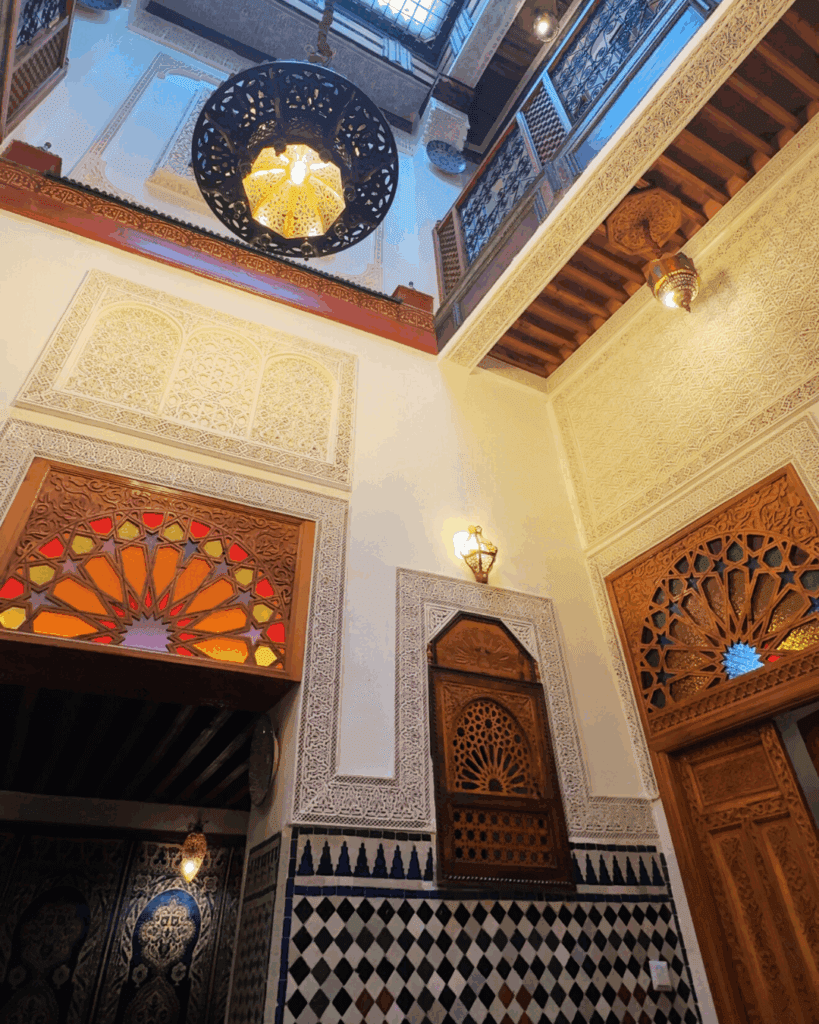
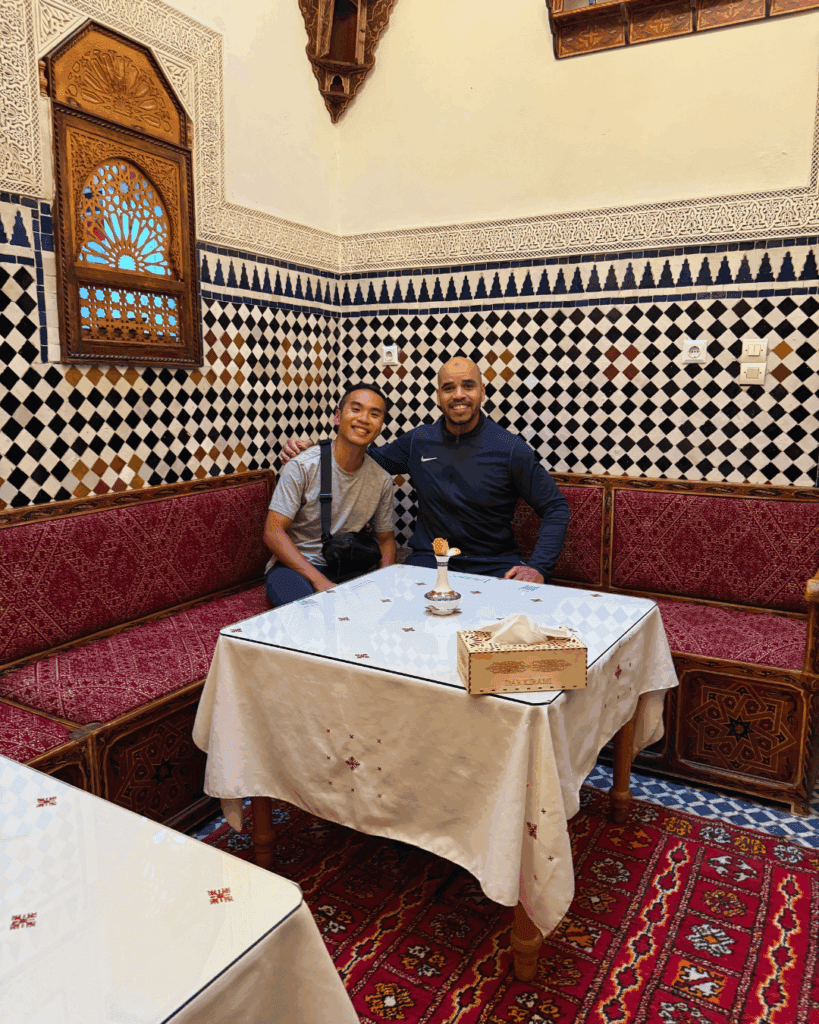
For dinner, I tried pastilla, a flaky pastry with a mix of sweet and savory flavors. I didn’t love the dish, but I’m glad I tried it. As I was heading out of the restaurant, a man claiming to be the chef’s son offered to take me to see a panoramic view of the city. Having been met with such kindness throughout the day, I decided to trust him.
What was supposed to be a quick walk turned into a half-hour trek through dark and sketchy alleys. I knew I should have turned back, but for some reason, I kept following him. Maybe I wanted to do it for the plot. Who knows? We finally arrived at the outlook, and the view was decent. As you might have expected though, the “tour” ended with him asking for money. He initially demanded 400 dirhams ($44), but I bargained it down to 250 ($28). All in all, the whole thing could have gone a lot worst. At least I didn’t get kidnapped, right? But lesson learned—always listen to your riad host.
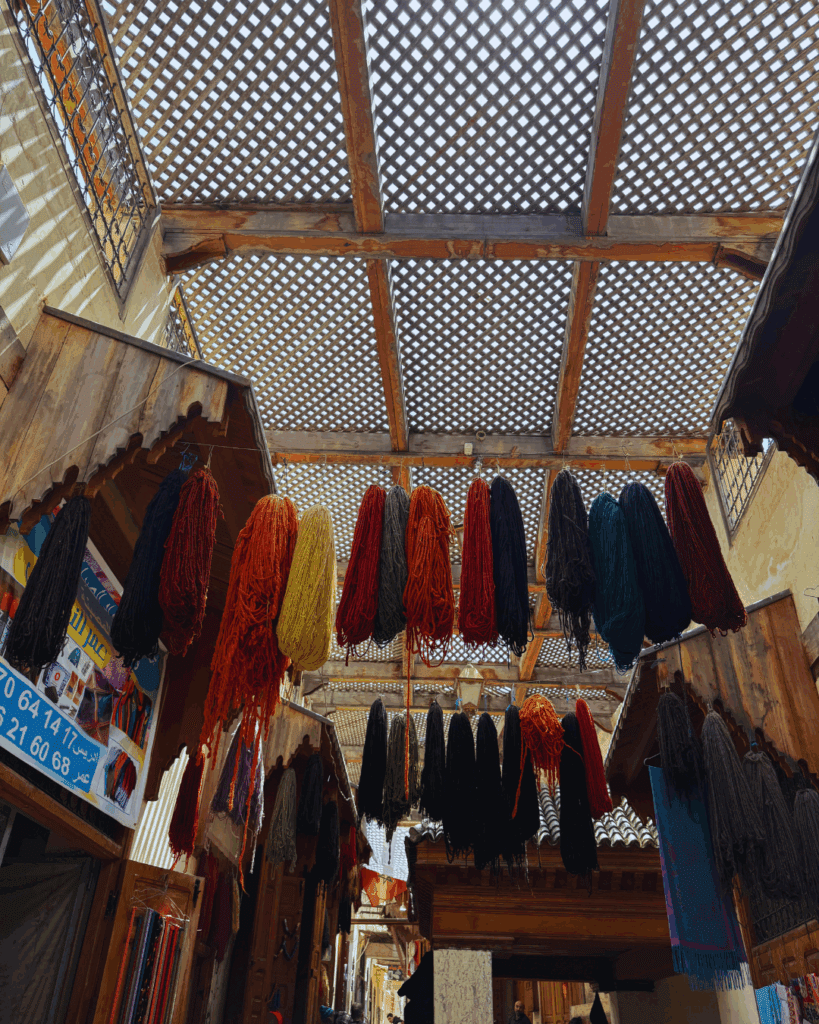
The next day, I went on a walking tour of the Fez medina, the center of traditional crafts such as leatherwork, pottery, textiles, and metalwork. It was fascinating seeing the artisans practicing their craft. One of the stops was at a tannery, and the smell was so strong that we were given stalks of mint to combat the smell. We also saw some incredible sites such the Nejjarine Museum dedicated to wooden arts and al-Qarawiyyin, the oldest university in Northern Africa.
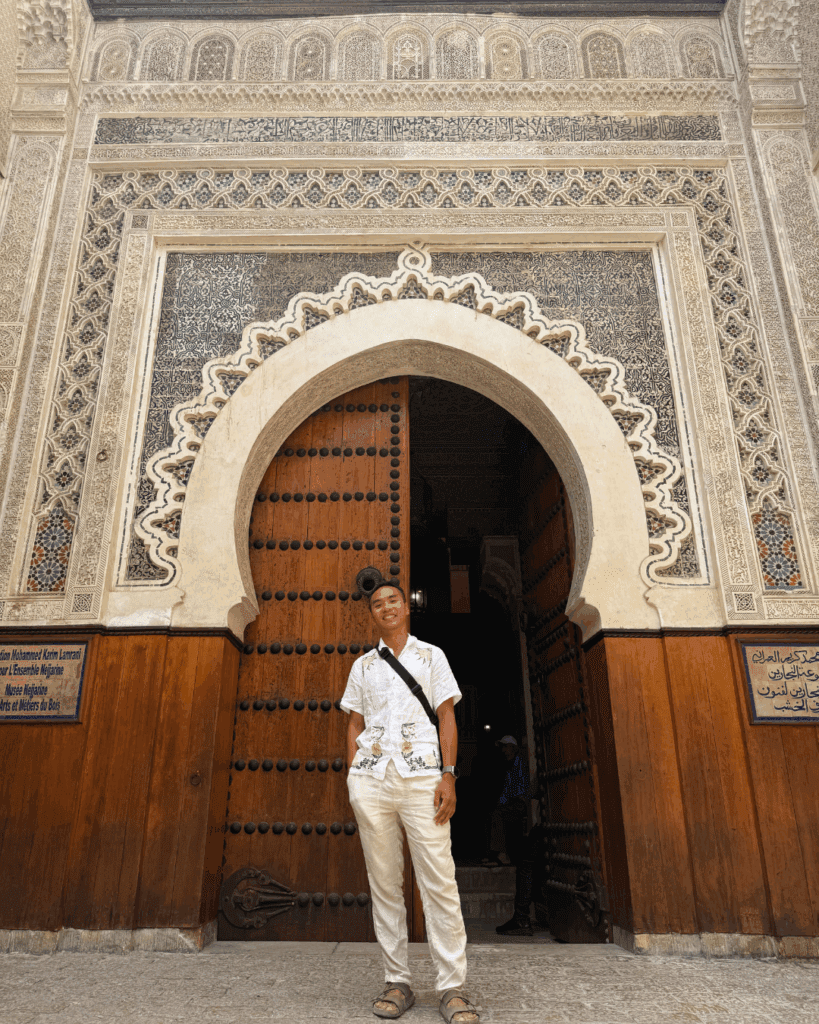
On my final day in Fez, I ventured outside of the medina, stopping by the Jnan Sbil Garden. It was great to step away from the crowds, absorbing the sights and sounds of nature around me. I also visited the grand Royal Palace and stopped by the Jewish Quarter, where I bought some incredibly sweet mulberries.
Days 5-7: Desert Tour
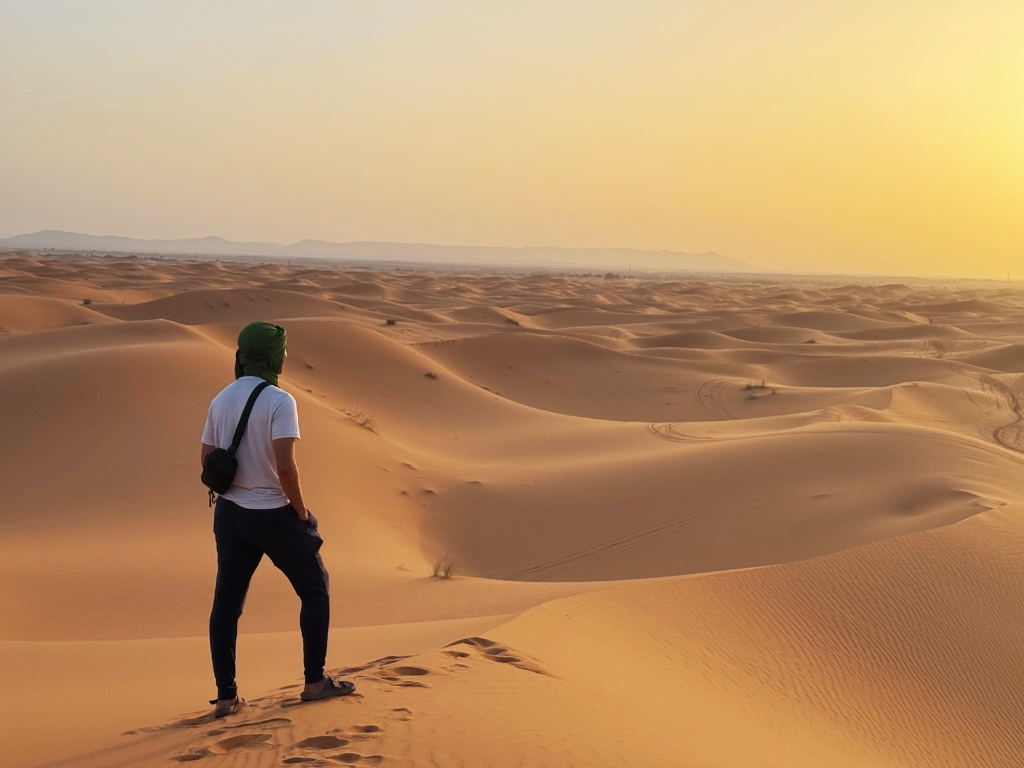
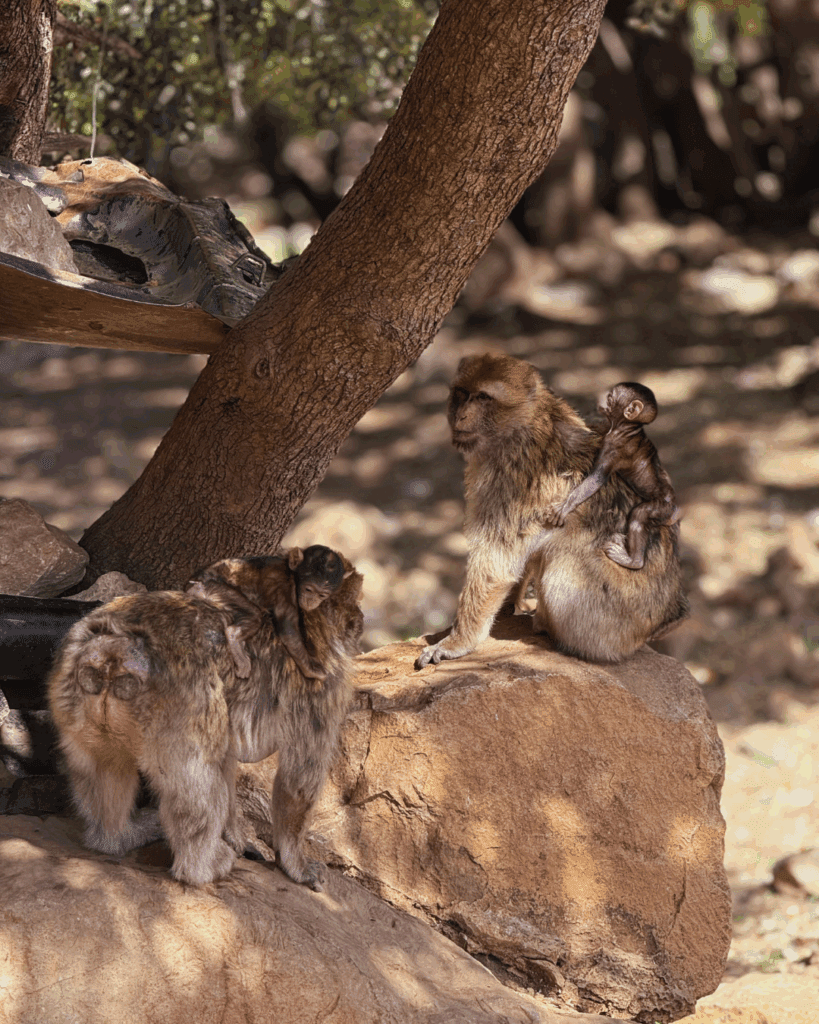
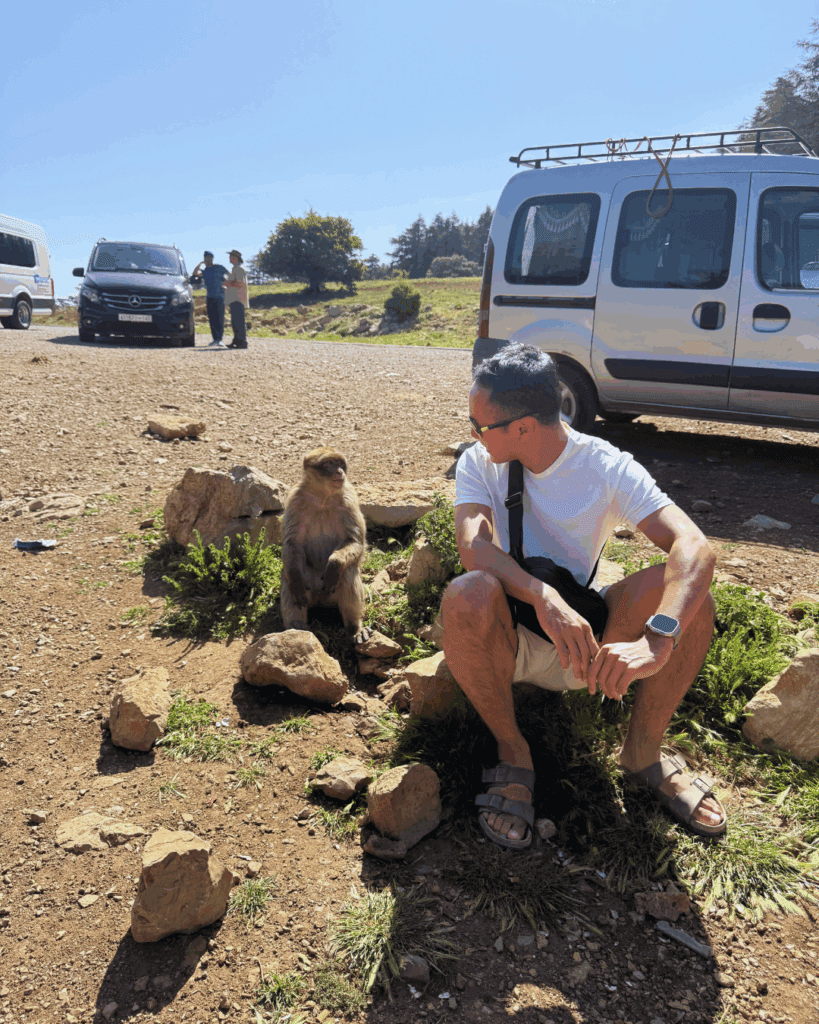
After Fez, I embarked on my three-day tour through the desert. We passed by Ifran, apparently known as the Switzerland of Morocco, as well as a cedar forest filled with macaques. It was amazing to see these monkeys up close, though I was scared that they were gonna attack me. After a long day’s drive, we arrived at the sand dunes and set off on camelback toward our campsite. It’s hard to put into words how magical this experience was, being perched on top of a camel, surrounded by endless rolling dunes. I felt like I was transported to another world.
The camp was more luxurious than I imagined. It was a true glamping experience with running water and electricity. I woke up early for the desert sunrise and went sandboarding afterwards. My one time skiing experience actually came in handy, and I only fell a couple times.
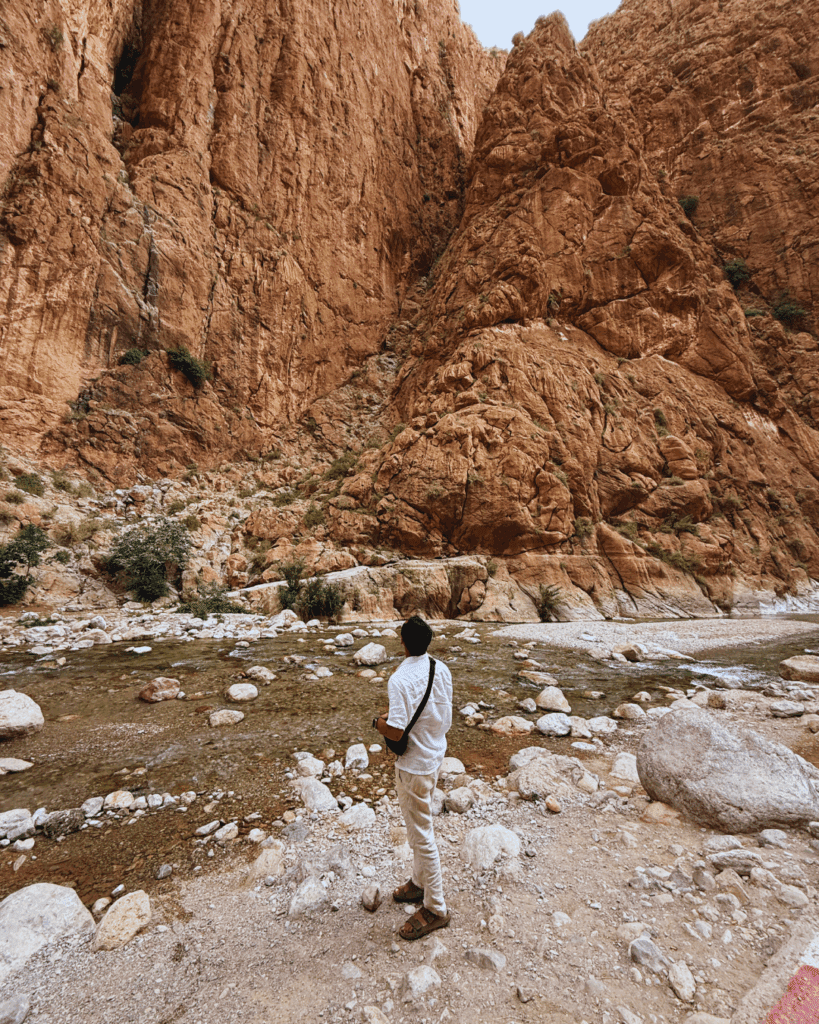
Today’s drive took us through some spectacular sights like Todra Gorge and the Monkey Fingers. The sheer scale of the cliffs was awe-inspiring. We finally arrived in Dades Valley in the late afternoon, and it was nice to unwind at the hotel after a full day of exploration. I’m also glad this tour doesn’t charge single travelers extra to have a room all by themselves.
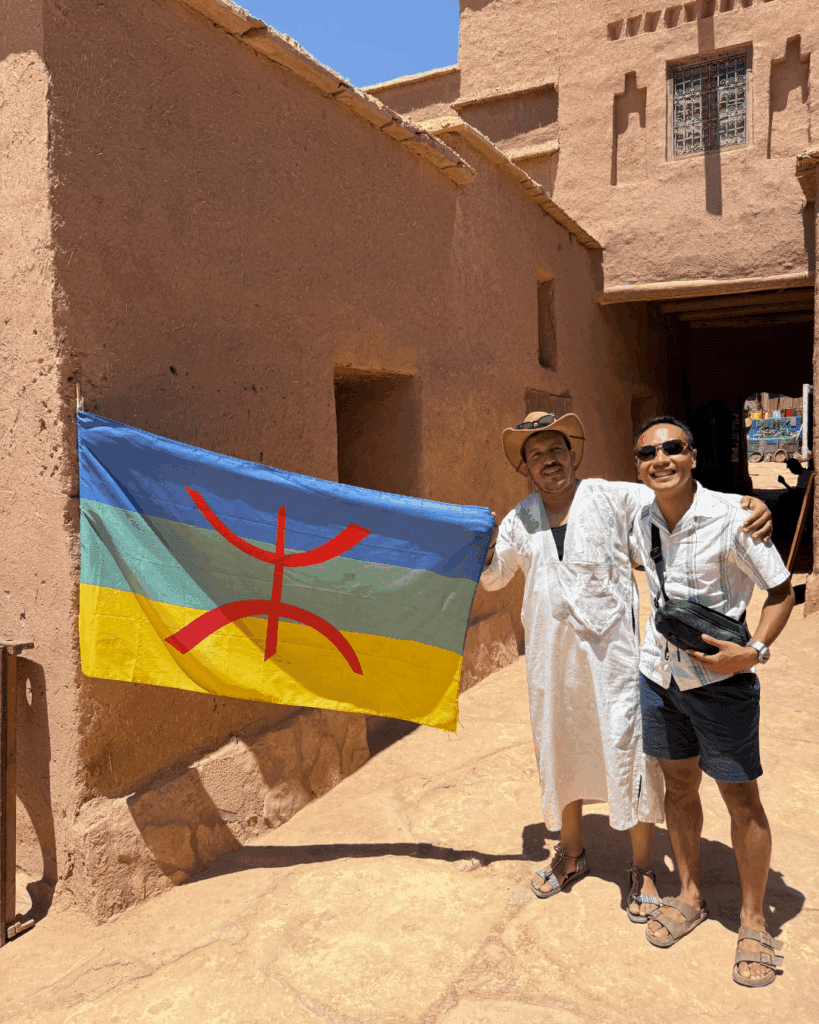
On our final day of the desert tour, we passed the Valley of the Roses (though there were none left) and stopped at Atlas Studios, the largest film studio in the world. I didn’t realize how many famous movies and shows were filmed here, such as Game of Thrones. We also visited Ait Ben Haddou,where I bought a beautiful painting to take home. After another long day’s drive, we finally arrived in Marrakesh in the late afternoon.
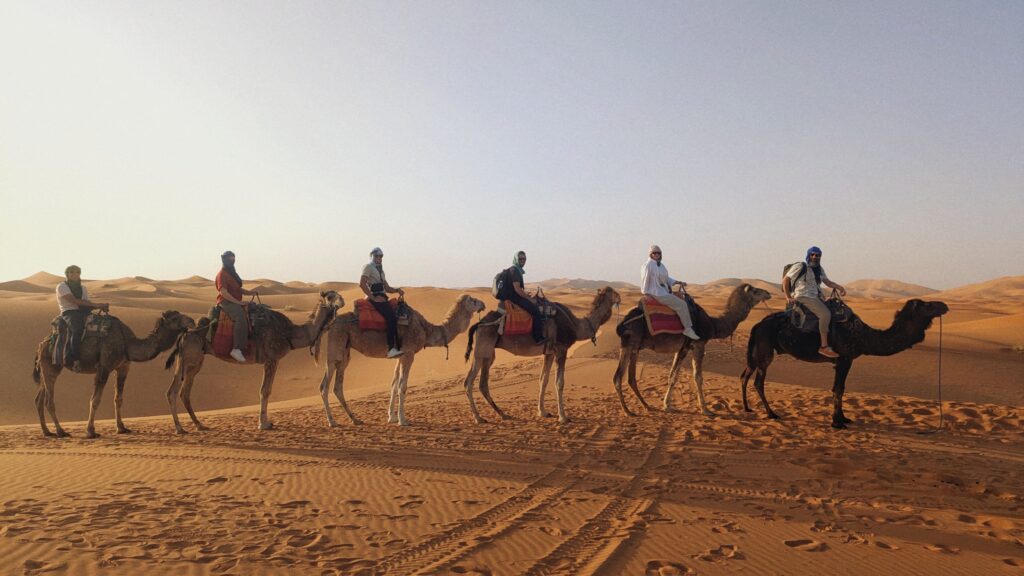
One of the best things about the desert tour was the people I traveled with. We were a group of six from all over the globe. There was a public health worker from Los Angeles who dances salsa, an airline pilot who was born in Mozambique, an Australian photographer who’s lived all over Europe, and a couple from Canada who was the life of the party. Our guide, Ali had such an inspiring background. He was the first in his family to attend college after living a nomadic lifestyle. I’m grateful to be part of this wonderful group, and it was a joy learning about the lives of my fellow travelers. I love how travel exposes you to people that you wouldn’t meet in your everyday life.
Days 8-9: Marrakesh
I spent two full days exploring Marrakesh, wandering through the medina, getting scrubbed down at the hammam, and trying some delicious food. The medina here felt similar to the one in Fes—busy, bustling, and full of history. The main square, Jemaa el-Fnaa was packed, especially at night.
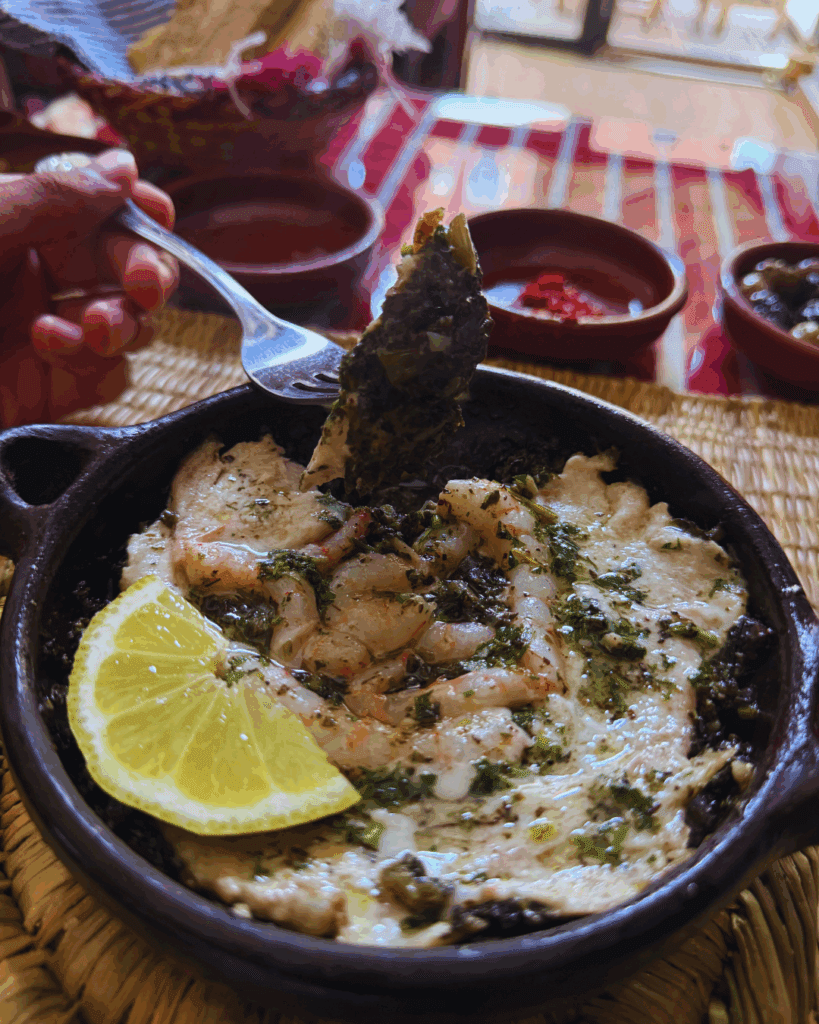
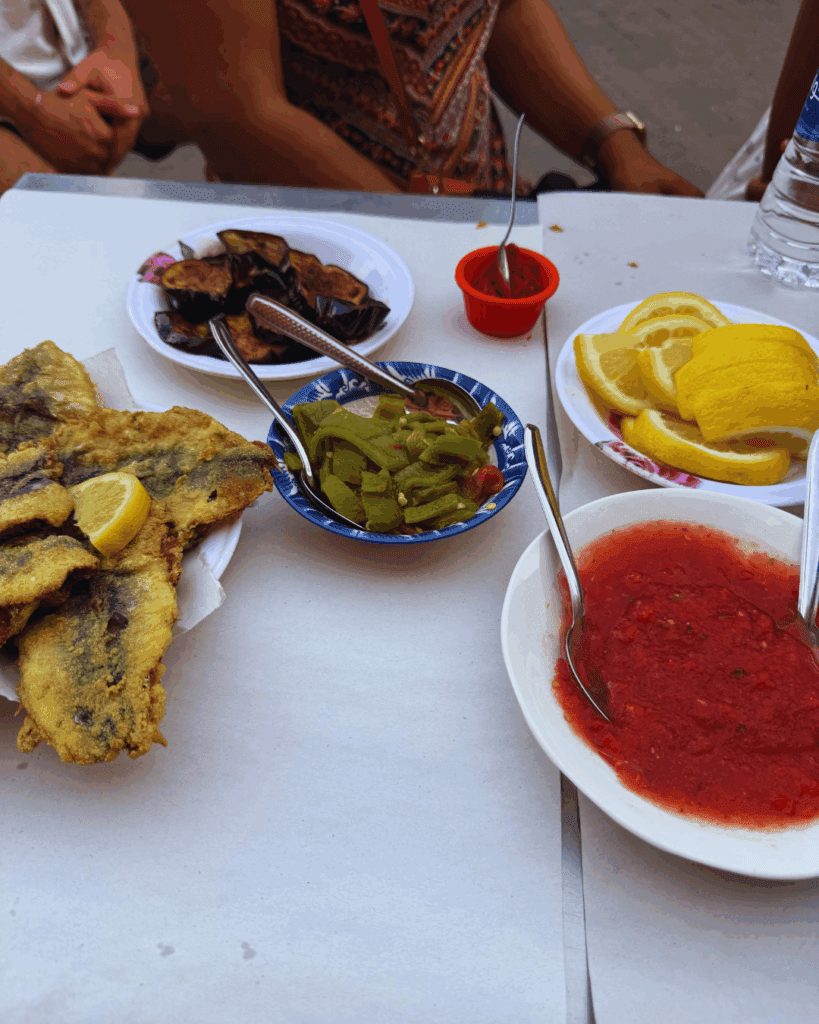
I had the best food of the trip here in Marrakesh. One afternoon, I ate at this amazing seafood restaurant serving grilled fish alongside bakoula, a salad made from mallow (a leafy vegetable). I also went on a food tour, trying various Moroccan dishes such as spleen sandwiches and briwat, a Moroccan “samosa” filled with cheese. The tour guide was an ex-professional chef, and he made his own version of tangia, a slow cooked meat stew which is a Marrakesh specialty. Fun fact: tangia is cooked using the heat from the hammams. Families would prep the clay urn at home and bring it to the back rooms of the hammams, where it is tucked underneath the furnace to cook for hours.
Speaking of hammams, they were quite the experience. I tried a touristy one and a more traditional one. I would recommend going to both as they’re two distinct experiences at two different price points ($75 vs $15).
The tourist hammam had a spa-like setting, beautifully decorated with ornate Moroccan tiles. I had my own private room, and the attendant handled everything from the black soap application to the scrubbing and rinsing. It was strange getting bathed by someone else at first, but I soon got used to it. I also added on a massage afterwards, which was similar to a western one done on a massage table.
The traditional hammam offered a no-frills experience, and I was the only foreigner there. The locals brought their own buckets, soap, and scrubbing mitts to bathe themselves. I wanted something a bit more glamorous, so I paid for the equipment and got an attendant to scrub me down. The hammam had a communal vibe since you bathe in the same space as others. The treatment was also rougher. The attendant really got in there, vigorously scrubbing every last bit of dirt off your skin. For the massage, you literally lay on the tile floor while getting stretched every which way.
After much exploration and relaxation, my final day in Morocco arrived. I took the train from Marrakesh to Casablanca and boarded my flight back to Washington D.C, wrapping up an incredible four-week trip to Northern Africa.
Reflections
I ended up loving Morocco far more than I ever expected. Even places I was skeptical about, like Chefchaouen, completely won me over with its beauty and relaxed atmosphere. Each city’s medina was more fascinating than I imagined, and I loved exploring the maze of narrow alleyways. The desert tour was such a great way to travel between Fez and Marrakesh. It was through this experience that I got to know an amazing group of people.
As for the food, I found tagine to be overrated. I tried plenty throughout the trip, and I wasn’t impressed. There are way better dishes in Morocco like the ones I mentioned in this post, so don’t limit yourself to tagine.
The biggest surprise was the Moroccan hospitality. Before the trip, I had read about how there were scammers and touts everywhere you go. Yes, these people exist, especially in larger cities like Marrakesh. For example, I had people telling me that the roads were closed and to follow them because they knew an alternative route. And who could forget that sus “tour” in Fez. However, those encounters only made up a small fraction of my experiences. The rest of the time, I was met with such kindness and generosity.
Overall, Morocco exceeded my expectations with the warmth of the people, the diverse landscapes, and the sense of adventure waiting around every corner.